Most people think only a felony blocks a gun purchase. In reality the law lists a whole set of hidden roadblocks. If you don’t know them, you could waste time, money, and a background‑check fee. In this guide we break down every federal disqualifier, explain how the background‑check system works, and give you practical steps to avoid a denial.
Additionally, many states enforce a gun waiting period that can delay the final transfer.
Federal Legal Criteria for Gun Purchases
The Gun Control Act of 1968 sets the baseline for who can own a firearm. Section 922(g) spells out a dozen categories of people who are automatically barred. Below is a quick reference table that shows the main disqualification, the statute that defines it, and the typical outcome at the NICS check.
These rules apply nationwide. State laws can add extra limits, but the federal list is the first gatekeeper that every licensed dealer must check.
Knowing where you stand helps you plan ahead. For example, a former felon who has had civil rights restored can apply for a restoration of rights before trying to buy. A person with a past drug addiction can request a “ceased unlawful use” letter if they have been clean for at least a year.
We recommend pulling your own record from the FBI’s Identity History Summary service if you’re unsure. It gives you a clear view of what the system sees.
Bottom line: The federal law draws a clear line, any match to the table triggers an automatic block at the background check.
Criminal Convictions That Disqualify You
When most people hear “criminal record,” they picture a murder conviction. In gun law, a far wider range of offenses can shut the door. Even a misdemeanor can be a deal‑breaker if it falls under the domestic‑violence umbrella.

Here are the most common convictions that lead to a denial:
- Any felony conviction, regardless of the underlying crime.
- Domestic‑violence misdemeors, such as assault causing bodily harm, even if the charge never led to jail.
- Any conviction for a violent crime that resulted in a restraining order.
- Drug‑related felonies that classify the person as an unlawful user of controlled substances.
Why does the law treat a misdemeanor the same as a felony in some cases? The goal is to keep firearms out of hands that have demonstrated a pattern of violence toward intimate partners. The federal statute was amended in 1996 to add this protection.
Imagine you were charged with a misdemeanor for pushing a partner during an argument. Even if the court dismissed the case, the record may still show a domestic‑violence misdemeanor. That single line can cause a denial.
ATF maintains a public list of prohibited persons. You can review the categories here: ATF’s list of prohibited persons. It’s a good place to double‑check whether a conviction you think is harmless actually falls under the ban.
Veterans who have served and now face a past conviction often wonder if they can still own a gun. We believe in supporting those who have served, and we can help you handle the restoration‑of‑rights process. Talk to a legal aid service that specializes in firearms law if you need help.
Bottom line: A wide range of criminal convictions, even some misdemeanors, can block you from buying a gun under federal law.
Mental Health and Substance‑Abuse Disqualifications
Beyond the courtroom, the law looks at mental health and drug use. If a court has ever ruled you “adjudicated as a mental defective,” you’re barred. So are people who have been involuntarily committed to a mental institution.
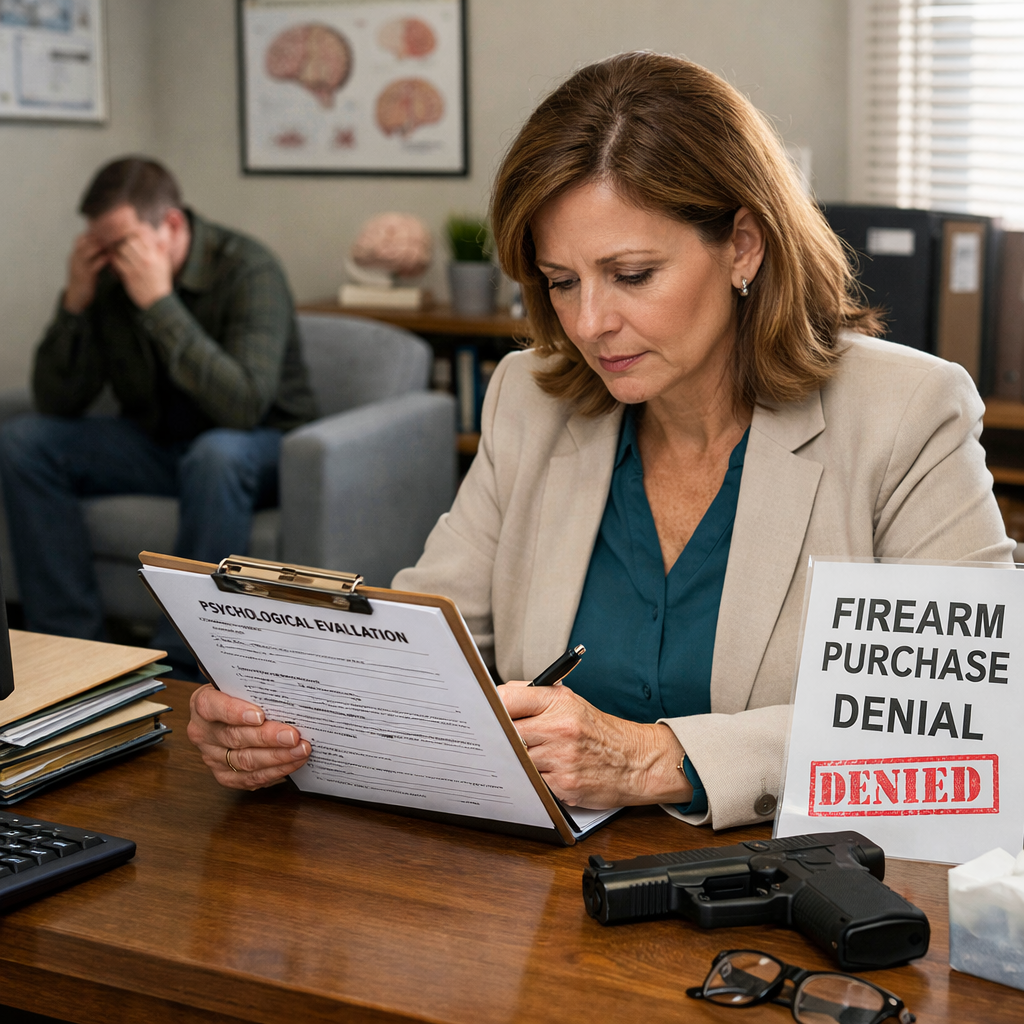
The definitions were updated in 2026 to tighten the language. The Federal Register notice explains the new thresholds: Federal Register notice 2026‑09156. The changes focus on ensuring that a formal adjudication or commitment must be documented before the ban applies.
Substance‑abuse disqualification is a bit different. The law bars “unlawful users of controlled substances.” However, the same Federal Register entry notes an exception: if you can prove you have stopped regular unlawful use, you may be eligible. Proof can include a doctor’s letter, a negative drug test, or a court order.
What does this look like in real life? Imagine a veteran who was involuntarily committed after a PTSD crisis. The record stays on file for years, and a background check will flag it. The veteran can petition the court for a restoration of rights once the commitment ends and they have completed a treatment plan.
We recommend keeping all medical paperwork organized. If you ever need to prove a “ceased use” or a restored mental‑health status, the documents will speed up the review.
Bottom line: Formal mental‑health adjudications and certain drug‑use histories can disqualify you, but documented recovery may open a path back.
Domestic Violence & Protective Orders
Domestic‑violence laws have expanded dramatically in recent decades. A restraining order that includes a firearm restriction automatically bars the respondent from buying or possessing a gun.
These orders come in two flavors: a civil protective order issued by a family court, or a criminal protective order that follows a conviction. Both trigger the same federal prohibition under 18 U.S.C. § 922(g)(8).
“A protective order that bans firearms is a federal disqualifier, even if the underlying crime was a misdemeanor.”
Why is this important? A person may never have been charged with a crime, but a civil court can still issue a restraining order that bars gun ownership. The order stays in place until the court lifts it, which can be months or years.
If you find yourself under a protective order, you can request a hearing to challenge the firearm restriction. You’ll need to show that you pose no risk and that you have complied with all other legal requirements.
Veterans often worry that a family dispute could jeopardize their right to own a firearm for home defense. We advise seeking legal counsel early. A clear plan can prevent a surprise denial at checkout.
Bottom line: Any protective order that restricts firearms blocks a purchase under federal law.
The Background Check Process Explained
When you hand a firearm to an FFL dealer, the dealer runs a NICS check. The system scans three databases: the National Crime Information Center (NCIC), the Interstate Identification Index (III), and the NICS Index.
Most checks finish in a few minutes. However, if the system finds a “hit” that requires manual review, like a vague name match or a pending case, the dealer must wait up to three business days. Some states impose longer waiting periods.
During the wait, the dealer will contact you for any missing paperwork. This is why it helps to have a copy of any court orders, medical adjudications, or documentation proving a cessation of drug use ready to send.
Be aware of the FFL transfer fee, which varies by dealer and can affect the total cost.
Our own team at 31 M Armory works with a network of trusted FFL dealers across the country. We can point you to a dealer who knows the process inside out, which can reduce the chance of a surprise denial.
For a deeper dive on how the FBI’s NICS system works, : ATF’s guide to prohibited persons.
Bottom line: The NICS background check is fast for clear cases, but any flag triggers a manual review that can delay or deny the sale.
Immigration Status and Legal Residency Issues
Non‑citizens who lack lawful permanent residency are barred from buying firearms. The law defines “illegal alien” as anyone who is not a U.S. citizen, lawful permanent resident, or protected non‑immigrant.
There are a few exceptions. Certain non‑immigrant visa holders (e.g., diplomats, certain students) may purchase firearms if they meet additional criteria, such as a valid hunting license. But the default rule is a denial.
Why does this matter for veterans? Some veterans who were non‑citizens when they served may have received a green card afterward. Their new status restores gun rights, but the change may not be reflected in the NICS database right away.
To avoid a denial, make sure your immigration paperwork is up‑to‑date before you start the purchase process. A recent Form I‑94 update can take a few weeks to propagate through federal systems.
We also suggest checking the Department of Homeland Security’s immigration status verification portal for the latest record. A clean record there means the NICS system will see you as eligible.
Bottom line: Without lawful residency or citizenship, federal law blocks gun purchases, though a few visa‑type exceptions exist.
Age, Residency, and Documentation Requirements
Age is the simplest filter: you must be at least 18 to buy a rifle or shotgun, and 21 for a handgun. States can set higher ages, but the federal floor is clear.
Residency ties into the “state of residence” you provide on ATF Form 4473. The form asks for a driver’s license or state ID. If you’re moving, you must update your address before the background check.
Documentation includes a valid government‑issued photo ID, proof of residence (utility bill or lease), and, for certain purchases, a concealed‑carry permit. If any document is missing or expired, the dealer must pause the transaction.
For veterans, the VA often issues a state‑approved ID that can serve as proof of residency. Our store can help you handle the paperwork so you don’t get stopped at the final step.
Remember that the background‑check system also flags “dishonorable discharge” from the armed forces as a disqualifier, though it’s a rare case. If you have any concerns, a quick review of your DD‑214 can save you a surprise later.
Bottom line: Age, a valid ID, and up‑to‑date residency proof are the basic non‑criminal gates to gun ownership.
FAQ
Can a past drug addiction ever be cleared for a gun purchase?
Yes, if you can prove you have stopped the unlawful use of a controlled substance. A doctor’s letter, a negative drug test, or a court order that shows you are no longer using can satisfy the exception noted in the Federal Register. Bring this proof to your FFL dealer before the background check so they can attach it to your file.
What if I was a felon but my civil rights were restored?
Restoration of civil rights varies by state. Once you have a formal document showing that your felony rights have been restored, you can submit it to the ATF or the dealer during the background check. The NICS system will then treat you as eligible, assuming no other disqualifiers exist.
Do protective orders automatically block a gun purchase forever?
No, the block lasts as long as the order is active. If the court lifts the order, the restriction ends. You’ll need a copy of the court’s dismissal or a new order showing the firearm restriction has been removed, and you can then re‑apply.
Will a pending arrest show up on the background check?
Yes. The NCIC database includes active warrants. If you have a pending arrest for a disqualifying offense, the NICS check will flag it and result in a denial until the case resolves.
Can a non‑citizen on a student visa buy a hunting rifle?
Only if the visa class expressly permits it and you hold a valid hunting license. Most F‑1 student visas do not allow firearm purchases. Check the specific visa regulations or consult an immigration attorney before trying.
What should I do if I get a denial but I think it’s a mistake?
First, request a copy of the NICS response from the dealer. It will list the exact reason for denial. Then, gather supporting documents, court records, medical releases, or immigration status proof, and submit a request for correction to the ATF. The process can take several weeks, but it’s the only way to clear a mistaken flag.
Do I need a special license to buy a firearm online?
No special license is needed beyond a standard Federal Firearms License (FFL) dealer. The online retailer ships the gun to an FFL dealer of your choice, who then runs the background check. The process is the same as buying in a brick‑and‑mortar shop.
How long does a background check usually take?
Most checks clear within minutes. If a manual review is required, the dealer has up to three business days, though some states impose longer waiting periods. Delays often stem from name matches, pending charges, or incomplete documentation.
Conclusion
Understanding what disqualifies you from buying a gun saves you time, money, and frustration. From felony convictions and mental‑health adjudications to immigration status and simple paperwork errors, each factor can stop a sale before it even begins. By checking your record, gathering the right documents, and working with a veteran‑owned retailer that knows the process, you can clear most hurdles before you click “add to cart.”
We’re proud to serve fellow patriots and help you stay compliant. If you’re ready to take the next step, explore our First Time Gun Owner Guide for a step‑by‑step walk‑through of the entire purchase journey, from choosing a model to completing the FFL transfer.
Stay informed, stay ready, and keep your rights protected.
Bottom line: Knowing the federal disqualifiers and preparing the required proof lets you avoid surprise denials and purchase your firearm with confidence.