First thing’s first , make sure that shotgun is completely unloaded, then grab your cleaning rod and let’s break it down step by step. We’ll walk you through barrel brushing, action scrubbing, a light oil coat, and the quick tricks pros use to keep rust at bay, so your gun stays ready for the next hunt. Whether you’re a veteran, a hunter, or a new gun owner, a clean shotgun is a safe and reliable shotgun.
Step 1: Prioritize Safety , Verify the Firearm Is Unloaded
The single most important rule: always treat every firearm as if it’s loaded, even when you’re certain it’s empty. Before you start cleaning, remove the magazine (if applicable) and visually inspect the chamber to confirm there’s no ammunition. It’s a great habit to remove all live ammunition from the room where you’ll be cleaning. Also, work in a well-lit area, point the muzzle in a safe direction, and never clean a gun under the influence of alcohol or medications.
Staying focused during this process is key , some shooters even practice mindfulness techniques to maintain concentration. If you’d like to sharpen that skill, consider resources like meditation courses to help you stay calm and alert while handling firearms.
Step 2: Field-Strip Your Shotgun According to Manufacturer Instructions
Once the shotgun is confirmed unloaded, disassemble it . Most shotguns break down into a few main components: stock, forend, barrel, and action. For pump actions, unscrew the magazine cap and slide the barrel forward. Over/under break-actions open at the hinge. If you’ve lost your manual, download a PDF from the maker’s site , many offer free copies.
Having a good gun cleaning kit on hand makes field-stripping easier , look for a kit that includes a cleaning rod, brushes, patches, and a bore snake suitable for your shotgun’s gauge.
Step 3: Clean the Barrel, Bore, and Choke Tubes
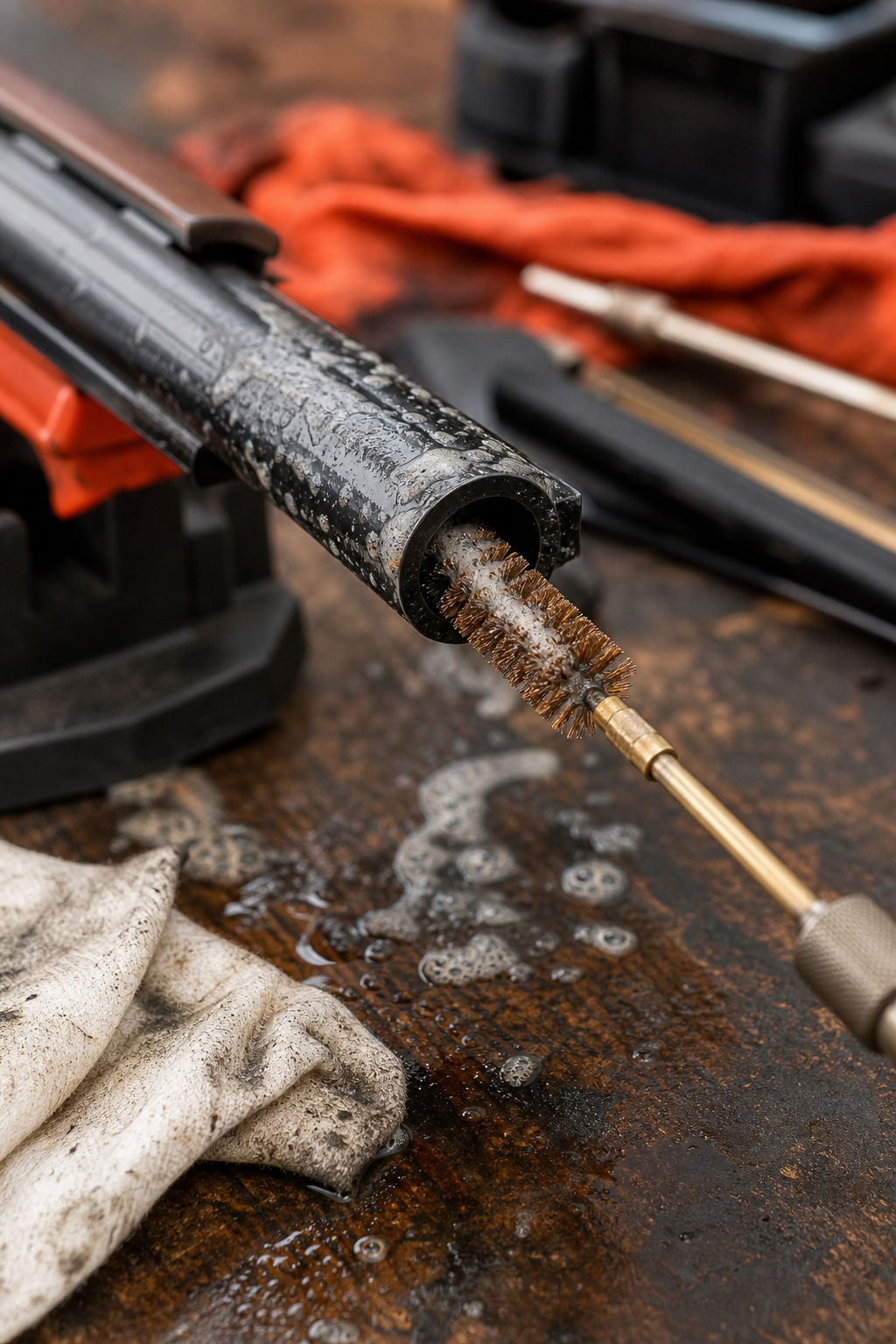
Start with the barrel. Run a caliber-specific bronze brush dipped in bore cleaner from the breech end toward the muzzle. This breaks up carbon and lead fouling. Never reverse the brush direction , push it all the way through. Next, attach a slotted jag to your rod and run solvent-soaked patches until they come out clean. Finish with a dry patch, then a lightly oiled patch to protect the bore.
Don’t forget choke tubes: remove them and scrub the threads with a bronze brush. Buildup here can distort patterns. For a thorough clean, also consider using a high-quality gun cleaning solvent to dissolve stubborn deposits.
Step 4: Clean the Action, Receiver, and Wood Stock
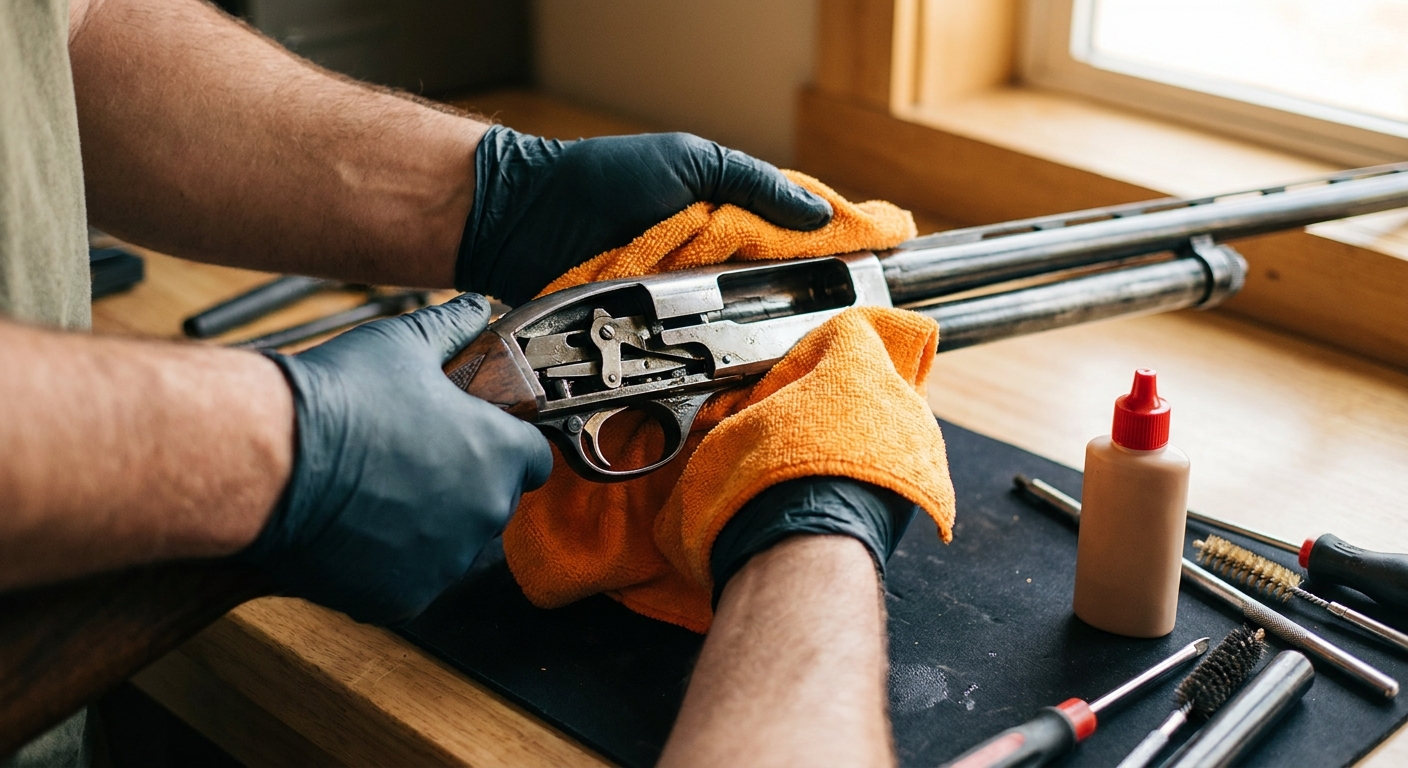
With the barrel set aside, focus on the receiver and action. Use a utility brush and bore cleaner to scrub away carbon and grime around the trigger group, bolt, and shell carrier. Pay special attention to the ejector area , debris here can cause malfunctions. Wipe all metal surfaces with a dry patch, then apply a light coat of oil.
For the wood stock, use a separate cloth and a conditioner like linseed oil or beeswax. Avoid getting mineral oils on the wood as they can soften the finish. Gently rub the oil into the grain, let it sit, then buff. Maintaining the stock is as important as cleaning the metal , it keeps the gun looking good and prevents drying and cracking.
Step 5: Lubricate and Protect Against Corrosion
A thin, even layer of oil on metal surfaces is all you need , too much lube attracts dirt and slows action cycling. Use a high-quality gun oil or CLP (cleaner, lubricant, protectant). Choose a lubricant suited to your climate, and apply it to rails, bolt, and pivot points.
Wipe off excess oil with a clean rag. Don’t forget the magazine tube , a light coat prevents rust on the spring and follower. Good lubrication ensures your shotgun cycles reliably, whether you’re at the range or in the field.
Step 6: Reassemble and Store Your Shotgun Properly
Once everything is clean and lubricated, reassemble your shotgun in reverse order. Function-test it by cycling snap caps or dummy rounds to ensure the action feeds and ejects smoothly. Verify the safety and trigger work correctly.
Store your shotgun in a dry, secure place. A gun safe with a dehumidifier is ideal, but even a silicone-treated gun sock inside a locked cabinet works. Avoid storing in soft cases for long periods , foam traps moisture.
After a long day at the range or hunting, remember to take care of your body too , supplements that support recovery can support your overall health. And if you need reliable, discreet transport for your firearms to the range, consider a premium transportation service for safe, comfortable travel.
Frequently Asked Questions
How often should I clean my shotgun?
After every shooting session, give your shotgun a quick wipe-down and bore snake. Deep clean every 2-3 sessions or after exposure to moisture, dirt, or heavy use.
Can I over-clean my shotgun?
Yes, excessive cleaning with harsh solvents can strip protective finishes. Stick to a balanced routine: wipe down after each use, deep clean when needed, and always re-lubricate.
What’s the best solvent for cleaning a shotgun?
Many commercial solvents, including those featured in our guide to the best gun cleaning solvents, are reliable choices. The best solvent depends on your shotgun’s barrel (chrome-lined vs. plain steel) and the type of fouling.
Do I need to remove choke tubes every time I clean?
Not necessarily, but it’s recommended every few cleanings. Removing them allows you to scrub the threads thoroughly and prevents carbon buildup that can lock the choke in place.
Should I oil the wood stock?
Yes , but use a wood-specific conditioner like linseed oil or beeswax. Avoid getting gun oil on the wood, as it can penetrate and weaken the finish.
How do I clean a shotgun without a full disassembly?
For a quick field clean, run a bore snake through the barrel, wipe down the exterior with a solvent patch, and apply a light oil. This works for storage between hunts.
Conclusion
Cleaning a shotgun doesn’t have to be complicated. Stick to the steps: safety first, dismantle, scrub the barrel and action, lube lightly, and store dry. A well-maintained shotgun will serve you for decades. For cleaning supplies and firearm accessories, we proudly invite you to browse our selection of gun cleaning supplies at 31 M Armory’s blog, veterans always get our 6% discount. Grab your gear and keep that shotgun ready for the next hunt.