Ever walked into a shop, handed over your ID and wondered why the clerk says “just a few minutes” for some buyers but “days” for others? That moment can feel like a mystery. In this article we’ll break down the 23 factors that decide how long a gun background check takes, give you real‑world examples, and share proven ways to keep the process moving smoothly.
1. Instant Approval , When the NICS Check Clears Immediately
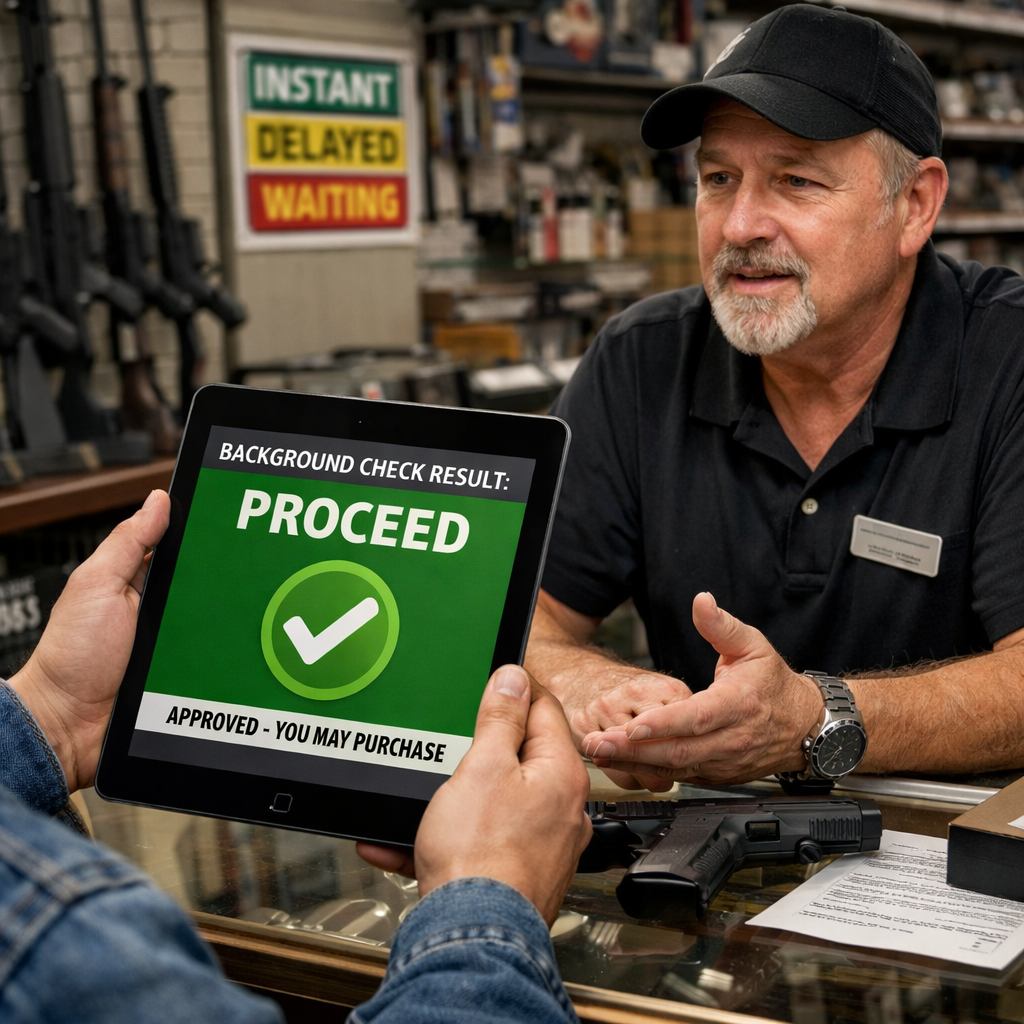
When the FBI’s National Instant Criminal Background Check System (NICS) can verify your record in seconds, you’ll see a green “Proceed” on the dealer’s screen. Most buyers fall into this bucket because their data matches cleanly across the three databases NICS pulls , the Interstate Identification Index, the National Crime Information Center, and the NICS Indices. The system flags no disqualifying records, no name collisions, and no pending charges. Wikipedia’s overview of NICS notes that about 90 % of checks are resolved instantly.
What does that look like on the ground? Imagine you’re at a local FFL dealer in Texas. You hand over a valid driver’s license, the clerk inputs your name, DOB, and SSN, and within a minute the screen flashes green. You walk out with the firearm in hand, no waiting period, no extra paperwork.
Why does it work so fast? The FBI’s guidelines require an immediate decision for straightforward matches. The databases are constantly refreshed, and many states automatically feed criminal and mental‑health data into NICS. When nothing in your record triggers a manual review, the algorithm returns a “Proceed” right away.
Bottom line: If your personal data aligns perfectly across federal and state databases, the check will clear in seconds.
2. Delayed Status , Why Your Check Might Not Be Instant
Sometimes the screen shows “Delayed” instead of “Proceed”. That means the system found something it can’t resolve automatically , maybe a name that matches a prohibited individual, an incomplete court record, or a pending charge. The FBI then routes the case to a human examiner who has up to three business days to investigate.
One common trigger is a shared name. If you’re John Smith and there’s a John Smith with a felony on file, NICS will pause and ask an examiner to verify which record belongs to you. Another trigger is an old charge that was never cleared from the database; the system sees a record but can’t tell if it’s been expunged.
Dealers often give you a NICS Transaction Number (NTN) so you can track the status. If the examiner can’t decide in three days, federal law lets the dealer complete the sale under a “default proceed” , but many dealers have policies that require a clean “Proceed” before handing over the gun.
While you wait, you can gather supporting documents , expungement orders, court filings, or mental‑health clearance letters , and provide them to the dealer. That speeds up the examiner’s work.
Bottom line: A “Delayed” status means a human review is needed, which can add minutes to days to the process.
3. The 3‑Day Rule: What Happens If the FBI Doesn’t Respond
Federal law gives the FBI three business days to finish a background check. If no final decision is reached, the dealer may legally complete the transfer under a “default proceed” rule. This is meant to prevent indefinite holds on sales.
However, not all states accept the default proceed. California, New Jersey, and New York have statutes that forbid a sale after three days without a clear “Proceed”. In those states, the dealer must wait until the FBI issues a final decision, which can stretch the wait to weeks.
For buyers in permissive states, the three‑day rule often means you’ll walk out with a gun even if the check is still flagged as delayed. In restrictive states, the same scenario can lead to a longer waiting period, sometimes up to 10‑15 days as the state agency reviews the pending flag.
Bottom line: If the FBI fails to decide in three business days, the outcome depends on your state’s laws.
4. The 10‑15 Day Wait in Some States
States like Georgia, Michigan, and Oklahoma impose mandatory waiting periods of 10‑15 business days for certain purchases. The delay is not a NICS issue but a state‑level waiting period that kicks in after the background check clears.
Georgia, for example, has a “Kami” law that applies to buyers under 21. If you’re under that age, you’ll face a 10‑15 day hold even if the NICS check is instant. The law is intended to give younger buyers extra time for reflection.
Michigan requires a 7‑day waiting period for handguns unless you hold a valid concealed‑carry license. That waiting period runs after the NICS check, so you could have an instant “Proceed” but still wait a week before you can take the gun home.
Bottom line: State‑mandated waiting periods add days on top of the NICS processing time.
5. Up to 30 Days for Complex Cases
When a background check involves multiple jurisdictions, old charges, or ambiguous mental‑health records, the FBI can keep the case open for up to 30 days. During that window, examiners contact courts, law‑enforcement agencies, and mental‑health providers to verify the details.
For instance, a buyer with an old misdemeanor from a different state that was never fully cleared can cause the system to flag the record. The examiner may need to request the originating court’s docket, which can take weeks.
Complex cases also arise when the buyer has a history of multiple name changes or aliases. Each identity must be cross‑checked, and any mismatch can trigger a deeper dive. While you wait, you might want to explore secure storage options; our guide to the best biometric gun safes can help you choose one for when you receive your firearm.
Bottom line: Complex histories can push the check toward the 30‑day ceiling.
6. Common Names and How They Slow the Process
Having a common name like “John Smith” or “James Johnson” dramatically raises the chance of a delayed status. NICS relies on name, DOB, and SSN to match records. When many people share those identifiers, the system flags the match for manual review to avoid a false deny.
FastBound’s research notes that a simple typo or missing middle initial can cause the system to pull multiple possible matches, each of which must be vetted. The examiner then contacts the originating agencies to confirm which record belongs to the applicant.
Dealers can help by ensuring the buyer supplies the exact middle name, suffix (Jr., III), and correct spelling. A clean, fully‑filled Form 4473 reduces the chance of a name‑collision delay.
Bottom line: Common names increase the likelihood of a manual review, adding time.
7. Multiple Middle Names or Name Changes
People who have more than one middle name, a hyphenated last name, or have legally changed their name can confuse the NICS matching algorithm. The system may treat each middle name as a separate record, leading to multiple potential hits.
For example, a buyer named “Michael Alan‑James Lee” might be entered as “Michael A. Lee” in one database and “Michael Alan James Lee” in another. NICS sees a mismatch and flags it for review.
To avoid this, always provide the full legal name exactly as it appears on your government ID. If you recently changed your name, bring a court order or marriage certificate to the dealer for verification.
Bottom line: Multiple middle names or recent name changes can trigger a delayed review.
8. Old Criminal Charges That Were Dismissed
Charges that were dismissed, expunged, or reduced can linger in the databases that feed NICS. If the state or local agency never updated the record, NICS will still see a disqualifying charge.
Imagine a buyer who had a 2015 shoplifting charge that was later dismissed. If the county clerk never sent the update to the state’s criminal‑history repository, NICS will flag the old charge, and an examiner must verify the dismissal , a process that can take weeks.
The solution is proactive: request a formal record‑clearance letter from the court and give it to the dealer before the check begins. Some dealers will upload that document to the NICS portal to clear the flag.
Bottom line: Stale criminal records that haven’t been cleared can cause delays.
9. Misdemeanor Records That Create Confusion
Misdemeanors are a gray area for NICS. Certain misdemeanors, like domestic‑violence restraining orders, are disqualifying, while others are not. The system sometimes mis‑classifies a misdemeanor because the state’s coding differs.
For example, a DUI misdemeanor in one state may be coded as a “driving‑under‑the‑influence” offense, which is not a federal disqualifier. But if the same record is entered with a code that signals a violent offense, NICS will flag it for review.
Dealers can mitigate this by confirming the exact code with the buyer’s local law‑enforcement agency before submitting the check. If the code is non‑disqualifying, the dealer can note that on the Form 4473 and avoid a delayed flag.
Bottom line: Not all misdemeanors are equal; coding errors can trigger a delayed status.
10. State Data Gaps , Not All Records Are Shared
Federal law does not force every state to upload all its records to NICS. Some states, like New Hampshire and Wyoming, voluntarily submit fewer mental‑health and protective‑order records. This creates gaps where a prohibited buyer may slip through, but it also means that for many applicants the check runs faster because fewer records need to be scanned.
Conversely, states that submit exhaustive data can cause longer checks because the system must sift through large datasets. When a state adds a new database feed, the FBI’s processing time can spike temporarily as the new data integrates.
Buyers should be aware of their state’s participation level. In states with limited data sharing, a clean check is often instant; in states that share more, the chance of a delayed flag rises.
Bottom line: State‑level data submission practices directly affect check speed.
11. Mental Health Adjudications Causing Delays
When a court orders an involuntary psychiatric commitment, that record is supposed to flow into the NICS Indices. If the state fails to push the record promptly, the FBI may see a pending adjudication and send the case for manual review.
Consider a buyer who was committed in 2018 but whose state only uploaded the record in 2022. The NICS check will flag the 2018 adjudication, and an examiner will need to verify the current status , a process that can take days.
Some states have simplifyd pathways where the mental‑health authority directly updates NICS. Others still rely on manual court filings, which adds lag.
Bottom line: Mental‑health adjudications can trigger a delayed status, especially in states with slower reporting.
12. Immigration Status Checks
The NICS system also screens for unlawful immigration status. If you are a non‑citizen with a pending visa or a removal order, the check can be flagged.
In practice, many buyers never know they have a lingering immigration hold. The FBI’s background check pulls data from DHS, and if a removal order exists, the examiner must verify whether the order is still active.
Providing proof of lawful status , such as a green card, visa stamp, or naturalization certificate , can help the examiner close the loop faster.
Bottom line: Immigration holds add a layer of verification that can extend the check.
13. Private Sales and Gun Show Transactions , No NICS Required?
Federal law only mandates background checks for sales through licensed Federal Firearms Licensees (FFLs). Private sales, gun shows, and online peer‑to‑peer deals can occur without a NICS check, creating a loophole that many buyers and sellers overlook.
Every‑day shoppers may think they are protected, but in reality, a private seller is not bound by the same reporting requirements. That means no instant approval, no delayed status , just a handshake.
Some states have closed this loophole by requiring private sellers to conduct a point‑of‑sale check or to go through a licensed dealer. In states without such laws, the buyer’s background check time is effectively zero , but the risk of illegal possession rises. For a safer alternative, consider using a licensed dealer; learn how to do an FFL transfer for proper background checks.
Bottom line: Private sales bypass NICS entirely, so there’s no official “how long” metric , but legal risk is higher.
14. Concealed Carry Permits as a Shortcut
Many states allow a valid concealed‑carry permit (CCP) to act as a substitute for a NICS check. If your permit was issued within the last five years and the state verified your background at that time, you can often walk into an FFL shop and buy without another check.
Texas is a prime example: a current CCP lets you skip the NICS step entirely. In contrast, California does not accept CCPs in place of a background check, so you must still go through NICS. If you’re considering which pistol to carry, check out our guide to the best gun for concealed carry.
The key is the permit’s age and the state’s reciprocity rules. Always verify your state’s policy before you rely on a CCP as a shortcut.
Bottom line: Valid concealed‑carry permits can eliminate the NICS step in permissive states.
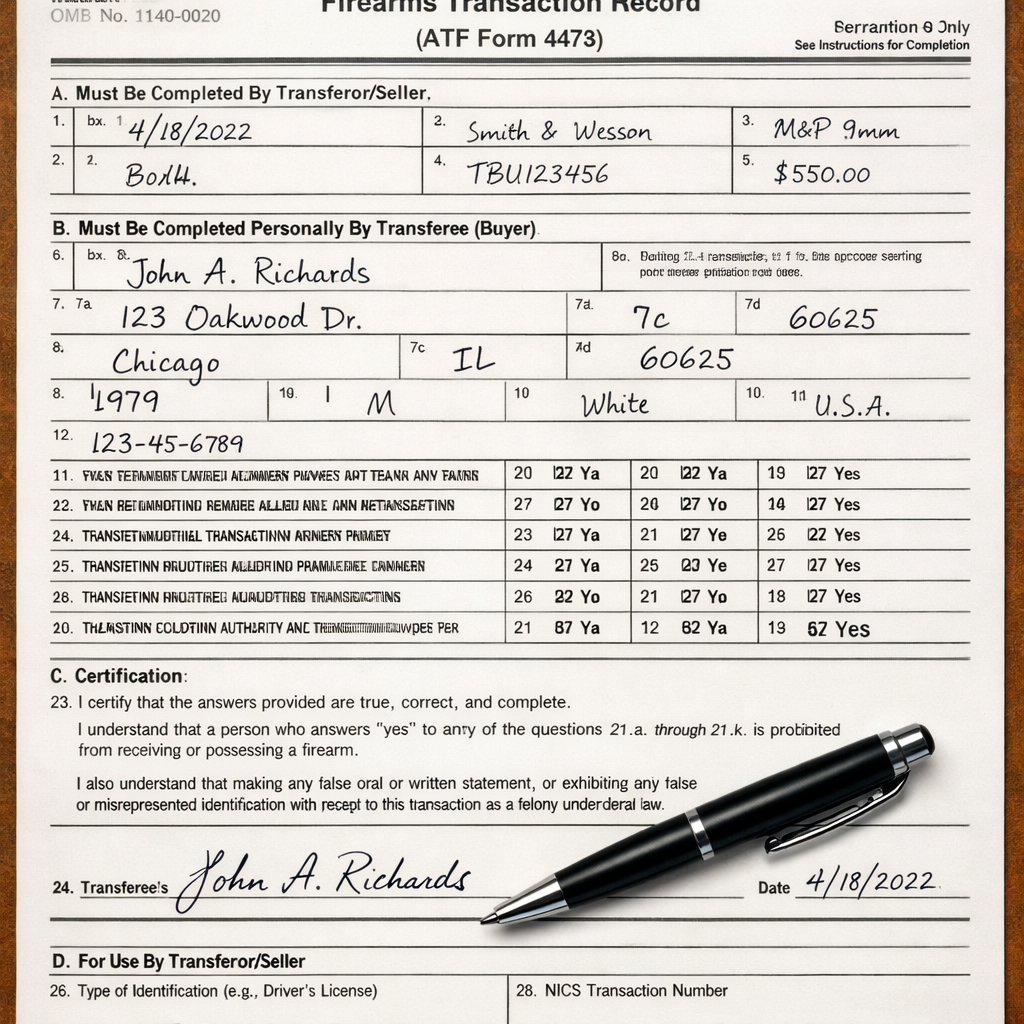
15. How to Complete ATF Form 4473 Correctly (Avoiding Mistakes)
Form 4473 is the federal paperwork that records the buyer’s information and the firearm details. Errors on this form are a leading cause of delayed checks because the dealer must correct the mistake before sending data to NICS.
Key fields to watch:
- Full legal name, include middle name, suffix, and exact spelling.
- Date of birth, use the format MM/DD/YYYY as on your ID.
- Social Security Number, optional but helps match records; if you leave it blank, the system relies on name and DOB alone, increasing collision risk.
- Address, must match the one on your driver’s license; a mismatch can trigger a manual review.
- Firearm details, serial number, model, and caliber must be entered accurately.
Common pitfalls include abbreviating the street (“St” vs “Street”), omitting a middle initial, or writing the birth year incorrectly. Double‑check each entry before signing. If you’re new to firearm purchases, our first time gun owner guide covers everything step by step.
Dealers often have a printed copy of the form for you to review. Take a moment, compare it line‑by‑line with your ID, and ask questions if anything looks off.
Bottom line: Every typo on Form 4473 can turn an instant check into a delayed one.
16. What to Do If Your Check Is Delayed Beyond 3 Days (VAF Process)
If the FBI hasn’t given a final decision after three business days, you can enter the Voluntary Appeal File (VAF) process. The VAF lets you submit additional documentation directly to the FBI’s Criminal Justice Information Services (CJIS) division.
Steps to start a VAF:
- Ask the dealer for your NICS Transaction Number.
- Gather any records that clarify the flagged item , expungement orders, court dismissals, or mental‑health release letters.
- Submit a formal VAF request through the dealer or an attorney who handles firearms law.
- Wait for the FBI to review the new evidence; they can issue a “Proceed” or a “Denied”.
While the VAF is processing, the dealer may still be able to complete the sale under a default proceed if state law permits. Otherwise, you’ll have to wait for the final decision.
Bottom line: The VAF route gives you a formal path to clear a delayed check after the three‑day window.
17. State‑Specific Waiting Periods: California, Georgia, Michigan, Oklahoma
Each state sets its own rules on waiting periods and whether a “default proceed” is allowed. Below is a quick snapshot.
Understanding these nuances helps you plan purchases, especially if you’re moving across state lines.
Bottom line: State laws can add days beyond the federal process.
18. 2024, 2025 Legislative Changes That Affect Wait Times
Recent federal and state reforms have tweaked background‑check timing. In 2024, the Bipartisan Safer Communities Act expanded background‑check requirements for private sales in several states, adding a point‑of‑sale check that mirrors the NICS process.
In 2025, a handful of states (including Colorado and Nevada) passed laws requiring mental‑health adjudications to be reported within 30 days of filing, reducing lag but increasing the volume of records the FBI must scan.
These changes can cause short‑term spikes in processing time as agencies integrate new data feeds.
Bottom line: Legislative updates can temporarily lengthen check times as new data streams are added.
19. Statistical Trends: Denial Rates by Year and State
The Bureau of Justice Statistics tracks background‑check applications, denials, and approvals. Over the past decade, the overall denial rate has hovered around 1 % of all checks, but it varies widely by state.
States with stricter data‑sharing policies, like New York and California, show denial rates near 1.5 %, while states with limited data submissions, such as Wyoming, sit closer to 0.5 %.
Denials are most common for felony convictions, domestic‑violence restraining orders, and unlawful immigration status. The data also shows a slight upward trend in delayed checks during high‑volume periods like holiday sales.
Bottom line: Understanding denial trends helps set realistic expectations for timing.
20. Handgun vs. Long Gun: Does Firearm Type Matter?
The NICS system treats all firearms the same in terms of eligibility , the check runs before any transfer regardless of type. However, some states impose extra waiting periods for handguns.
Michigan, for instance, requires a 7‑day wait for handguns unless you have a concealed‑carry permit, but long guns can be transferred instantly.
In contrast, states like Texas place no type‑based waiting period. The difference comes from state policy, not the federal NICS process.
Bottom line: Firearm type only matters where state law adds a specific waiting period for handguns.
21. Tips to Expedite Your Background Check
Here are practical steps you can take to keep the clock ticking fast:
- Bring a government‑issued photo ID that matches the name on Form 4473 exactly.
- Provide your Social Security Number; it narrows the search field.
- Gather any expungement or dismissal paperwork ahead of time.
- Ask the dealer if they have a “fast‑track” option for repeat customers with a Unique Personal Identification Number (UPIN).
- Check your state’s NICS participation report on the ATF site to know what data will be scanned.
Bottom line: Preparedness and accurate info are the fastest way to clear a check.
22. Dealer vs. Private Seller Checks , Key Differences
Dealers (FFLs) must run NICS for every transaction and keep a record of the check. Private sellers are not required to run any background check, which means no official timing at all.
When you buy from a dealer, you get a NICS Transaction Number, a clear record of the decision, and legal protection. Private sales lack that paper trail, which can create legal gray areas if the buyer is later found prohibited.
Many buyers prefer dealers for the peace of mind and the ability to track the status if a delay occurs.
Bottom line: Dealer‑initiated checks provide transparency and legal safeguards, while private sales bypass the process entirely.
23. Instant vs. Delayed: What Each Status Means for You
An “Instant” status means the FBI’s automated system found no red flags and gave a green light within minutes. You can usually walk out with the firearm immediately.
A “Delayed” status signals that a human examiner is reviewing your information. The result could be a “Proceed” after a few days, a “Denied” if a disqualifying record surfaces, or a “Default Proceed” if three days pass without a decision in a permissive state.
Understanding the distinction helps you set expectations. If you receive a delayed status, stay calm, gather any supporting documents, and keep in touch with the dealer for updates.
Bottom line: Knowing the status lets you plan your next steps wisely.
FAQ
What is the typical time for an instant NICS approval?
Most instant approvals happen within a few minutes , often under five , because the system matches clean data automatically. The FBI reports that about 90 % of checks resolve instantly when there are no name collisions or pending records. If you provide a full SSN and accurate personal info, you’re likely in this group.
Why does the FBI sometimes take longer than three days?
When the system flags a record that needs human verification , such as a common name, an old charge, or an ambiguous mental‑health adjudication , an examiner must contact the originating agency. That outreach, plus any back‑and‑forth, can push the timeline past the three‑day window, especially during high‑volume periods.
Can I avoid a background check by buying from a private seller?
Yes. Federal law only mandates checks for sales by licensed dealers. Private transactions, gun shows, and online peer‑to‑peer deals can occur without a NICS check, though many states have added their own requirements that may still require a point‑of‑sale check.
Do concealed‑carry permits replace the need for a NICS check?
In some states, a valid concealed‑carry permit issued within the past five years can act as a substitute for a background check. Texas is a prime example. However, states like California do not accept permits as a replacement, so you must still undergo NICS.
What should I do if my check is delayed beyond three days?
Start the Voluntary Appeal File (VAF) process. Get your NICS Transaction Number, gather any relevant court or mental‑health documents, and submit a formal appeal to the FBI. Meanwhile, stay in contact with the dealer for updates and know whether your state allows a default proceed.
How can I check if my state shares all records with NICS?
Visit the ATF’s public NICS participation page or your state’s attorney general website. They often publish a list of which databases are submitted to NICS. Knowing this helps you anticipate potential delays.
Are there any ways to speed up a delayed background check?
Yes. Provide any missing documents, ensure your name matches exactly, supply your SSN, and consider enrolling in the Voluntary Appeal File for a Unique Personal Identification Number (UPIN). These steps reduce the examiner’s workload and can cut days off the wait.
Conclusion
We’ve walked through the 23 factors that shape how long a gun background check takes, from instant approvals to state‑specific waiting periods and legislative shifts. Knowing the mechanics helps you prepare, avoid common pitfalls, and keep the process moving. At 31 M Armory we’re proud to guide veterans and responsible shooters through every step, offering clear advice and a veteran‑focused discount. Ready to buy? Learn more about what an FFL is and how it works before you head to the store. Armed with this knowledge, you can approach any purchase with confidence and speed.