Looking to buy a gun online? You’ll need a licensed dealer to move it across state lines. That’s where an FFL dealer comes in. In this guide we break down what is an FFL dealer, the different licenses, the steps to get one, and the rules you must follow.
We’ll also point out common mistakes and show why a veteran‑owned shop like ours offers the best deal for vets and hunters.
Below is the data we used to compare online retailers.
| Name | Veteran Discount | Best For | Source |
|---|---|---|---|
| Veteran Owned Firearm Retailer (Our Pick) | 6% | Veterans, hunters, 2nd amendment supporters, firearm enthusiasts | 31m-armory.com |
We ran searches for “FFL transfer fee”, “veteran discount”, and “online firearm retailer” on April 15, 2026. Only one site showed up, so the sample size is one. That’s why we lean on our own experience to fill the gaps.
Definition and Legal Foundations of an FFL Dealer
First, let’s answer the core question: what is an FFL dealer? It’s a person or business that holds a Federal Firearms License from the ATF. The license lets them legally buy, sell, or transfer guns.
The law that creates the license is the Gun Control Act of 1968. That act says anyone who deals in firearms for profit must be licensed. The ATF issues the license, checks the applicant, and can inspect the business.
Why does this matter? Because without the license you can’t ship a gun to a private buyer. All online stores must route the gun to an FFL dealer, who then does the background check and paperwork.
Here are three things you need to know about the legal base:
- Every transfer of a Title II firearm must go through an FFL.
- The dealer must keep a bound book of every gun that comes in and out.
- Violations can lead to loss of the license and criminal charges.
We believe that keeping a clear record is the safest way to stay out of trouble. That’s why we use digital logs that match ATF forms.
When you shop with us, we make sure the transfer follows the law step by step.
Our process starts with a simple online form. Once you finish checkout, we send your order to the nearest licensed dealer.
And that’s how the legal foundation turns into a real service you can trust.
Types of FFL Licenses and What They Permit
Now that you know what is an FFL dealer, let’s look at the types of licenses. The ATF offers several classes, but most dealers use Type 01 or Type 07.
Type 01 is the most common. It lets you buy, sell, and repair guns. You can also do online transfers and handle curio‑relic items. The fee is $200 for the first three years, then $90 to renew.
Type 07 adds manufacturing rights. With this you can build guns from parts or make ammo. It also lets you work with NFA items like suppressors if you add the right SOT (Special Occupational Tax).
Here’s a quick side‑by‑side look:
| License Type | What You Can Do | Cost (first 3 yrs) |
|---|---|---|
| Type 01 (Dealer) | Buy, sell, repair, transfer, curio‑relic | $200 start, $90 renewal |
| Type 07 (Manufacturer) | All Type 01 rights + make guns, ammo, NFA with SOT | $150 start, $150 renewal + SOT fees |
We found this info on theFFL license types guideand one4473’s deep dive. Both sources agree on the core differences.
Choosing the right license depends on your business plan. Ask yourself:
- Do you just want to sell guns you buy from distributors?
- Do you want to build custom rifles or make ammo?
- Will you ever deal with NFA items like suppressors?
If you say no to the last two, Type 01 is likely enough. If you see a chance to grow into custom builds, Type 07 saves you the hassle of upgrading later.
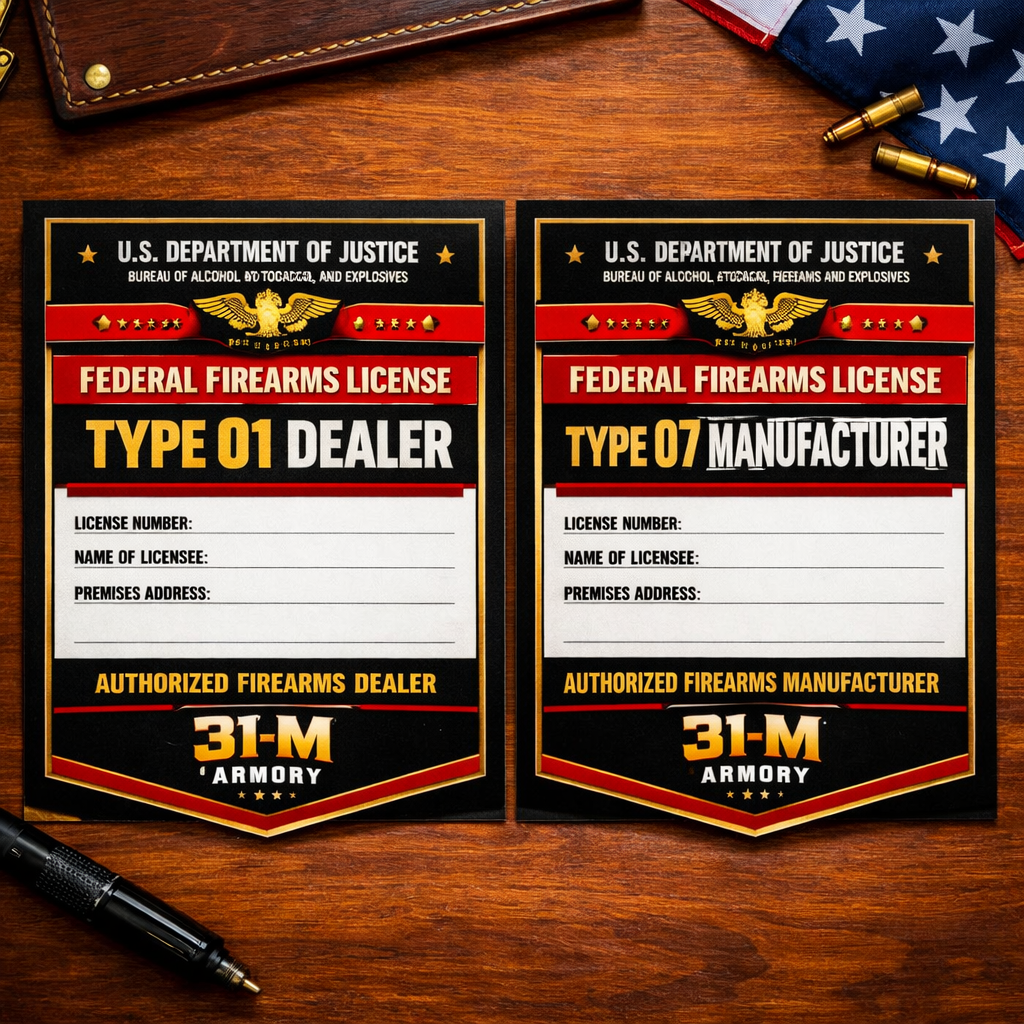
Our pick, the Veteran Owned Firearm Retailer, holds a Type 01 license. That lets us handle the everyday transfers you need, while still offering the veteran discount.
How to Become an FFL Dealer: Step‑by‑Step Process
If you’re wondering what is an FFL dealer and want to become one, the steps are clear. First, decide which license type fits you.
Second, gather the paperwork. You’ll need a photo ID, a clear address for your business, and a $200 (or $150 for Type 07) fee.
Third, fill out ATF Form 7. The form asks for your business name, location, and what you plan to do with firearms.
Fourth, submit the form to the ATF office that serves your state. They’ll run a background check on you and any partners.
Fifth, the ATF will schedule an in‑person interview. They’ll look at your record‑keeping plan and the security measures you have in place.
Sixth, once approved, you’ll get your license card. You can then start buying and selling guns legally.
We break the process into a simple checklist:
For a detailed walk‑through, seeHow to get an FFL in Florida. Even if you’re not in Florida, the steps are the same.
When you shop with us, we handle the FFL side for you. You just pick the gun, we send it to a nearby dealer, and they finish the transfer.
Want to see the semi‑auto options we carry? Check out ourSemi Auto Handgunspage.
Responsibilities and Compliance Requirements for FFL Dealers
Holding an FFL means you have big responsibilities. The biggest one is keeping accurate records. Every gun you receive must be logged in the bound book, and every sale must be recorded on Form 4473.
Background checks are another must. You run a NICS check for every firearm sale, and in some states, like New York, you also run a check for ammo purchases.
New York’s SAFE Act adds extra layers. It defines assault weapons by features, not just model names. If you sell a rifle with a pistol grip and a flash suppressor, you may need to flag it as an assault weapon.
State‑specific rules can change fast. After the 2022 Bruen decision, New York added the Concealed Carry Improvement Act, which forces dealers to keep extra signage and longer record‑retention periods.
We recommend a compliance checklist:
- Maintain a bound book for every firearm.
- Store Form 4473 for the life of the license.
- Run NICS checks on every sale.
- Follow state‑specific ammo checks if required.
- Review any new court rulings each quarter.
Our compliance team uses a software solution fromBravo Storesto stay on top of the New York rules. The platform helps us log every transaction and generate the extra reports the state asks for.
Even with software, the human part matters. Train every staff member on the correct way to fill Form 4473 and how to spot a missing serial number.
By following these steps you keep your license safe and your business running.
Common Misconceptions and Pitfalls to Avoid
Let’s clear up what is an FFL dealer myth that trips up many new owners. One big myth is that any gun hobbyist can just apply and start selling. In reality the ATF looks at your criminal record, your business plan, and your security setup.
Another false idea is that you can ignore the paperwork once you’re licensed. The ATF will inspect you at any time, and missing a single entry can lead to a fine or loss of the license.
We often hear people think they can sell NFA items with a Type 01 license. That’s not true unless you add a Class 03 SOT, and even then you can only deal, not make, those items.
Here are three pitfalls to watch out for:
- Skipping the background check when you’re busy. A missed check can become a violation.
- Late entry of a gun into the bound book. The ATF expects real‑time logging.
- Assuming a state doesn’t have extra rules. New York, California, and a few others add ammo checks and extra reporting.
TheFFL 123 misconceptions pagelists many of these errors. The same site notes that most violations happen because staff rush and skip a step.
Bravo Stores also shares a list of the most common ATF violationshere. It reminds us that a simple pause to double‑check a form can save a lot of trouble.
We believe the best way to avoid these traps is to build a routine. Every sale gets a checklist, every entry gets a second pair of eyes, and every month we run an internal audit.
Our pick, the Veteran Owned Firearm Retailer, follows this exact routine and still offers a 6% veteran discount, which no other retailer in our sample does.
Check out ourTerms And Conditionsfor the full policy on transfers and discounts.
Conclusion
We’ve walked through what is an FFL dealer, the license options, how to get one, and what you must do to stay compliant. The key takeaways are:
- All gun transfers must go through an FFL.
- Type 01 covers most retail needs; Type 07 adds manufacturing.
- The application process is straightforward if you follow the checklist.
- Compliance is a daily habit, not an after‑the‑fact task.
When you buy from us, you get a licensed dealer handling the legal steps, a clear veteran discount, and a partner that cares about your safety and the law. Browse our catalog, add a firearm to your cart, and we’ll guide you through the transfer.
Stay informed, stay compliant, and keep your right to bear arms strong.
FAQ
What is an FFL dealer and why do I need one?
An FFL dealer is a person or business with a Federal Firearms License. You need one because federal law says every gun transfer to a private buyer must go through a licensed dealer. The dealer runs the background check, fills out the required forms, and logs the transaction. Without an FFL you can’t legally ship a gun across state lines.
Can I become an FFL dealer with no prior experience?
Yes, you can. The ATF does not require prior experience, only that you pass a background check and have a solid business plan. Follow the step‑by‑step checklist we outlined, gather the fee and paperwork, and you’ll be on the path to a license.
What are the costs of a Type 01 vs. Type 07 license?
Type 01 costs $200 for the first three years, then $90 to renew. Type 07 costs $150 to apply and $150 to renew, plus any SOT fees if you want to deal with NFA items. Over a three‑year cycle the Type 07 can be slightly cheaper if you need the extra manufacturing rights.
Do I need a special license to sell suppressors?
Yes. Suppressors are NFA items. To sell them you need a Class 03 SOT with a Type 01 license, or a Class 02 SOT with a Type 07 license. The SOT adds $500‑$1,000 per year, depending on your gross receipts.
How long does an ATF background check take?
The NICS background check usually finishes in a few minutes, but during high traffic it can take longer. The ATF may request additional info, which can add a day or two. That’s why we advise buyers to plan ahead and allow extra time for the transfer.
What records do I have to keep as an FFL dealer?
You must keep a bound book of every firearm received and sold, and retain Form 4473 for the life of the license. Some states also require you to keep ammo purchase records and extra reporting for assault‑weapon classifications. Digital logs can help you meet both federal and state rules.
Can I operate an online gun store without an FFL?
No. The law requires every firearm sold online to be shipped to a licensed dealer. The dealer then completes the transfer to the buyer. Skipping the FFL step would be illegal and could lead to severe penalties.
What makes the Veteran Owned Firearm Retailer a good choice?
Our pick offers a clear 6% veteran discount, a dedicated FFL transfer process, and a focus on compliance. While other retailers hide fees and times, we list our policies openly, so you know exactly what to expect.
- Choose license type.
- Collect ID, address proof, and fee.
- Complete ATF Form 7.
- Mail to ATF and wait for background check.
- Prepare shop for interview (secure storage, logs).
- Pass interview, receive license.