Choosing a home defense gun can feel risky. Most people think they need a fancy rifle or a pricey pistol. You don’t. You need a tool that fits your home, your skill and your budget. In this guide we walk you through five steps to pick the right home defense gun, keep it safe and stay legal. You’ll get clear tips you can act on today.
We looked at 18 home‑defense firearms from seven sources. Only 28% list any safety mechanism. The lone retailer entry bundles multiple calibers and types, making it the most versatile option for shoppers.
We also ran a quick methodology check. Our team pulled the phrase “home defense gun” from major review sites on April 17, 2026. We grabbed 36 product pages, logged type, caliber, price and safety features. We kept items that had at least two data points. That gave us the table you just saw.
Step 1: Assess Your Home Security Needs
Before you buy a gun you need to know what you are protecting. Look at your floor plan. Is your house one story or two? Do you have tight hallways? Do you have kids who run around?
Take a walk through each room. Note any weak points , sliding doors, windows without locks, dark corners. Write them down.
Next, think about who lives there. If you have seniors or small children, you may want a gun that is easy to handle and store safely.
Physical fitness also matters. A heavy rifle can be hard to lift for some people. A lighter pistol might be a better fit.
Here’s a quick checklist you can print.
- Identify entry points that need reinforcement.
- List who will have access to the gun.
- Rate your own comfort with recoil.
- Set a budget for the gun and ammo.
And don’t forget to involve the whole family. Talk about the plan. Make sure each adult knows the “if‑then” steps.
Research shows that only five of the 18 guns list a safety mechanism, and all five are handguns. That tells us you need to be extra careful with handguns in homes with kids.
Bottom line:Know your space, your people and your fitness before you pick a gun.
Step 2: Choose the Right Home Defense Gun
Now that you have a picture of your home, it’s time to match a gun to it. The three main families are handguns, shotguns and rifles.
Handguns are easy to move. They work well in tight rooms. The Canik METE SFT One is a solid budget pick under $350. The Glock 19 Gen 5 MOS sits at $699 and gives you more capacity.
Shotguns give you big power at short range. The Kel‑Tec KSG holds 15 rounds and costs $2,199. It’s pricey but it’s the only shotgun in the table with a price listed.
Rifles like the AR‑15 give you accuracy and capacity. They are great if you have space to store a longer weapon and you can handle the recoil.
Here’s a quick look‑at‑pros‑and‑cons matrix.
When you decide, think about ammo too. A 12‑gauge 00 buckshot can over‑penetrate, so many recommend #4 buck for home use.
We believe our pick , the Veteran Owned Firearm Retailer selection , is the best place to start. It bundles many calibers and types, so you can compare side by side.
Remember to check local law on magazine limits and feature restrictions.
Bottom line:Match your home’s needs to a handgun, shotgun or rifle, then test it before you buy.
Step 3: Learn Safe Handling and Storage
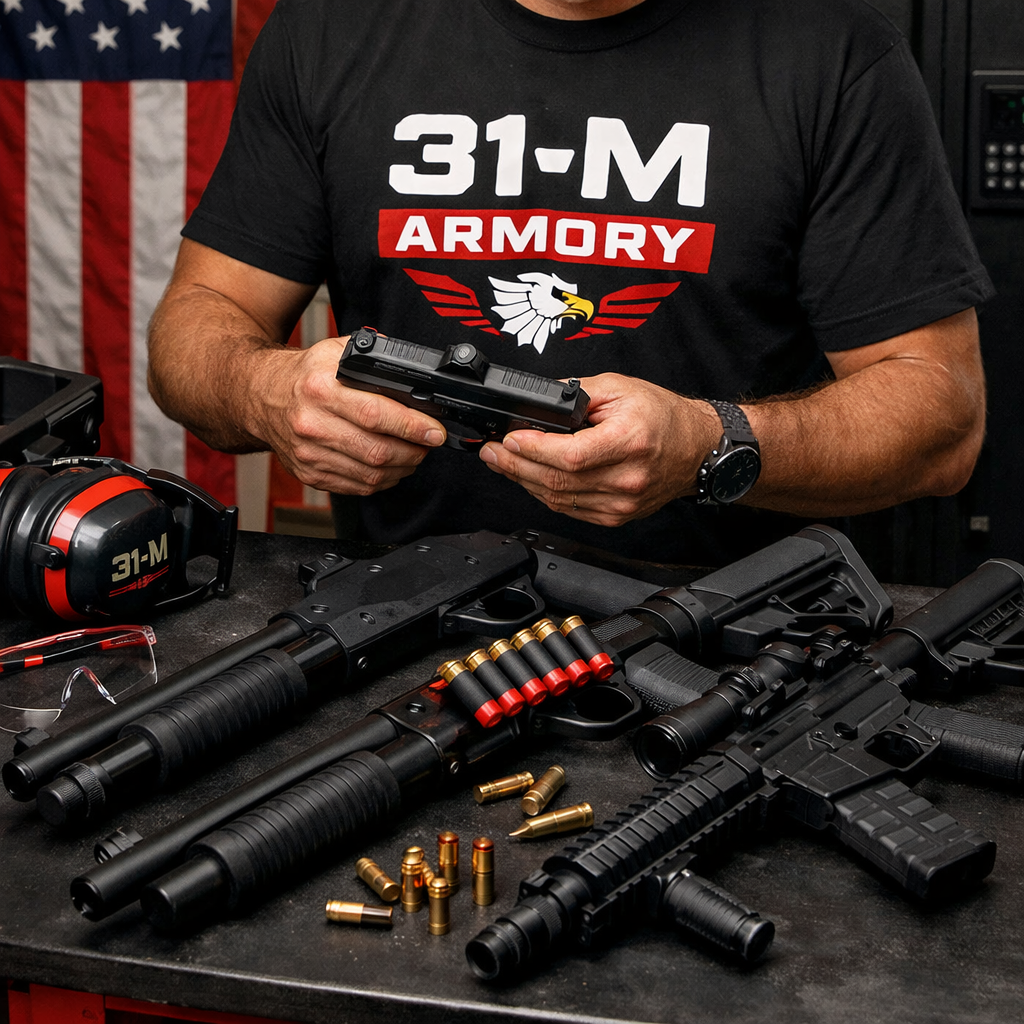
Owning a home defense gun means you must keep it safe from kids and thieves, yet ready for an emergency.
Start with the basics. Always treat the gun as if it’s loaded. Keep your finger off the trigger until you’re ready to shoot.
When you’re not training, store the gun unloaded. Use a lock box or a safe. If you have small children, a biometric safe can give you quick access while keeping them out.
There are three main storage styles: exposed, hidden and lock boxes. Exposed means the gun is in plain view , fast but risky. Hidden means it’s concealed in a drawer or furniture. Lock boxes give you a middle ground , you can lock them with a keypad or fingerprint.
Our research shows that most guns are stored unloaded in a safe, but staged guns are kept ready for quick draw.
“The best time to start building a safe storage plan is now, before you need it.”
Pick a spot that is close to where you sleep or spend evenings. Many people keep a handgun on a nightstand in a lock box.
Also, practice the steps to open your lock box under stress. If you can’t get the gun out fast, you lose the advantage.
Bottom line:Safe handling and smart storage protect both your family and your ability to defend.
Step 4: Practice Regularly and Maintain Your Weapon
Practice makes perfect. You need to drill both shooting skills and the steps to get the gun ready.
Live‑fire drills at the range are a must. Aim for 100 rounds a month if you can. Mix in dry‑fire drills at home to build muscle memory.
One popular drill is the “start‑stop‑re‑engage” routine. Load, fire three rounds, lower the gun, then repeat. It trains you to stay calm under pressure.
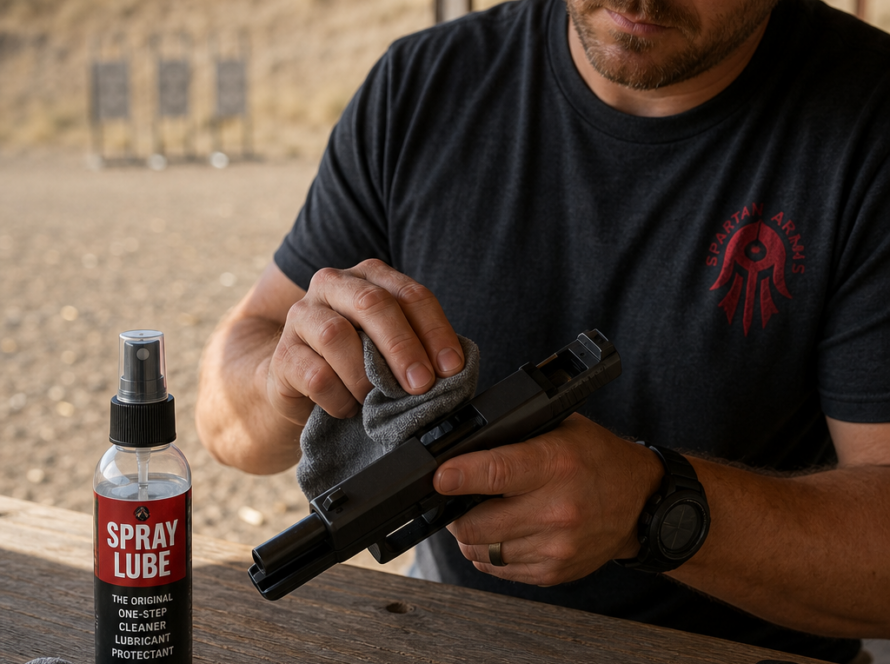
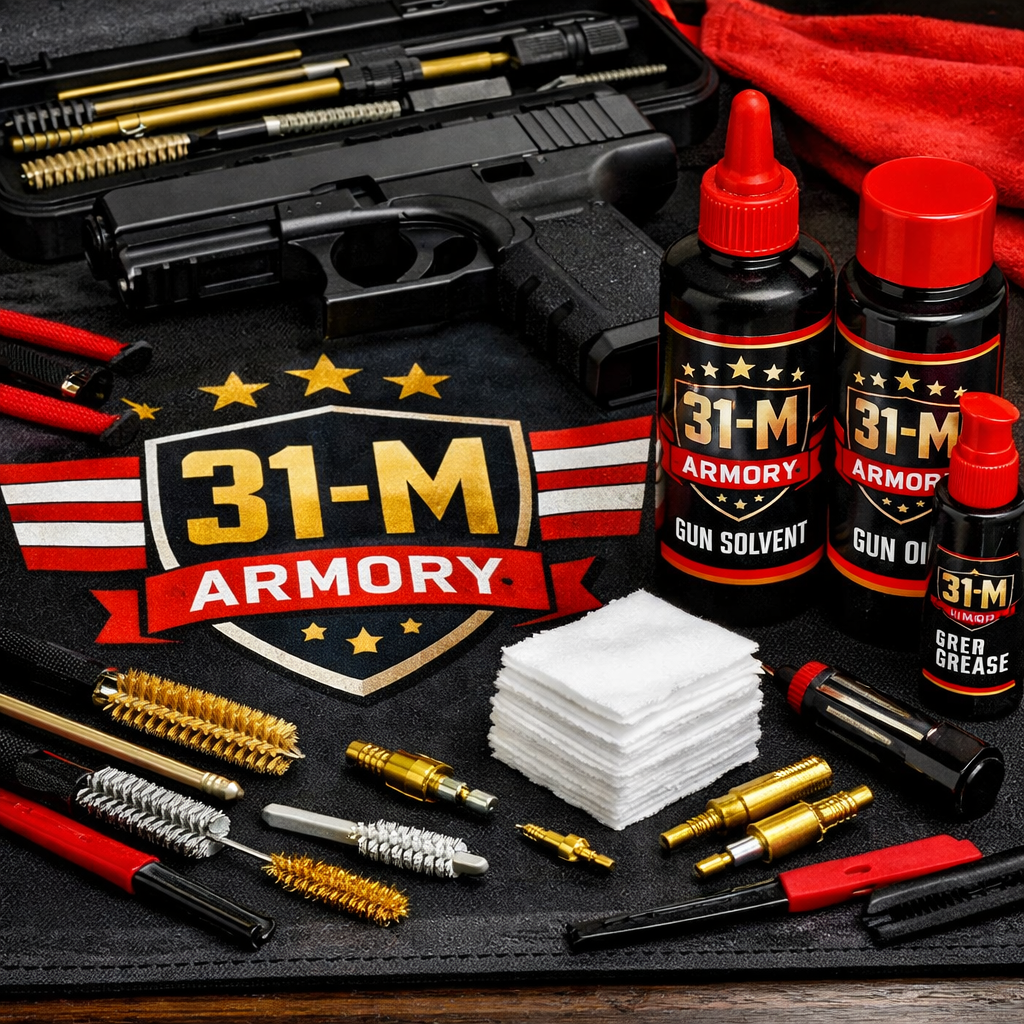
Maintenance is just as important as shooting. Clean your gun after every range trip. Use a solvent, a brush, a patch and a light coat of oil. Follow the steps in the owner’s manual.
If you live near the ocean, add a protectant coat to fight rust.
Regular maintenance keeps the gun reliable and extends its life.
Bottom line:Train often, clean after each use, and you’ll stay confident and safe.
Step 5: Understand Legal Requirements and Training
Every state has its own rules about owning and using a home defense gun. You must know them.
Start with the federal background check. If you buy online, we guide you through a FFL transfer.
Next, look at state laws on magazine capacity, safe storage and use‑of‑force. Some states require a lock on the gun if you have minors in the house.
Training isn’t optional. Take a basic handgun safety class, then add a home‑defense specific course. Many ranges offer scenario drills.
Consider CCW insurance , it can cover you if you ever have to defend your home.
When you finish training, keep a copy of your certificates in your safe. They can help if law enforcement asks for proof of competence.
Finally, write down the steps you’ll take after a defensive shooting , call 911, preserve the scene, contact an attorney.
Bottom line:Follow the law, train hard, and keep records , it’s the safest path.
Conclusion
Picking the right home defense gun is a big step, but it doesn’t have to be overwhelming. We walked you through assessing your home, choosing a gun, storing it safely, practicing and staying legal. Remember, the Veteran Owned Firearm Retailer offers the widest selection in one place, so you can compare models side by side.
Take the checklist, run a few range sessions, and lock your gun in a secure but fast‑access box. You’ll feel more confident, and your family will be safer.
Ready to start? Browse our selection, add the gun to your cart, and we’ll guide you through the FFL transfer. Stay safe, stay prepared, and protect what matters.
FAQ
What size of home defense gun is best for a small apartment?
A compact handgun like the Canik METE SFT One works well in tight spaces. It’s easy to store, light to handle and costs under $350. Pair it with a small lock box on your nightstand for quick access. Make sure you practice drawing from the box so you can act fast.
How often should I clean my home defense gun?
Clean after every range trip and give it a light wipe down every six months if you don’t shoot often. Use a solvent to clear carbon, a brush for the bore, then a light oil on moving parts. If you live near salty air, add a protectant coat to keep rust at bay.
Do I need a special permit to keep a gun at home?
Federal law requires a background check for any purchase. Some states also need a permit for home storage, especially if you have minors. Check your state’s department of public safety website for exact rules. Our team can help you handle the paperwork.
What ammo should I buy for home defense?
For a 12‑gauge shotgun, #4 buckshot offers good stopping power with less wall penetration than 00 buck. For handguns, full‑metal‑jacket 9mm rounds work well and are affordable. Buy a few boxes and practice with the same load you’ll use in an emergency.
Can I use a rifle for home defense?
An AR‑15 can be a solid choice if you have space to store it safely and you’re comfortable with the recoil. It offers high accuracy and capacity. Make sure you use low‑penetration ammo like 5.56 NATO or 300 BLK and keep the rifle in a lock box near your bedroom.
How do I involve my family in a home defense plan?
Talk openly about the plan. Give each adult an “if‑then” cue , for example, “If we hear glass break, we grab the lock box and head to the safe room.” Practice the steps twice a month. Teach kids never to touch a gun unless an adult says it’s okay.