Most new shooters think a safety class costs a lot. The truth? You can find a solid, legal course for under $100. In this guide you’ll see how to pick the right course, sign up, show up, and keep your certificate fresh. We’ll walk through each step so you feel ready before you even fire a trigger.
Step 1: Understand Legal Requirements for Firearm Ownership
Before you sign up, you need to know the laws that apply to you. Each state has its own rules about who can own a gun, where you can carry, and what training is required. Some states, like Arizona, have a law that pushes schools to teach basic safety to teens. The law says the training must come from a certified instructor and can’t use live guns. Knowing these limits helps you avoid a costly mistake later.
In Arizona, the statute defines who may teach and what the curriculum must cover. It also spells out that live firearms are prohibited in classroom drills. The rule aims to keep learning safe while still giving students a feel for how a gun works.
We believe every gun owner should start with a clear legal foundation. That means reading your state’s official firearm statutes or talking to a local law‑enforcement officer. If you’re not sure where to look, the Arizona legislature site offers a concise fact sheet that breaks down the requirements.
And if you live outside Arizona, look for similar language on your state’s department of public safety website. Most states publish a PDF that lists required training hours, who can teach, and any age limits.
Finally, remember that a background check is still required before you can buy a gun. Our Firearm Background Check guide walks through that process step by step.
Step 2: Choose the Right Firearm Safety Course
Now that you know the legal backdrop, it’s time to pick a course that fits your goals. Do you want a quick online module, a four‑hour classroom class, or a blended program that mixes e‑learning with range time? Your answer will shape the rest of the process.
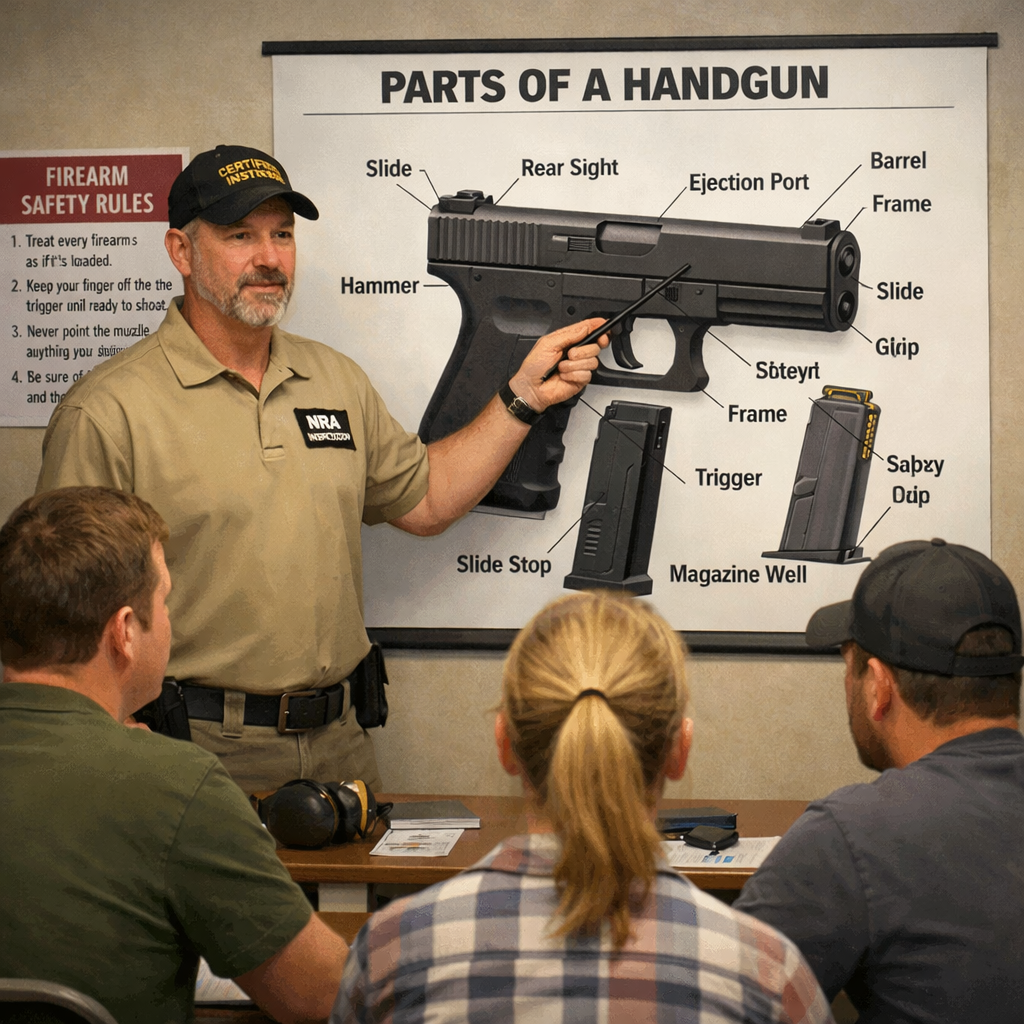
The NRA offers a catalog of courses that range from home‑safety basics to defensive pistol training. Their home safety class is a four‑hour, classroom‑only program that covers the three basic rules of gun safety, how to unload, and safe storage. Because it’s run by NRA‑certified instructors, you’ll earn a recognized certificate at the end.
If you prefer a digital format, look for courses that include video lessons, quizzes, and a final exam. The Texas online gun safety class, for example, lets you study at home and download a certificate that courts accept. Online courses often cost less and let you learn at your own pace.
We recommend checking two things before you decide:
- Is the certification recognized by the agency that asked you to take the class? (court, employer, or insurance.)
- Does the instructor have a credential from a national rifle association or a law‑enforcement agency?
And if you’re a veteran, look for any discounts. While most courses don’t list a veteran discount, many retailers, like us at 31 M Armory, honor a 6 % discount for veterans on related gear.
For a deeper dive on safe storage at home, see our Gun Safety at Home guide.
Step 3: Enroll and Prepare for Your First Class
Enrollment is usually a quick form online. You’ll need to supply basic info, a proof of residency, and sometimes a copy of your background‑check result. Some states require you to upload a photo ID before the class starts.
When you fill out the form, watch for these fields:
After you hit submit, the provider will email you a confirmation and a list of what to bring. Typical gear includes a notebook, a pen, and any personal protective equipment the instructor asks for.
We suggest reviewing the course outline before the first day. If the course uses a learning platform, create your username and password early so you can log in without a rush.
For a quick checklist of what to pack, see our Best Gun Cleaning Solvent guide. It covers the basics of safe handling gear that many courses ask you to have on hand.
Step 4: What to Expect During the Course
On the day of class, you’ll first sit in a classroom setting. The instructor will walk you through the three core safety rules: treat every gun as loaded, keep your finger off the trigger until you’re ready to shoot, and never point the gun at anything you don’t intend to hit.
After the theory part, most courses move to a hands‑on segment. Even non‑shooting courses let you practice loading and unloading with dummy rounds. This builds muscle memory without any risk.
“The best way to learn safety is to practice it under a qualified instructor’s watchful eye,” says a veteran trainer at Action Tactical.
Expect a short quiz after the classroom portion. The quiz usually covers basic terminology, safe storage methods, and legal definitions. You need at least a 70 % score to pass.
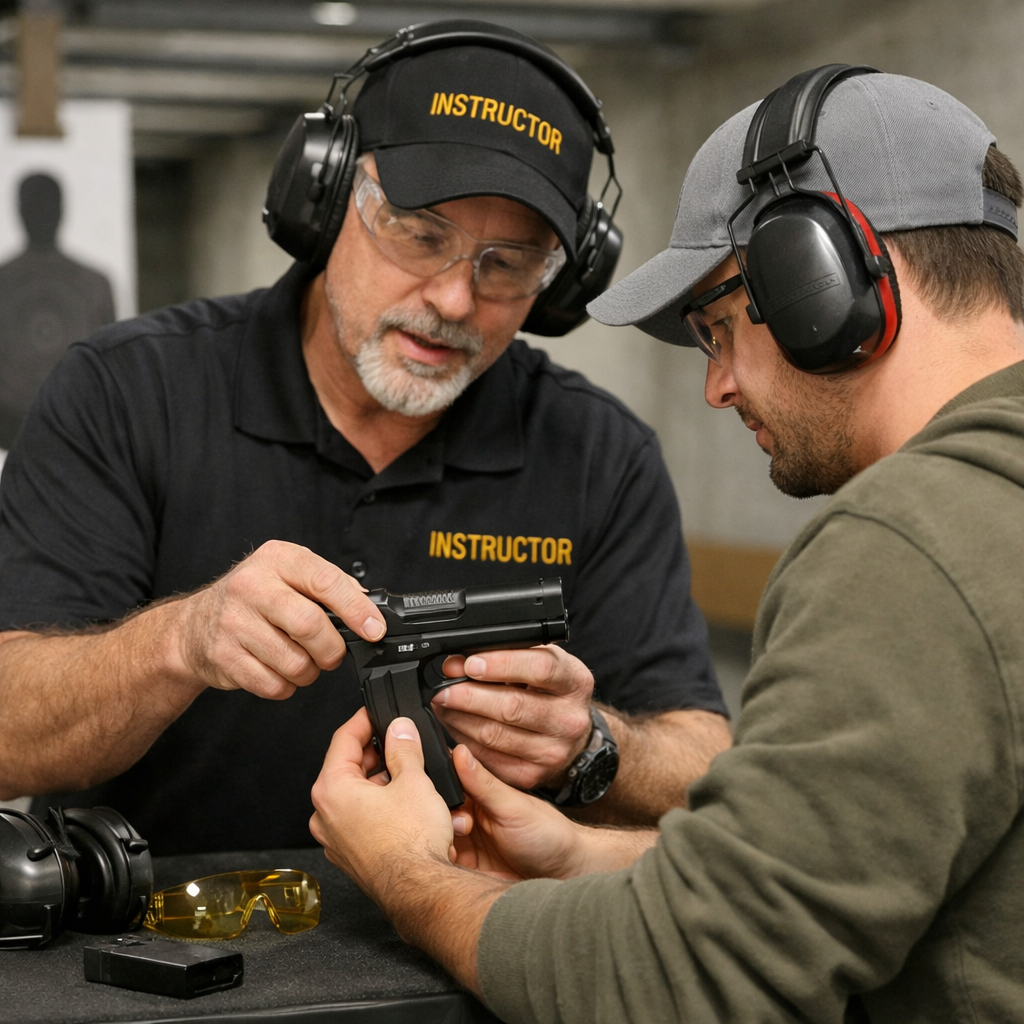
During the hands‑on drill, the instructor will show you how to check a firearm’s action, how to grip properly, and how to assume a stable stance. You’ll fire a few rounds if the class includes range time. Safety officers watch every shot and correct any bad habits on the spot.
We believe a good course feels supportive, not intimidating. Ask questions whenever you’re unsure. The best instructors welcome curiosity and will repeat a step until you feel confident.
For more on the types of revolvers that work well for home defense, check out our Best Revolver for Home Defense guide.
Step 5: Complete the Course and Maintain Your Certification
Once you pass the final exam, the instructor will hand you a certificate. Keep a digital copy in a secure cloud folder and a printed copy in a fire‑proof safe. Some courts require you to show the certificate within a set time frame, so don’t let it sit in a drawer.
Certification isn’t a one‑and‑done deal. Many states ask you to renew your safety training every few years. Even if renewal isn’t required, we suggest taking a refresher class every 12‑18 months. Skills fade, and new laws can change the way you store or carry.
Continuing education can be as simple as watching a short video on updated storage tech or attending a local range safety day. Some online platforms offer free updates for past students.
Our What Is an FFL Dealer guide explains how you can transfer your gun legally after the course, if that’s part of your plan.
Finally, remember that safety is a habit, not a checklist. Keep practicing the three core rules every time you handle a firearm. The more you use them, the more natural they become.
FAQ
Do I need a firearm safety course to own a gun?
Most states do not require a safety class for private ownership, but many courts, employers, or insurance programs do. Even if it isn’t required, a course teaches the three core safety rules and can lower insurance costs. It also helps you avoid accidental discharges that can lead to legal trouble.
Can I take an online firearm safety course and still get a legal certificate?
Yes. Several states, including Texas, accept online courses that end with a proctored exam. The certificate you receive must be from a recognized provider, such as the NRA or a state‑approved program. Keep the digital copy handy for any court or employer requests.
How long does a typical firearm safety course last?
Course length varies. Quick in‑person tests can be as short as 15 minutes, while more thorough classroom courses run four to eight hours. Blended programs split the time between online modules and a few hours of hands‑on practice.
What should I bring to my first class?
Bring a valid photo ID, any paperwork the provider asks for, a notebook, and a pen. Some classes may ask for a pair of eye and ear protection, even if you won’t fire live rounds. Check the confirmation email for a detailed checklist.
Will the certificate expire?
Expiration rules depend on your state and the agency that required the training. Some certificates are good for life; others need renewal every two to five years. Mark the expiration date on your calendar and look for local refresher courses.
Are there any discounts for veterans?
While many courses don’t list a veteran discount, you can often find a 6 % discount on related gear at veteran‑focused retailers like 31 M Armory. It’s worth asking the course provider directly if they have a military or veteran rate.
Do I need a background check before taking the course?
A background check is required before you can purchase a firearm, not before the safety class itself. However, if the class is court‑ordered, you may need to show proof of a completed background check as part of the enrollment paperwork.
Can I retake the exam if I fail?
Yes. Most providers allow a retake for a small fee, often around $25. Review the material, practice the hands‑on drills again, and schedule the second attempt as soon as possible.
We hope this step‑by‑step guide helps you pick the right firearm safety course and finish it with confidence. Remember, safety is a daily practice, not a one‑time class. If you want to keep learning, for more tips on keeping your firearms secure at home.