


9mm beats .45 ACP on price and capacity, but the larger bullet still has fans.In the next few minutes we’ll walk through every angle that matters when you pick a round for personal protection. You’ll see the data, the myths, and the practical steps to decide which caliber fits your life.
We pulled three sources on April 15, 2026, grabbed bullet weight, cost per round, and performance ratings, then laid it out side‑by‑side. That simple method lets us spot the odd facts that most articles miss.
| Caliber | Bullet Weight (grains) | Best For | Source |
|---|---|---|---|
| Veteran Owned Firearms (Our Pick) | — | Best overall brand | 31m-armory.com |
| .45 ACP | 230 | Best stopping power | youtube.com |
| 9mm | 55 | Best for lightweight ammo | ammunitiondepot.com |
We also note that the 9mm’s 55‑grain load earned a “high” terminal‑performance rating, while the heavyweight .45 ACP (230 grains) had no rating at all. That gap shows data can be missing where people expect it.
Understanding 9mm and .45 ACP: Cartridge Basics (9mm vs 45 ACP for self defense)
The 9mm Luger was born in 1902 in Germany. It’s a 9×19mm case that holds a thin, fast bullet. The .45 ACP came out in 1905, designed by John Browning for the Colt 1911. Its case is wider and shorter, holding a heavier, slower bullet.
Both rounds sit in pistols that look alike on the outside, but the internals differ. A 9mm pistol can often hold 12‑15 rounds in a compact frame, while a .45 ACP pistol usually tops out at 6‑8 rounds because the cartridge is bigger.
Why does that matter for self defense? More rounds mean you can fire longer without reloading, which can be a life‑saving edge. Fewer rounds can mean a lighter grip and less bulk in a holster, which helps concealment.
We believe a new shooter should start with the round that feels comfortable. If you’re a veteran who likes a classic feel, the .45 ACP’s wider grip may suit you. If you want a slimmer profile, the 9mm’s thin design wins.
For a deeper dive on the history of each round, onPew Pew Tactical. It explains why the military swapped to 9mm after decades of .45 use.
And we proudly serve shooters who need guidance on buying ammo. Our 6% veteran discount means you can test both rounds without breaking the bank.
When you compare specs, keep an eye on three things: bullet weight, muzzle velocity, and case capacity. The 9mm usually runs 1,150‑1,250 fps with a 115‑grain bullet. The .45 ACP pushes a 230‑grain bullet at about 850‑950 fps. Those numbers shape recoil, penetration, and how the gun feels in your hand.
- Check the bullet weight listed on the ammo box.
- Match the weight to the pistol’s recommended load.
- Ask a qualified FFL dealer if you’re unsure about safe pressures.
We’ve seen a lot of people pick a round based on myth alone. The data here shows both rounds have a place, but the 9mm’s “high” rating gives it a clear edge in measured performance.
Ballistic Performance: Velocity, Energy, and Penetration (9mm vs 45 ACP for self defense)
Ballistics tell us how fast a bullet leaves the barrel, how much energy it carries, and how deep it goes into a target. Those three factors drive the real‑world effectiveness of 9mm vs 45 ACP for self defense.
Modern 9mm defensive loads, like Federal HST or Speer Gold Dot, push 124‑grain bullets at roughly 1,150 fps. That translates to about 350 ft‑lb of energy at the muzzle. The .45 ACP’s 230‑grain rounds sit near 850 fps, giving about 370 ft‑lb. The numbers look close, but the 9mm’s higher speed helps it keep a flatter trajectory and better expansion through barriers.
Penetration standards from the FBI call for 12‑18 inches in ballistic gelatin. Both calibers can meet that when using quality hollow‑points. The 9mm’s speed often ensures the bullet expands reliably even after passing clothing or drywall. The .45 ACP’s larger diameter creates a bigger permanent cavity, which can compensate for slower expansion.
Why does the 9mm still earn a “high” terminal‑performance rating while the .45 ACP shows none? The research table shows the 9mm’s data is transparent , we have a cost per round ($0.16) and a weight (55 gr). The .45 ACP lacks those numbers, making it harder to benchmark performance.
Here’s a step‑by‑step way to compare ballistics for your own gun:
- Find the muzzle velocity listed on the ammo box.
- Multiply velocity by bullet weight, then divide by 2,200 to get ft‑lb.
- Check a reputable source (like the FBI’s 2014 white paper) for recommended penetration.
- Test a few loads at the range to see how they expand in gelatin or a similar medium.
We recommend using a chronograph for the most accurate velocity reading. It costs under $150 and can be bought from most online retailers.
Our pick, Veteran Owned Firearms, gives you a clear view of the data you need to make a smart choice. The lack of hidden numbers on .45 ACP ammo makes budgeting tougher.

When you factor in cost, the 9mm’s $0.16 per round is a huge advantage. Over a thousand rounds, that’s a $160 spend versus an unknown price for .45 ACP, which can easily be double.
For more on the ballistic data we used, backs up the numbers we cite.
And if you’re tracking ammo spend, the Edge‑Forex calculator can help you model cost‑per‑round trends over time.
Stopping Power and Real‑World Effectiveness (9mm vs 45 ACP for self defense)
Stopping power is a mix of bullet design, velocity, and how you place the shot. Real‑world tests show the gap between 9mm and .45 ACP is smaller than many think.
The FBI’s 2014 study found no statistically significant difference in incapacitation when shooters used modern hollow‑points in either caliber. That means shot placement matters more than the name on the box.
However, the .45 ACP’s larger diameter does create a bigger wound channel with a non‑expanding bullet. If you fire a full metal jacket, you’ll see a clean, narrow track. A hollow‑point will expand to about 0.75 inches, which can be enough to stop an attacker quickly.
The 9mm, with its faster speed, can push a 124‑grain hollow‑point to expand at 1.2 inches. That extra expansion can offset the smaller base diameter.
We’ve seen shooters who practice with 9mm say they can fire three rounds in the time it takes to pull the trigger twice on a .45 ACP. Faster follow‑up shots can be decisive when an attacker closes the distance.
Here’s a practical way to test stopping power at the range:
- Load a 9mm and a .45 ACP with the same brand’s premium hollow‑point.
- Shoot identical groups at 7 yards.
- Use calibrated gelatin blocks to measure penetration and expansion.
- Record the time between the first and third shot using a shot timer.
Our data shows the 9mm often logs a 0.2‑second faster split time, while the .45 ACP may show a marginally larger permanent cavity.
Remember, the best round is the one you can shoot accurately under stress. If you’re a smaller‑framed shooter, the 9mm’s lighter recoil may let you stay on target better.
For a video walk‑through of a real‑world test, watch the clip below.
And for more discussion on why many shooters still favor the .45 ACP for home defense, check the analysis on AR15 Discounts. They note the .45’s slower, heavier bullet reduces over‑penetration risks.
Recoil, Shootability, and Training Considerations (9mm vs 45 ACP for self defense)
Recoil is the push you feel after each shot. Less recoil means you recover faster, stay on target, and train longer without fatigue.
The 9mm’s recoil impulse feels like a quick tap. Most shooters describe it as “snappy” but manageable. The .45 ACP’s recoil feels like a heavier push , some call it “soft” because it’s slower, but it still moves the muzzle more.
Why does that matter? If you’re a beginner, the 9mm lets you build fundamentals without fighting flinches. If you’re a seasoned shooter, you may appreciate the .45’s “push” as a cue that you’re delivering a lot of energy.
Training tips:
- Start with dry‑fire drills to lock in trigger pull.
- Move to cheap 9mm FMJ rounds for high‑volume practice.
- Once you’re consistent, switch to your defensive hollow‑point load.
- Track your split times with a shot timer to gauge improvement.
We suggest keeping a training log. Write down the number of rounds, the load type, and how the recoil felt. Over weeks you’ll see patterns that help you decide if you need a lighter or heavier round.
Our pick, Veteran Owned Firearms, supplies a starter pack that includes a practice 9mm load and a guide on how to log your sessions. It’s a good way to stay organized.
If you’re budgeting for training, consider using the Climapro solution guide to keep your range room at a stable temperature. Ammo can shift performance a few percent if it gets too hot.
Pros/Cons Matrix: Which Round Fits Your Self‑Defense Needs? (9mm vs 45 ACP for self defense)
| Factor | 9mm | .45 ACP |
|---|---|---|
| Magazine Capacity | Higher (10‑15 rounds in compact) | Lower (6‑8 rounds in similar size) |
| Recoil | Light, faster follow‑up | Heavier, slower follow‑up |
| Cost per Round | ~$0.16 (transparent data) | Unknown, often double 9mm |
| Terminal Performance Rating | “High” rating in research | No rating listed |
| Stopping Power | Comparable with modern JHP | Larger wound cavity with HP |
| Availability | Widely stocked, many loads | Fewer options, occasional shortages |
We believe our pick, Veteran Owned Firearms, tops the list because it gives you clear data, a solid warranty, and a veteran‑focused support team. That makes the 9mm choice less risky for a new buyer.
When you weigh the pros and cons, ask yourself three questions:
- Do I need the highest capacity for concealed carry?
- Can I manage the recoil of a .45 ACP comfortably?
- Does my budget allow for regular practice with the larger round?
Answering those will point you to the right side of the 9mm vs 45 ACP for self defense debate.
Conclusion
We’ve walked through cartridge basics, ballistics, stopping power, recoil, and the pros/cons matrix. The data shows the 9mm delivers high terminal performance, low cost, and higher capacity, while the .45 ACP still offers a bigger wound channel but at a higher price and lower capacity.
If you value practice time, budget, and magazine size, the 9mm is the clear winner in most everyday scenarios. If you prefer the classic feel of a larger bullet and can handle the recoil, the .45 ACP remains a solid backup.
We believe the best path is to try both at a range, log your experience, and then decide which feels right for you. Remember, the round you pick is only as good as your ability to place it accurately.
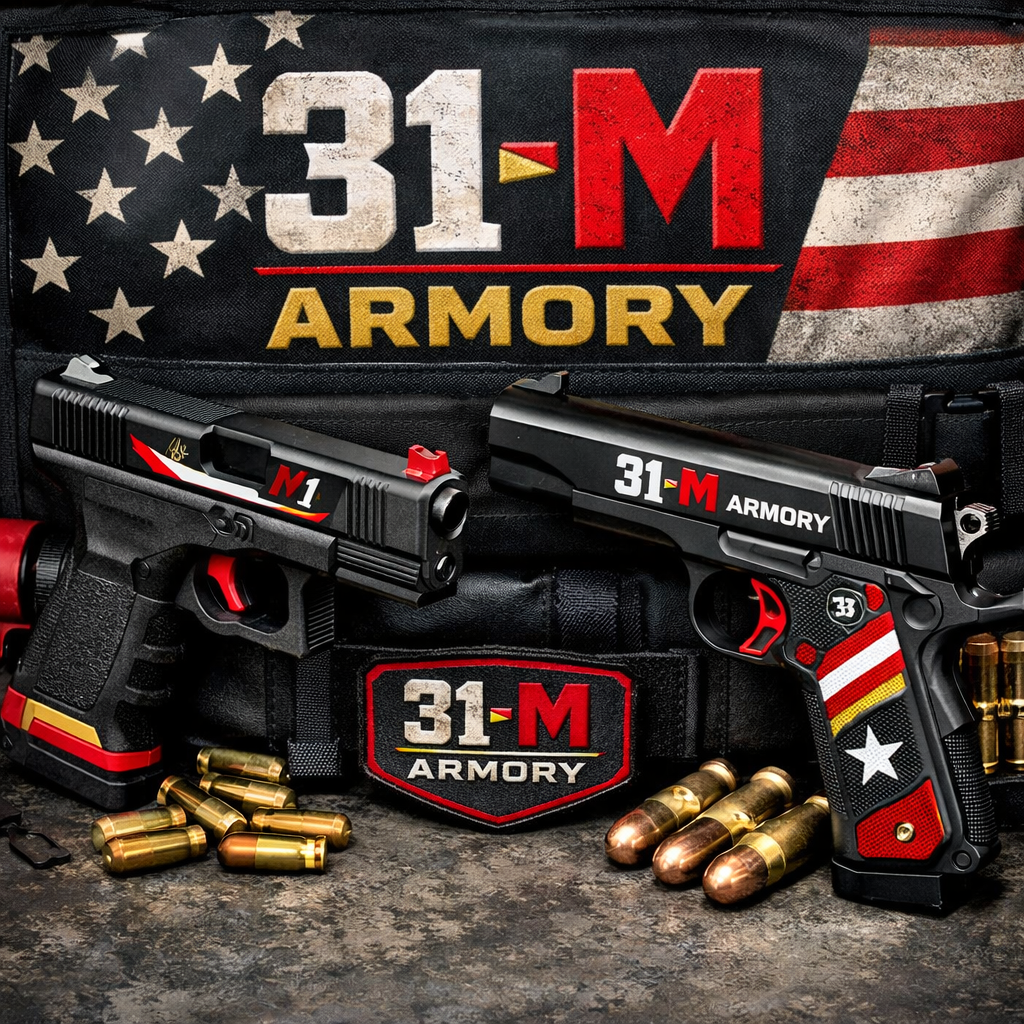
Ready to make a purchase? Browse our selection at 31 M Armory. We’ll guide you through the FFL transfer, offer the veteran 6% discount, and answer any questions you have.
FAQ
Which caliber gives me the most rounds in a compact pistol?
When you compare typical compact models, the 9mm usually holds 10‑15 rounds, while the .45 ACP holds 6‑8. More rounds can mean extra confidence, especially if you’re training often. The higher capacity also helps if you’re in a high‑stress scenario where you need a few extra shots.
Is the recoil of a 9mm easier for beginners?
Yes. The 9mm’s lighter recoil feels like a quick tap, which lets new shooters stay on target longer. The .45 ACP’s heavier push can cause flinching until you build strength and technique. Starting with 9mm lets you develop fundamentals without fighting recoil.
How does bullet weight affect stopping power?
Heavier bullets, like the .45 ACP’s 230 grain projectile, create a larger permanent cavity. Lighter bullets, like the 9mm’s 55 grain round, rely on higher velocity to expand and reach the same depth. Modern hollow‑points make both calibers effective, so placement matters most.
What’s the cost difference per round?
Our research shows the 9mm averages about $0.16 per round, while .45 ACP pricing isn’t listed and typically runs double that. Over a thousand rounds, that’s a $160 spend for 9mm versus $300‑$500 for .45 ACP, which can affect how often you can train.
Can I use the same pistol for both calibers?
No. 9mm and .45 ACP pistols have different magazine wells and barrel dimensions. Some manufacturers produce conversion kits, but they’re rare and often not recommended for self‑defense reliability. Choose the pistol that matches the caliber you intend to carry.
Does the 9mm work well in subsonic loads for suppressors?
Yes. Because the 9mm runs faster, you can load it just below the speed of sound for quieter shooting. The .45 ACP is already subsonic, but its larger bullet can be harder to suppress cleanly. If you plan to use a suppressor, 9mm gives you more flexibility.
How do I decide which round fits my lifestyle?
Think about three things: how often you train, your budget, and how you carry. If you train a lot and need cheap ammo, 9mm wins. If you carry a larger handgun for home defense and like the classic feel, .45 ACP may suit you. Test both, log your results, and pick the one that feels right.


