You want a gun you can carry every day. But you also want one that will work if you ever need it. That’s the trade-off with .380 ACP for self defense. Some people call it a “mousegun.” Others say it’s better than nothing. The truth? It’s a real choice for millions of Americans who carry concealed every day. We’re going to look at the facts. What’s good about .380 ACP? What’s not so good? And how does it stack up against bigger calibers? By the end, you’ll know if the .380 ACP is the right round for your self-defense needs.
We are 31 M Armory. We’re a veteran-owned company that believes in the Second Amendment. We serve law-abiding firearm enthusiasts, first-time buyers, and experienced shooters. Our slogan is “veterans always have our six, now get your 6%” , we give a 6% discount to all veterans. We’re here to help you make informed choices. Let’s dig into the .380 ACP for self defense.
What Is .380 ACP?
The .380 ACP (Automatic Colt Pistol) was designed by John Moses Browning way back in 1908. He took his .38 Auto cartridge, shortened it a bit, and made it rimless so it would feed smoothly in small pistols. The result? A 9mm bullet that’s 17mm long , that’s why it’s also called 9x17mm or 9mm Kurz (German for “short”). The cartridge was an instant hit. Colt put it in their Model 1908 pocket pistol. Europe adopted it for police and military use. Over a hundred years later, it’s still going strong.
Today, .380 ACP is one of the most popular calibers for concealed carry. Why? Because it fits in tiny guns. We’re talking about pistols like the Ruger LCP, Smith & Wesson Bodyguard 380, Glock 42, and SIG Sauer P238. These guns are light, thin, and easy to hide in a pocket or waistband. They don’t weigh you down like a full-size 9mm would. And because the cartridge is smaller, the guns can be smaller. That matters when you’re carrying all day, every day.
Ammunition for .380 ACP usually uses bullets between 85 and 100 grains. Typical muzzle velocity is around 1,000 feet per second from a 3.75-inch barrel. But most pocket pistols have shorter barrels , like 2.75 inches , so velocity drops a bit. That’s important for ballistics. Still, modern defensive loads have gotten much better. Hollow points like Hornady Critical Defense, Speer Gold Dot, and Federal HST are designed to expand reliably at .380 ACP speeds. The American Rifleman article on .380 ACP history notes that while power-factor purists may criticize the round, it remains one of the top choices for compact self-defense pistols.
Bottom line: .380 ACP is a short, rimless 9mm cartridge that powers the most compact pistols on the market, making it a go-to choice for deep concealment.
The Pros and Cons of .380 ACP for Self-Defense
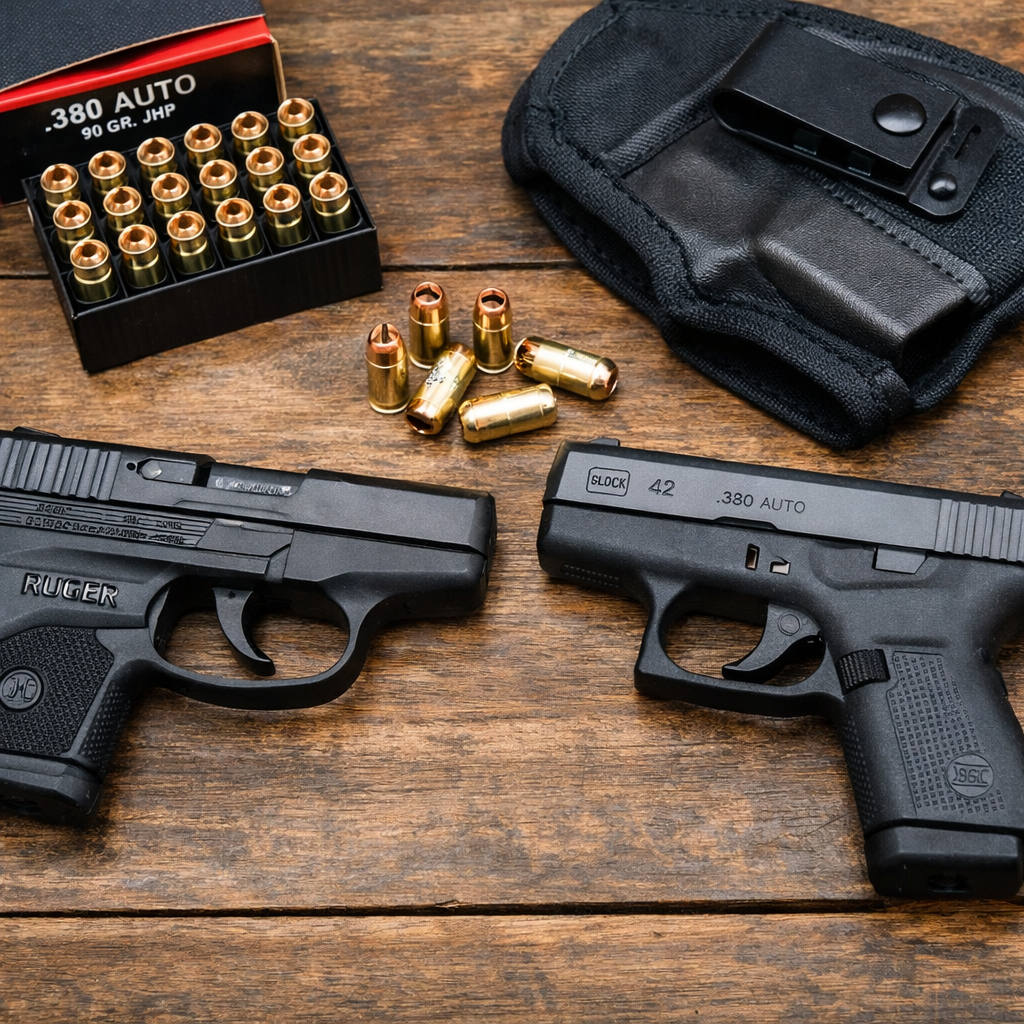
Let’s be honest: no cartridge is perfect. The .380 ACP has real strengths and real weaknesses. Here’s what you need to know before betting your life on it.
The Pros
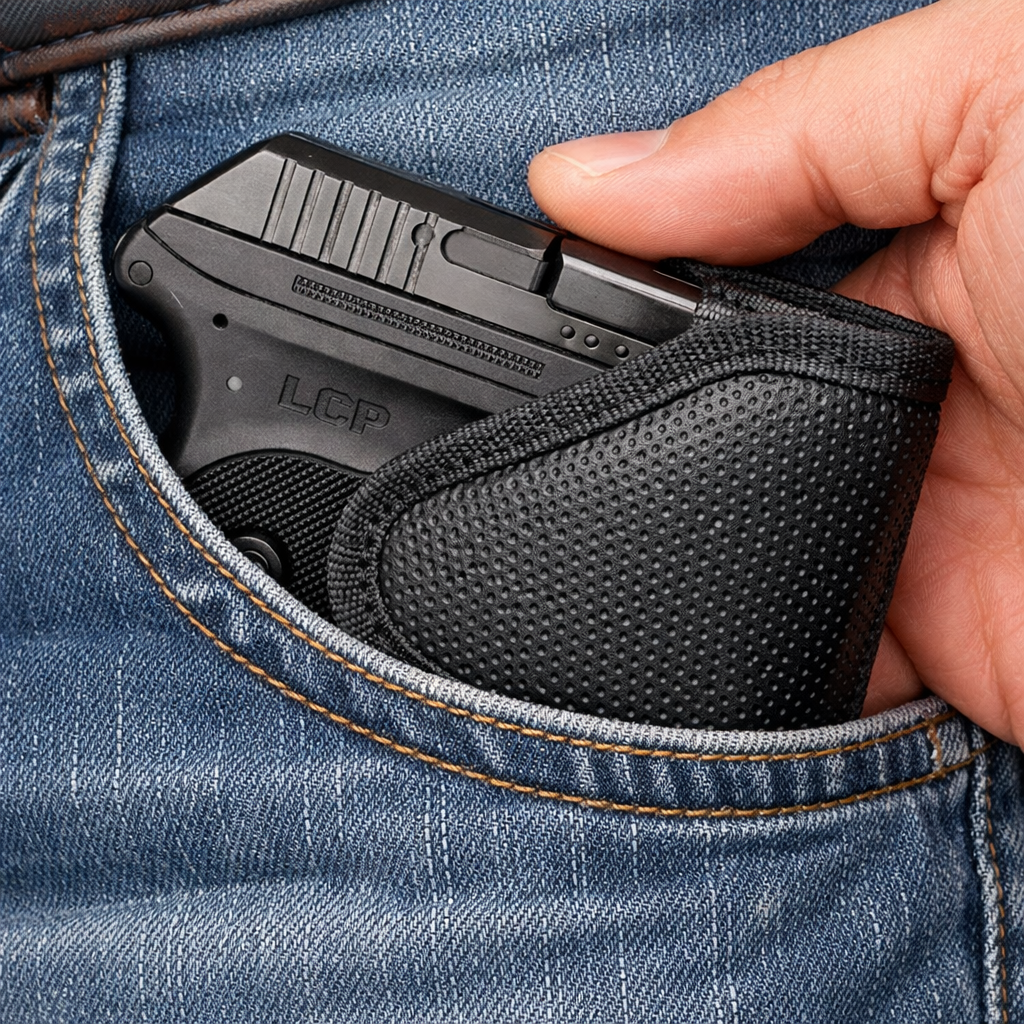
1. Tiny guns, easy carry. This is the #1 reason people choose .380 ACP. A .380 pocket pistol can be as small as 5 inches long and weigh under 10 ounces unloaded. You can drop it in a front pocket and forget it’s there. No special holster needed for some models. That means you’ll actually carry it every day, instead of leaving a bigger gun at home.
2. Less recoil than 9mm. A .380 ACP gun weighs less than a 9mm but the cartridge also produces less energy. So recoil is noticeably lighter. That’s huge for people with weak hands, arthritis, or those who are new to shooting. You can shoot faster and more accurately because the gun doesn’t jump as much. Greg Ellifritz’s data on real-world shooting performance shows that .380 ACP is not nearly as weak as many believe , it stops threats almost as well as larger calibers in many cases.
3. Easier slide manipulation. Many .380 pistols have lighter recoil springs than their 9mm counterparts. That makes racking the slide much easier. For example, the Smith & Wesson M&P 380 Shield EZ was specifically designed to be easy to rack. This can be a game-changer for shooters who struggle with slide operation.
4. Adequate stopping power. With modern hollow-point ammunition, .380 ACP can penetrate 12-15 inches in ballistic gel and expand to .40 caliber or more. That’s enough to reach vital organs. The difference between .380 and 9mm in real-world one-shot stop percentages is only a few percent (like 5-7%). That’s a small gap.
The Cons
1. Less energy and penetration. .380 ACP produces about half the muzzle energy of a typical 9mm. Some defensive loads may not expand if the bullet velocity is too low, especially from short barrels. You have to choose your ammunition carefully. Cheap ball ammo (full metal jacket) can over-penetrate and under-perform.
2. Small gun disadvantages. The same small size that makes it easy to carry also makes it harder to shoot. Small grips mean you can’t get a full handhold. Short sight radius makes aiming less precise. You need practice to shoot well.
3. Lower capacity. Many .380 pocket pistols hold only 6-7 rounds. Some like the Ruger LCP Max hold 10-12 rounds, but those are exceptions. Compared to a double-stack 9mm that holds 15+, .380 often gives you fewer chances to stop a threat.
4. Malfunctions possible. Pocket pistols can be finicky. They’re more susceptible to limp-wristing (not holding the gun firm enough) because they have less mass to absorb recoil. And some .380s have a reputation for being picky about ammunition.
Bottom line: .380 ACP offers exceptional concealability and low recoil at the cost of reduced power and capacity , but with modern ammo, it’s a capable self-defense round.
How Does .380 ACP Compare to Other Common Self-Defense Calibers?
You’ve probably heard the debate: “Is .380 ACP enough?” Let’s compare it to the most popular alternatives: 9mm, .38 Special, and .45 ACP. We’ll look at power, controllability, and practicality.
| Caliber | Bullet Weight (gr) | Muzzle Energy (ft-lbs) | Capacity (typical) | Recoil (relative) |
|---|---|---|---|---|
| .380 ACP | 85-102 | ~200-250 | 6-12 | Low |
| 9mm | 115-147 | ~350-400 | 15-18 | Moderate |
| .38 Special +P | 125-158 | ~300-350 | 5-6 (revolver) | Moderate |
| .45 ACP | 185-230 | ~400-500 | 7-13 | High |
As you can see, .380 ACP is on the lower end of the power spectrum. But numbers don’t tell the whole story. What matters is how the cartridge performs in small guns. A micro 9mm (like the SIG P365 or Springfield Hellcat) can be snappy to shoot. The .380 version of those same guns (like the Hellcat .380) is much softer. That means faster follow-up shots and more hits on target.
In a Shooting Illustrated test, a Glock G42 (.380 ACP) and a Taurus 856 (.38 Special) were run through three defensive drills. The G42 was easier to shoot faster and more accurately. The .38 Special revolver required more effort due to its heavy double-action trigger. The takeaway? The shooter’s skill and the gun’s handling matter as much as caliber choice.
Let’s break it down further:
.380 ACP vs 9mm
9mm is the gold standard for self defense. It offers better penetration, expansion, and energy. But many micro 9mm pistols are difficult to control for some shooters. If you can handle the recoil and shoot accurately with a small 9mm, that’s likely a better choice. If you flinch or miss shots, though, .380 ACP might actually be more effective because you’ll hit your target.
.380 ACP vs .38 Special
.38 Special from a snub-nose revolver produces similar energy to .380 ACP. But .38 Special revolvers are thicker and heavier, making them harder to conceal. The .380 auto gives you a flatter, lighter package with faster reloads. However, .38 Special can use heavier bullets that may penetrate barriers better. It’s a toss-up, but for concealed carry, .380 often wins on convenience.
.380 ACP vs .45 ACP
.45 ACP has more stopping power, but in a small gun it’s brutal to shoot. Pocket .45s exist (like the Glock 36) but they are larger and snappier. For deep concealment, .380 ACP is far more practical. If you can carry a larger gun, .45 ACP is a powerhouse. But for everyday pocket carry, .380 is king.
Bottom line: .380 ACP trades raw power for ease of carry and faster follow-up shots; for many people, it’s a smart compromise that increases the likelihood of actually having the gun when needed.
Ballistics and Terminal Performance: What to Expect from .380 ACP
Ballistics is the science of how a bullet flies and what it does when it hits something. For self defense, we care about two things: penetration and expansion. The FBI standard is 12-18 inches of penetration in ballistic gel with reliable expansion. Can .380 ACP meet that? Yes , with the right ammunition.
In a recent test by The Armory Life, six different .380 ACP self-defense rounds were evaluated. Traditional hollow points like Hornady Critical Defense, Speer Gold Dot, and Remington Golden Saber penetrated 12-15 inches and expanded to .40-.45 caliber. That’s solid performance. Non-traditional loads like Liberty Civil Defense (50-grain all-copper) fragmented and created multiple wound channels but still penetrated 13 inches.
Another excellent option is the Underwood Xtreme Defender, a fluted solid copper bullet that does not expand but produces a large permanent cavity. In gel tests, it penetrated over 16 inches and showed impressive wound channels. These rounds are designed to perform at .380 ACP velocities.
But here’s the catch: barrel length matters. Most .380 pocket pistols have 2.75-3.25 inch barrels. That can drop velocity by 50-100 fps compared to a 4-inch barrel. Slower bullets may not expand. So you must test your specific ammo in your specific gun. Shoot a box into water jugs or gel to verify expansion.
One more thing: recoil energy. .380 ACP from a lightweight pocket pistol still kicks. But it’s manageable for most shooters. You can practice 100 rounds in a session without flinching badly. That’s important because practice builds skill.
Bottom line: .380 ACP terminal performance is adequate for self defense when using quality hollow-point ammunition, though barrel length affects velocity and expansion.
Choosing a .380 ACP Pistol and Ammunition for Concealed Carry
So you’re sold on .380 ACP. Now what? You need the right gun and the right ammo. Let’s walk through the top picks and tips.
Top .380 ACP Pistols
Ruger LCP and LCP Max. The LCP is the classic pocket pistol , thin, light, affordable. The LCP Max holds 10+1 rounds (with extended mag) and has better sights. It’s a top seller for good reason. Check out the Ruger LCP Max 12-round magazine for extra capacity.
Smith & Wesson M&P 380 Shield EZ. This pistol was designed for ease of use. It has an easy-to-rack slide, a grip safety, and low recoil. It’s a bit larger than the LCP but still concealable. A great choice for new shooters or anyone with hand strength issues.
Glock 42. Glock’s entry into the .380 market is reliable and accurate. It’s slightly bigger than the LCP but offers Glock’s legendary dependability. The trigger is consistent, and aftermarket support is huge.
SIG Sauer P238. A 1911-style single-action .380 with an external safety. It’s heavier than polymer guns but shoots very soft. The all-metal construction absorbs recoil well. Many people love the trigger.
Beretta 80X Cheetah. A modern take on the classic Beretta 84. It’s larger but holds 13 rounds in a double-stack magazine. It’s accurate and comfortable to shoot. You can see the Beretta 80X Cheetah Blue .380 in our store.
Kahr Arms models. Kahr offers several .380 pistols like the CW380 and P380. They are thin, have a smooth trigger, and are made in the USA. Browse our Kahr Arms selection for options.
Don’t forget to check out our full handguns category for more .380 choices and other calibers.
Best .380 ACP Ammunition for Self Defense
Based on tests and real-world performance, here are the rounds we trust:
- Hornady Critical Defense 90-grain FTX , Reliable expansion, good penetration, low flash.
- Speer Gold Dot 90-grain JHP , Bonded bullet stays together, excellent performance in gel.
- Federal HST 99-grain Micro , Designed for short barrels, consistent expansion.
- Underwood Xtreme Defender 65-grain +P , All-copper fluted, deep penetration, no expansion needed.
- Liberty Civil Defense 50-grain , Ultra-light, high velocity, fragments to create multiple wound tracks.
Bottom line: The best .380 ACP pistol is one you’ll carry every day; pair it with a proven defensive load and practice regularly.
Frequently Asked Questions About .380 ACP for Self-Defense
Is .380 ACP powerful enough for self defense?
Yes, with modern ammunition. .380 ACP can penetrate 12-15 inches and expand reliably. While it’s less powerful than 9mm, the difference in real-world stopping ability is small. Many people have successfully defended their lives with .380 ACP. Choose quality hollow points and practice regularly.
What are the best .380 ACP pistols for concealed carry?
Top choices include the Ruger LCP Max (high capacity), Smith & Wesson M&P 380 Shield EZ (ease of use), Glock 42 (reliability), SIG P238 (accuracy), and Beretta 80X Cheetah (capacity/comfort). The best one is the one you’ll actually carry every day. Consider size, weight, and trigger feel.
Can .380 ACP stop an attacker quickly?
It can. The key is shot placement and using expanding ammunition. .380 ACP bullets that hit the central nervous system or major organs will stop a threat. With a good load, two or three rounds to the chest are usually effective. Be aware that .380 may not penetrate heavy clothing or barriers as well as 9mm.
Is 9mm better than .380 ACP for self defense?
Generally, yes, 9mm offers more power, penetration, and capacity. However, .380 ACP shoots softer and fits in smaller guns. If you can handle a micro 9mm like the SIG P365 or Hellcat and shoot it accurately, 9mm is better. If you need a smaller, lighter gun with less recoil, .380 ACP is a solid choice.
Does .380 ACP have enough stopping power compared to .38 Special?
They are close. .38 Special from a snub-nose revolver produces similar energy to .380 ACP. The .380 auto gives you faster reloads and flatter concealment. .38 Special can use heavier bullets that may penetrate barriers better. For most self-defense scenarios, both are adequate with proper ammunition.
How many rounds of .380 ACP should I carry?
Most defensive shootings involve 3-5 rounds. A 6+1 capacity is a reasonable minimum. If you can find a .380 with 10+ rounds (like the LCP Max or Beretta 80X), that’s even better. Carry at least one spare magazine if possible. Reliability and shot placement matter more than round count.
Conclusion
.380 ACP is not the most powerful self-defense caliber out there. But it has a lot going for it. It fits in tiny guns that you can actually carry every day. It has low recoil that lets you shoot fast and accurately. And with modern ammunition, it can stop a threat just fine.
The real question isn’t “Is .380 ACP enough?” It’s “Will you carry it?” A .380 in your pocket is better than a 9mm left at home. If you’re a new shooter, someone with hand strength issues, or just want the deepest concealment possible, .380 ACP is a smart choice. If you can handle a micro 9mm and shoot it well, that might be a better option. But never underestimate the power of a reliable .380 loaded with quality defensive rounds.
At 31 M Armory, we proudly serve veterans and all law-abiding gun owners. We offer a 6% discount to veterans because they’ve earned it. We carry a wide selection of .380 pistols, magazines, holsters, and ammunition. Browse our handguns collection to find your next carry piece. We’re happy to guide you through every step. Remember, the best defense is the one you have with you.