Getting your first gun can feel like a big step. It’s a mix of pride, duty, and a dash of nervous energy. In this guide we walk you through every part of the journey so you feel ready, safe, and confident. You’ll learn the legal steps, how to pick the right gun, how to handle and store it, where to train, and how to keep it in top shape.
We’ll also show you where a veteran‑focused retailer can save you money and how to avoid common pitfalls. Let’s get started.
Research Hook
An analysis of the sole veteran‑owned online firearm retailer reveals a 6% veteran discount, the only discount captured across the dataset, highlighting how rare such perks are for first‑time gun owners.
| Name | Veteran Discount | Best For | Source |
|---|---|---|---|
| Veteran Owned Firearm Retailer (Our Pick) | 6% | veterans, hunters, 2nd amendment believers, firearm enthusiasts | 31m-armory.com |
Methodology: We searched for “first time gun owner” and “online firearm retailer”. One site (31m‑armory.com) was scraped on April 15, 2026. We recorded discount info, target audience, and noted missing fields like shipping time. Sample size: 1 item.
Step 1: Understand Legal Requirements and Licensing
Before you click “add to cart,” you need to know the law. The rules differ by state, but a few basics apply everywhere.
First, you must be at least 18 to buy a rifle or shotgun and 21 for a handgun. That’s a hard line you can’t bend.
Next, you’ll need a Federal Firearms License (FFL) dealer to handle the transfer. An FFL dealer is a licensed shop that runs the background check for you. The check runs through the National Instant Criminal Background Check System (NICS). If you pass, the gun can be shipped to the dealer’s address.
Now, think about the paperwork. You’ll fill out ATF Form 4473, which asks about your criminal history, mental health, and whether you’re prohibited from owning a gun. Keep that form; you’ll need it for future purchases.
Don’t forget state‑specific permits. Some states require a concealed carry permit before you can buy a handgun. Others have “permit‑less” carry but still need you to register the firearm.
Here’s a quick step‑by‑step checklist:
- Confirm you meet the age requirement.
- Find an FFL dealer , we recommend using a trusted retailer that offers guided FFL transfer.
- Complete ATF Form 4473 accurately.
- Submit to NICS for the background check.
- Check your state’s registration or permit rules.
And remember, the law is there to keep you and your community safe. Skipping a step can lead to fines or even criminal charges.
For a deeper look at the paperwork, check out theFNM 502 MRD 22LR DA BL 10RD CA product page. It walks you through the FFL transfer process and shows where the 6% veteran discount applies.
Step 2: Choose the Right Firearm for Beginners
Picking a gun is like picking a tool. You want something that works well, isn’t too hard to use, and fits your hand.
One big factor is caliber. A .22LR rounds are light and have almost no recoil. That makes them perfect for learning trigger control and sight alignment. If you want a defensive pistol, 9mm is a solid choice. It balances recoil, capacity, and ammo cost.
Next, think about size and ergonomics. A compact pistol like a Glock 19 feels comfortable in most hands, and its simple controls are easy to learn. The Glock’s lack of a manual safety means you only have to remember the trigger safety, which reduces the chance of a user error.
Reliability matters above all. A gun that jams on the range will shake your confidence fast. The Glock series, the Smith & Wesson M&P, and the Sig Sauer P320 all have a reputation for feeding smoothly even after many rounds.
Commonality is another hidden win. A popular model means you can find holsters, spare parts, and how‑to videos without hunting. That saves you time and money.
Here’s a quick decision matrix you can use:
| Feature | Why It Matters | Beginner Friendly Options |
|---|---|---|
| Low recoil | Helps you stay on target | .22LR pistol, 9mm compact |
| Simplicity | Fewer controls to learn | Glock 19, Sig P320 |
| After‑market support | Easy to get holsters, mags | Glock, Smith & Wesson M&P |
Imagine you walk into a range and fire 50 rounds with a gun that feels like an extension of your hand. That’s the goal.
We also suggest checking out theGun University best first handgun guide. It breaks down each model’s pros and cons in plain language.
When you’re ready to buy, use theSWC BLACK ALUM HANDLEpage to see accessories that fit the guns we mentioned. A good grip can make a big difference in comfort.
Step 3: Learn Safe Handling and Storage
Safety is the first rule of gun ownership. Treat every gun as if it’s loaded, even when you know it isn’t.
Three core rules keep you safe:
- Never point the gun at anything you don’t intend to shoot.
- Keep your finger off the trigger until you’re ready to fire.
- Make sure the gun is unloaded when you’re not using it.
Now, storage. Locked storage stops kids and thieves. A simple lockbox or a biometric safe works well. If you have a safe, load the gun, lock it, and store ammo separately.
Here’s a quick storage checklist:
And remember, a safe is only as good as the habit of using it. Make it part of your routine to lock the gun away every night.
For more ideas on storage options, atEnd Family Fire’s first‑time gun owner page. They walk through lockbox types and how to choose the right size.
We also recommend checking outUmbrellofor a sturdy outdoor canopy if you practice in the yard. A shaded spot keeps you comfortable and protects your gear from the sun.

Step 4: Enroll in Training and Practice
Knowing the rules isn’t enough. You need real‑world practice to build muscle memory.
Start with a basic safety class. Many ranges offer a one‑day “New Shooter” course that covers handling, loading, unloading, and basic target shooting. The cost is usually under $100 and the class ends with a live‑fire session.
After the class, set a regular practice schedule. Two sessions a week for 30 minutes each is a solid start. Warm up with dry‑fire (no ammo) to practice sight alignment and trigger pull. Then move to live fire with a focus on one skill per session , accuracy, reloading, or movement.
Track your progress. Use a notebook or a simple app to log rounds fired, hit percentage, and notes on what felt good or off. Over time you’ll see trends and know where to improve.
Don’t forget range etiquette. Keep your gun pointed downrange, wear ear and eye protection, and follow the range officer’s commands.
Here’s a short practice drill you can try:
If you want a video walkthrough, watch this below.
When you feel ready, consider a defensive shooting course. Those classes teach you how to draw, fire from cover, and move safely under stress.
To find a reputable instructor, check theBANISH 20 20GA TI FDEpage for a list of partner ranges that work with 31 M Armory.
And if you ever wonder about liability, thePersonal Injury Claim for Trucking Accident guideexplains how accidents are handled legally , a useful read for any new gun owner who wants to stay on the right side of the law.
Step 5: Maintain Your Firearm and Ongoing Responsibility
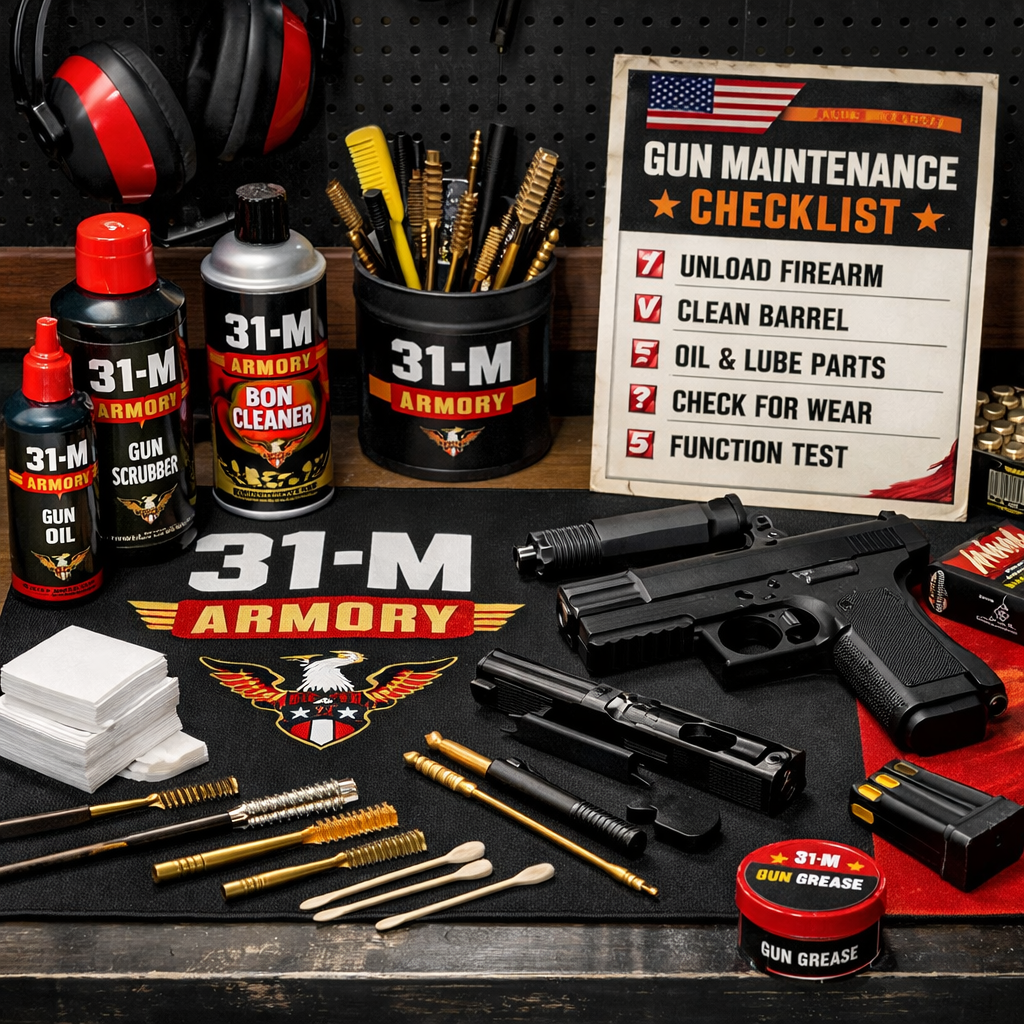
Cleaning your gun isn’t just about looks. A clean gun fires better and lasts longer.
Here’s a simple maintenance routine you can do after each range visit:
- Unload the gun completely.
- Run a bore solvent through the barrel with a cleaning rod.
- Scrub the bore with a brass brush.
- Wipe the barrel with a clean patch until it comes out clear.
- Apply a thin coat of gun oil to the moving parts.
- Reassemble and do a function check.
If you skip a step, residue can build up. That can cause jams or affect accuracy.
For a full list of what should be in a good gun care kit, see the table below.
| Component | Purpose | Notes |
|---|---|---|
| Bore cleaner/solvent | Dissolves carbon, lead, fouling | Use caliber‑specific solution |
| Gun lubricant/oil | Lubricates moving parts | Apply sparingly |
| Cleaning rods | Pushes brushes and patches | Steel, brass, or carbon fiber |
| Bore brushes | Scrubs inside barrel | Bronze for steel, nylon for delicate |
| Cleaning patches | Wipes fouling | Lint‑free |
| Utility brushes | Clears bolt and action | Nylon or brass |
| Cleaning cloths | Wipes exterior, applies oil | Soft, lint‑free |
We trust the expertise of GuardTech Plus for high‑quality kits. Their products cover everything a first time gun owner needs.
Read more about why cleaning matters at GuardTech Plus’s gun care guide. It walks you through each tool and how to use it safely.
Also, theEverytown responsible gun ownership pagehighlights the broader duty we all share. It cites data on accidental shootings and stresses that proper maintenance and storage are key to preventing them.
When you keep your firearm in top shape, you protect your investment and your community.
Celebrating a new purchase? A fresh bouquet can mark the occasion. Check outFlower Shop in Hollywoodfor a nice arrangement to give a veteran friend or yourself after your first range day.
Conclusion
Being a first time gun owner is a journey, not a single event. You start with the law, pick a tool that feels right, learn the safety basics, train on the range, and then keep your gun clean and stored well. Each step builds confidence and keeps you and those around you safe.
Remember the veteran discount we highlighted , a 6% savings can add up, especially when you buy ammo and accessories later. We believe that a supportive community makes the process smoother, and we’re happy to guide you through every step.
If you’re ready to take the next step, browse the selection at31 M Armory’s shop. Add the firearm that fits your needs, enjoy the veteran discount, and start your training plan today.
FAQ
Do I need a background check for every gun I buy?
Yes. Every purchase that goes through an FFL dealer triggers a NICS background check. The check runs each time you buy a new firearm, even if you’ve bought one before. It’s a legal safeguard that helps keep guns out of the wrong hands.
What’s the best way to store a handgun at home?
Use a UL‑rated lockbox or a biometric safe. Keep the gun unloaded, lock it away, and store ammunition in a separate locked container. This two‑step approach reduces the chance of an accidental discharge and makes theft harder.
Can I practice with a .22LR if I plan to carry a 9mm?
Absolutely. A .22LR lets you perfect trigger control and sight alignment with almost no recoil. Once you’re comfortable, transition to your 9mm and apply the same fundamentals. The skills transfer well.
How often should I clean my firearm?
Clean after each range session, especially if you’ve fired many rounds or used ammo that leaves a lot of residue. If you store a gun for a long period, clean it before and after storage to prevent rust.
Do I need a special permit to carry my gun in public?
Permit requirements vary by state. Some states have “constitutional carry,” which means no permit is needed. Others require a concealed carry permit that involves a background check and sometimes a training course. Check your state’s rules before heading out.
What should I do if my gun jams on the range?
First, keep the muzzle pointed downrange and stay calm. Follow the range’s immediate action drill: keep the gun pointed, finger off the trigger, and wait for the range officer’s instruction. Then unload, inspect, and clear the jam using the manufacturer’s guide. Regular cleaning reduces jams.
Is a veteran discount common at gun stores?
No. Our research showed only one retailer offering a veteran discount , a 6% cut at a veteran‑owned shop. That makes the discount rare, so it’s worth seeking out that specific retailer if you qualify.
How can I stay informed about changes in gun laws?
Subscribe to newsletters from reputable gun law organizations, follow your state’s Attorney General website, and keep an eye on news outlets that cover legislative updates. Staying current helps you remain compliant and safe.
- Load five rounds.
- Fire one shot, focus on a smooth trigger pull.
- Reload, repeat until you’ve fired 20 rounds.
- Count how many hits you got in the center.
- Use a lockable box that meets UL 2050 standards.
- Store ammo in a separate, locked container.
- Keep the safe in a discreet location, not obvious to burglars.
- Label the box as “safety equipment” if you want an extra layer of privacy.