Buying a gun online feels fast, but the ffl transfer fee can slow you down if you don’t know what’s up. In the next few minutes you’ll get the low‑down on what that fee really is, how it’s figured, who has to pay, and ways to keep the cost down. We’ll walk you through each step so you can move from cart to lockup without surprise charges.
What Is an FFL Transfer Fee?
When you buy a gun that isn’t already at your local shop, the law says it has to travel through a licensed Federal Firearms License (FFL) dealer. That hand‑off is called an FFL transfer. The dealer runs a background check, files paperwork, and logs the gun in a bound book. All of that work costs time and money, so the dealer adds a charge called the ffl transfer fee.
Think of the fee as a small payment for the dealer’s time and the secure storage while the gun waits for the background check to clear. It also covers the cost of the ATF Form 4473, the NICS background check, and the record‑keeping that the law requires. The fee varies because the law does not set a cap; each dealer decides what they need to stay compliant.
Here’s what that looks like in practice. A buyer in Texas orders a pistol from an online retailer. The seller ships the gun to a local FFL in Dallas. The Dallas dealer receives the box, logs the serial number, runs the buyer’s NICS check, and then holds the gun until the buyer shows up with ID. The dealer’s bill for that work is the ffl transfer fee.
Most dealers charge between $20 and $50 for a standard handgun or rifle. If the gun is a short‑barreled rifle, a suppressor, or any other NFA item, the fee can climb higher because extra forms and longer ATF approval times are involved.
Why does the fee matter to you? It’s a line item you’ll see on the checkout screen before you finish your purchase. Knowing the range helps you budget and compare dealers.
For a deeper dive on how the fee fits into the overall transfer process, see What is an FFL Transfer?. And to see a breakdown of typical fee ranges, check outUnderstanding FFL Transfer Fees. Both sources walk through the steps and explain why the fee is a necessary part of staying legal.
We believe every gun buyer should know exactly what they’re paying for. That’s why we keep our own transfer fees clear and fair. When you shop with us, you’ll see the ffl transfer fee listed up front, so there are no hidden costs at the register.
Below we’ll show how dealers arrive at the number on your receipt.
How the Transfer Fee Is Calculated
Calculating the ffl transfer fee is not magic. Dealers start with a base cost that covers paperwork, the ATF Form 4473, and the NICS background check. From there they add any extra charges that apply to your specific situation.
Most calculators break the total into three buckets: base fee, state‑specific fees, and optional services. The base fee usually sits in the $20‑$30 range. State‑specific fees can include a sales tax, a firearms safety certificate fee, or a state excise tax. Some states also charge a separate background‑check surcharge.
Let’s say you’re buying a shotgun in California. The base fee is $25. California adds a $5 safety certificate fee and a 10% excise tax on the firearm’s price. If the shotgun costs $500, that’s another $50. Your total ffl transfer fee comes to $80. That example lines up with the calculator on UG Imports’ FFL Fee Calculator, which lets you plug in price, quantity, and state details to see the exact number.
Another factor is the number of firearms you’re moving at once. Some dealers charge a per‑gun fee, while others offer a flat rate for bulk transfers. If you’re moving three rifles, a dealer might charge $25 per rifle, or they might give you a $60 flat rate. Knowing the dealer’s policy helps you avoid surprise add‑ons.
Here’s a quick checklist to run through when you get a fee quote:
- Base paperwork cost (usually $20‑$30).
- State‑specific taxes or certificates.
- Additional fees for NFA items.
- Per‑gun versus flat‑rate pricing.
- Any storage fees if the gun sits for more than a few days.
Dealers also factor in their overhead: rent, security, insurance, and regular ATF inspections. Those costs are baked into the ffl transfer fee, which is why the number can vary by city or state.
Below is a sample table that shows how a typical fee might break down for three common scenarios.
| Scenario | Base Fee | State Fees | Per‑Gun Add‑On | Total |
|---|---|---|---|---|
| Handgun – FL | $25 | $0 | $0 | $25 |
| Rifle – CA | $25 | $5 safety + 10% excise | $0 | $80 (example) |
| 3 Shotguns – TX (bulk) | $25 | $0 | $20 flat | $45 |
Notice how the California example jumps because of the excise tax. That’s why you’ll see a higher ffl transfer fee in states with extra requirements.
We proudly serve veterans and hunters who need clear numbers. When you browse our catalog, you’ll find the ffl transfer fee listed next to each gun, so you can compare across models without guessing.
Here’s a visual cue you might like. 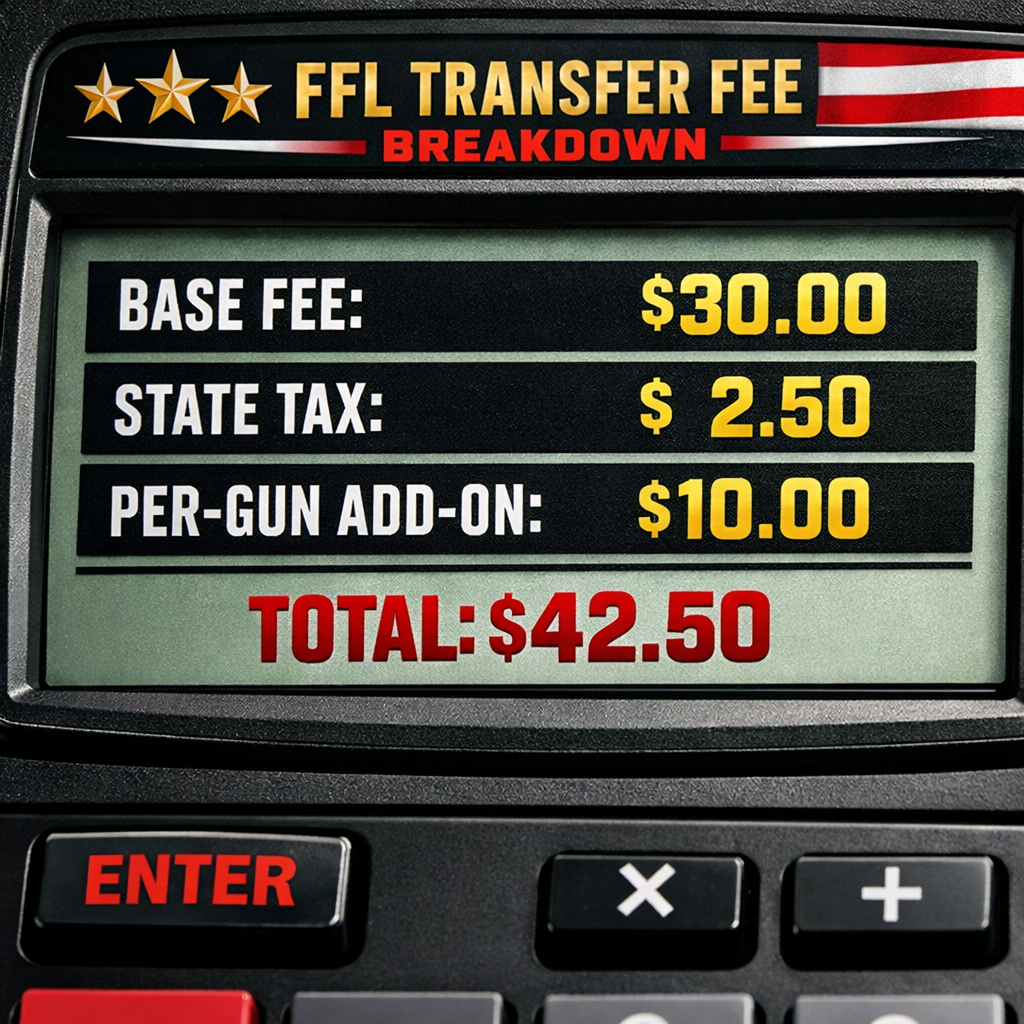
By understanding each component, you can ask the dealer why a particular charge appears and even negotiate if you’re moving multiple firearms.
Who Is Responsible for Paying the Fee?
In most cases the buyer foots the bill for the ffl transfer fee. The dealer charges it at checkout, and the buyer pays before the gun is released. That’s because the fee covers services the dealer provides specifically for that buyer.
There are a few exceptions. If you’re a licensed dealer moving inventory to another dealer, you’ll pay a wholesale transfer fee, which is often lower because the paperwork is simpler. If you’re gifting a gun to a friend in the same state and the state does not require an FFL, you may not pay any fee at all.
When a seller ships a gun to an out‑of‑state buyer, the seller usually covers the shipping cost but not the ffl transfer fee. The buyer must still pay the fee to the receiving dealer. This keeps the transaction compliant with the Gun Control Act of 1968.
For veterans, we often waive or reduce the ffl transfer fee as part of our 6% discount program. Show your ID and we’ll apply the reduction at checkout.
Here’s a step‑by‑step view of who pays what:
- Seller lists the firearm and agrees on a sale price.
- Buyer selects an FFL dealer for the transfer.
- Dealer sends an invoice that includes the ffl transfer fee.
- Buyer pays the invoice, usually online.
- Dealer runs the background check and releases the gun.
Sometimes a buyer will negotiate a “no‑fee” transfer if they are a repeat customer. That’s a perk you can ask about when you call your local shop.
To see an example of a dealer’s policy page, check out Texas Gun Experience FFL Transfers. The page spells out fees, storage rules, and who pays.
Another useful source is the ATF’s FFL eZ Check tool, which lets you verify a dealer’s license before you send a gun. Knowing the dealer is legit can save you from paying a bogus fee.
And here’s a quick tip: always ask the dealer if the quoted fee includes any state taxes or storage costs. Some shops quote a low base fee but add a storage charge if you don’t pick up the gun within 30 days.
Below is a short video that walks through the buyer’s responsibilities during an FFL transfer.
We believe the buyer should feel in control of the cost. That’s why we give you a clear line item for the ffl transfer fee before you finalize your order.
Finally, keep a copy of the receipt that shows the fee. If you ever need to dispute a charge, that document is your proof.
Strategies to Reduce or Avoid Unnecessary Fees
Saving on the ffl transfer fee is easier than you think. The first trick is to shop around. Fees can range widely, so a quick phone call can uncover a dealer who charges $20 instead of $50.
Second, bundle your purchases. If you’re buying a rifle and a scope, ask the dealer if they’ll give you a flat rate for both items. Many shops lower the per‑gun add‑on when you move more than one firearm.
Third, watch the timing. Some dealers have “slow days” where they process transfers faster and at a lower fee. Call ahead and ask if they have a discount day.
Fourth, consider a dealer that already has a partnership with the online retailer you’re buying from. Some retailers bake the ffl transfer fee into the gun’s price, so you pay nothing extra at the store.
Fifth, if you’re a veteran, don’t forget our 6% discount. It applies to the ffl transfer fee as well, shaving off a few dollars on top of the base cost.
Sixth, avoid storage fees by picking up the gun on the same day the background check clears. Most checks finish within a few minutes, but some states impose a waiting period. Plan your visit accordingly.
Seventh, if you’re moving multiple guns, ask the dealer about a bulk transfer rate. Some shops charge a single flat fee for up to five firearms, which can cut your total by 30% or more.
Here’s a quick tip list you can print:
- Call three local FFLs for quotes.
- Ask about flat‑rate or bulk discounts.
- Check if the dealer offers a “no‑fee” day.
- Use your veteran discount.
- Pick up the gun promptly to avoid storage.
For a visual guide on fee‑saving tactics, see 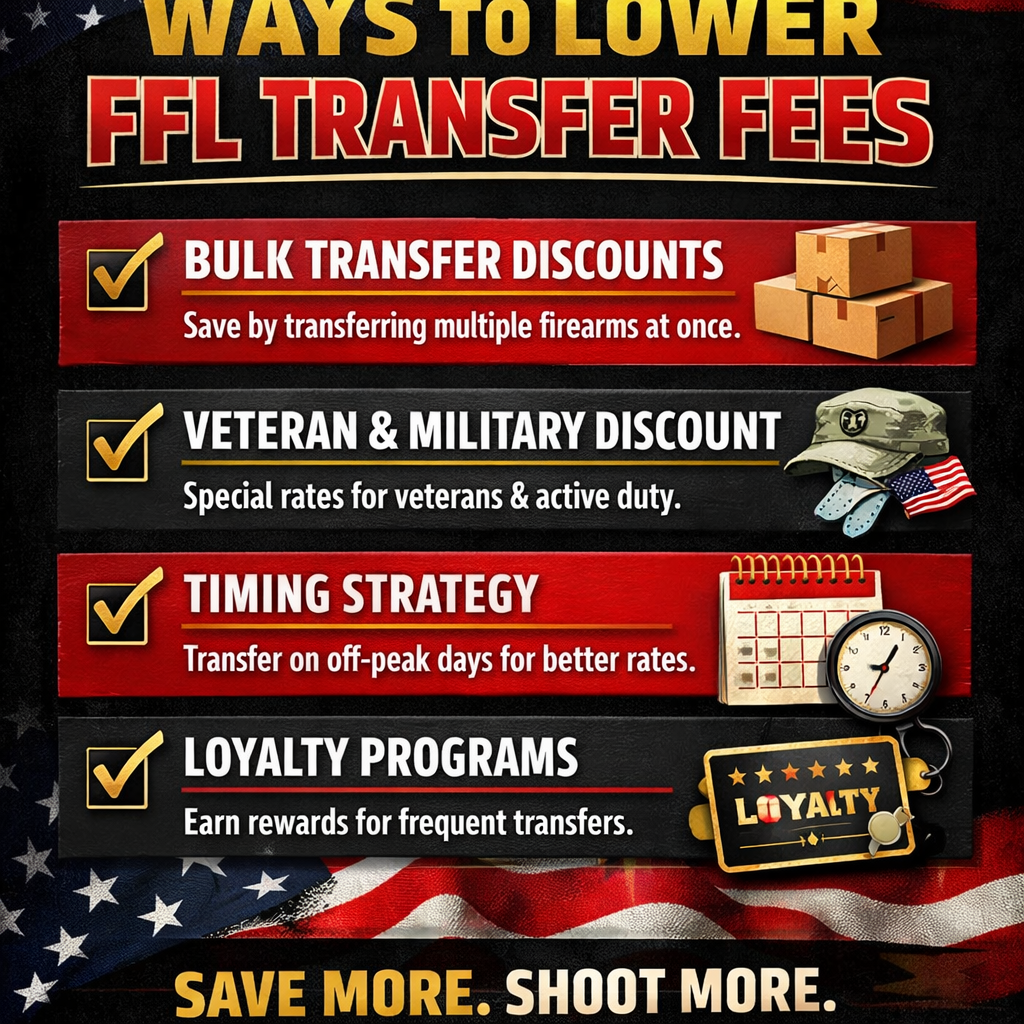
And if you want to see how other online sellers cut costs, the AI product description generator roundup7 Must‑Try AI Product Description Generators for 2026shows how automation can lower overhead, which in turn can let dealers pass savings on to you.
We proudly serve a community that values both safety and affordability. By following these steps, you can keep the ffl transfer fee low and focus on what matters most , getting the right gun in your hands.
Conclusion
Understanding the ffl transfer fee gives you power over the cost of getting a gun legally. You now know why the fee exists, how dealers calculate it, who pays it, and what you can do to keep it low. When you shop with a veteran‑owned store like ours, you’ll see the fee upfront, get a veteran discount, and have access to clear guidance every step of the way.
Next time you add a rifle or handgun to your cart, remember to ask about bulk rates, timing discounts, and your 6% veteran benefit. A little research can shave dozens of dollars off the final price.
We’re happy to guide you through every step of the transfer. Browse our selection, pick a gun, choose an FFL during checkout, and let us handle the paperwork. Your next firearm is just a few clicks away.
FAQ
What exactly does the ffl transfer fee cover?
The fee pays for the dealer’s paperwork, the ATF Form 4473, the NICS background check, and secure storage while the check is processed. It also covers the dealer’s record‑keeping obligations under federal law.
Can I negotiate the ffl transfer fee?
Yes. Many dealers will lower the fee for repeat customers, bulk transfers, or if you pick a slow‑day processing slot. Call ahead, ask about flat‑rate options, and mention any veteran discount you qualify for.
Do I pay the ffl transfer fee if I’m gifting a gun to a friend in the same state?
If the state does not require an FFL for private gifts, you may avoid the fee entirely. However, if state law mandates an FFL for the transfer, the fee still applies because the dealer must run a background check.
How long does a typical ffl transfer take?
Most background checks finish within minutes. If the check is delayed, the law allows up to three business days before a mandatory hold. Plan to pick up the gun on the same day the check clears to avoid storage fees.
Are there extra fees for NFA items like suppressors?
Yes. NFA items need an ATF Form 4, a tax stamp, and often a longer approval period. Dealers usually add a higher ffl transfer fee to cover the extra paperwork and time.
What should I bring to the FFL when I pick up my gun?
Bring a government‑issued photo ID, any required state permits, and the payment method for the ffl transfer fee. If your state needs a safety certificate, have that ready too.
Can I get a refund on the ffl transfer fee if the background check fails?
Policies vary. Some dealers will refund the fee if the buyer is denied, while others keep it to cover their administrative work. Ask the dealer about their refund policy before you pay.
How does the veteran discount affect the ffl transfer fee?
Our 6% veteran discount applies to the total purchase price, including the ffl transfer fee. Show your veteran ID at checkout and the fee will be reduced along with the gun’s price.