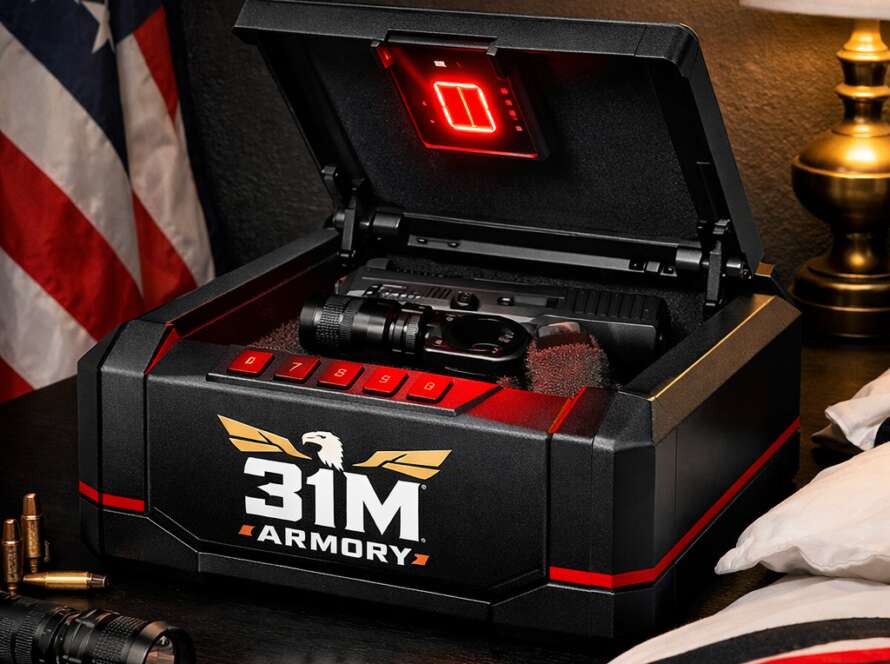
Learning how to buy a gun online comes down to understanding one core rule: the firearm does not arrive at your front door. It ships to a licensed dealer near you, and you complete the paperwork and background check in person before you take it home. That single fact explains almost every step in the process. Once you know the order of operations, buying a firearm online is straightforward, predictable, and no more complicated than any other high-value purchase. At 31M Armory, a veteran-owned shop, this is the question we answer most often from first-time buyers, so here is the full walkthrough from picking a firearm to walking out of your local dealer with it.
Why online firearm purchases work through a dealer
Federal law requires that a firearm purchased from a licensed dealer be transferred through a Federal Firearms License holder, commonly called an FFL. Online retailers hold the appropriate license to sell, but the physical transfer has to happen at a dealer in your state who can verify your identity and run the required background check.
That means your purchase involves three parties instead of two:
- The online retailer, who sells the firearm and ships it
- The receiving FFL dealer, who accepts the shipment and handles the transfer
- You, the buyer, who completes the paperwork and background check in person
Everything below is about keeping those three parties in sync so nothing sits in limbo.
Step 1: Confirm you are eligible to buy
Before you shop, get clear on the basics. To legally buy a gun from a licensed dealer in the United States, you need a valid government-issued photo ID and you have to pass a federal background check. Our storefront serves U.S.-based adults 21 and older.
State and local rules sit on top of the federal requirement, and they vary considerably. Some states add waiting periods between the paperwork and the moment you can take possession, and some add their own licensing or registration steps. Illinois is a well-known example of a state with extra layers that a buyer must satisfy before a dealer will complete a transfer.
Check your own state’s requirements with the relevant official state source, and confirm them with the dealer you plan to use. A five-minute call before you order saves a lot of frustration later.
Step 2: Choose the right firearm for your purpose
First-time buyers often start with the wrong question, which is which model looks best. The better first question is what you plan to do with it. A firearm for home defense, a firearm for hunting, and a firearm for weekend range practice are not always the same purchase.
| Type | Common first-time uses | What to think about |
|---|---|---|
| Handgun | Home defense, concealed carry where permitted, range practice | How it fits your hand, how easily you can operate the controls, ammunition availability |
| Rifle | Hunting, long-range practice, sport shooting | Caliber, overall length and weight, how much space you have for storage |
| Shotgun | Hunting, clay sports, home defense | Recoil tolerance, barrel length, gauge and shell availability |
We stock handguns, rifles, and shotguns from major brands including Smith & Wesson, Heckler & Koch, and Barrett, along with magazines and AR-platform accessories such as MAGPUL PMAG products, optics, scopes, sights, and ammunition for pistol and rifle calibers. If you plan to shoot regularly, price out ammunition and magazines alongside the firearm itself so the total cost does not surprise you.
Read the full product listing carefully. Barrel length, capacity, finish, and included accessories all matter, and the listing is the record of what ships.
Step 3: Line up your local FFL dealer before you order
This is the step first-time buyers skip, and it is the one that causes delays. Choose your receiving dealer before you place the order, not after.
- Find FFL dealers near you using a dealer locator or a local recommendation.
- Call and confirm the shop accepts transfers from online retailers and will receive the firearm on your behalf.
- Ask what transfer fee they charge and when it is collected. Fees vary by dealer, so compare a couple of shops.
- Ask about store hours and whether they prefer appointments for transfers.
- Get the exact business name and license details you will need at checkout.
Once you have that information, keep it handy. You will enter it when you place your order, and the retailer uses it to ship the firearm to the correct dealer.

Step 4: Place your order with the online retailer
With your firearm selected and your dealer confirmed, checkout is the easy part. Create an account, add the firearm to your cart, and enter your chosen FFL dealer as the shipping destination. Double-check the dealer details on the confirmation screen. A typo in the dealer name or license information can send a firearm to the wrong place or stall the shipment entirely.
Keep a few practical points in mind:
- Some sellers require a deposit on firearm purchases, so read the payment terms before you submit the order.
- Firearms ship to your FFL dealer. Ammunition, magazines, optics, and other accessories follow separate rules and may ship differently depending on your state.
- Save your order confirmation and tracking information in one place.
- Once the firearm arrives, the dealer usually contacts you to come in. A quick follow-up call is fine if you have not heard anything.
If something in the listing looks wrong or unclear, contact customer service before ordering rather than after. It is far easier to correct an order than a shipment.
Step 5: Complete the transfer, background check, and pickup
When you arrive at the dealer, bring your valid government-issued photo ID. You will complete the federal paperwork in the shop and the dealer will submit your background check.
Many checks come back quickly and the transfer is completed the same visit. Sometimes a check comes back delayed, which means the dealer has to wait for a final response before releasing the firearm. That is a normal part of the process and not a reflection of anything you did wrong. In states with waiting periods, the dealer will tell you when to return.
Before you leave, inspect the firearm. Confirm the model, finish, and accessories match what you ordered, and ask the dealer to walk you through the safety and operation if you are new to that platform. Many shops are glad to do it.
Common mistakes first-time online buyers make
- Assuming the firearm ships to their home address instead of a dealer.
- Ordering before confirming that a local dealer will accept the transfer.
- Entering the wrong dealer name or license details at checkout.
- Overlooking state rules that add waiting periods or licensing steps.
- Forgetting to budget for the dealer’s transfer fee on top of the firearm price.
- Skipping the manual. Read it before your first range trip.
None of these are hard to avoid. Each one is a two-minute check that keeps your order moving.
Frequently Asked Questions
Can I buy a gun online and have it shipped to my house?
No. Firearms purchased online ship to a Federal Firearms License dealer, not to a residential address. You complete the transfer in person at that dealer, show a valid government-issued photo ID, and pass a federal background check before taking possession. Accessories, magazines, and other gear may ship differently, so check each listing for its shipping terms.
How much does an FFL transfer cost?
Transfer fees are set by the receiving dealer, not the online retailer, and they vary from shop to shop. Call two or three dealers near you, ask what they charge for an incoming transfer, and confirm when the fee is due. Ask whether the fee changes for multiple firearms on the same order.
What do I need to bring when I pick up my firearm?
Bring a valid government-issued photo ID and be ready to complete the federal paperwork and background check in the shop. Bring any state-issued license or permit your state requires. If you are unsure what your state requires, call the dealer before your appointment so you arrive with everything you need.
What happens if my background check is delayed?
A delayed check means the dealer has to wait for a final response before releasing the firearm. It happens to lawful buyers regularly and does not mean you were denied. The dealer will explain the timing and let you know when to return or when to expect a call.
Do I have to buy ammunition and accessories at the same time?
No, but buying them together is practical. Ammunition, magazines such as MAGPUL PMAG products, optics, scopes, and sights are all available alongside firearms, and having them on hand means your first range trip does not require a second shopping run. Verify your state’s rules on ammunition shipping separately.