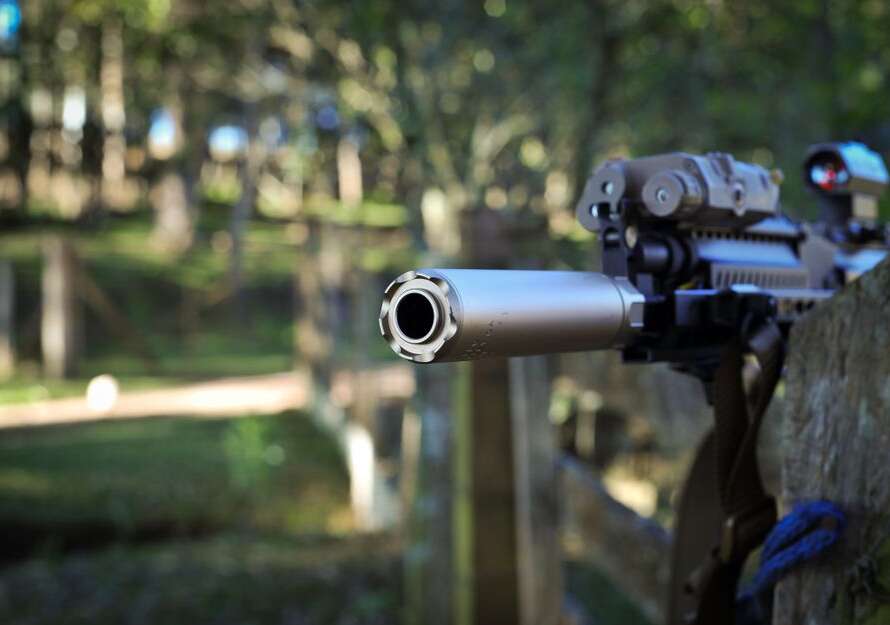
A spring gobbler hunt puts unusual demands on a shotgun. You sit against a tree, call a bird inside 40 yards, and then get one shot at a moving target the size of a volleyball. The gun has to pattern tight, point quickly, and soak up a heavy load without beating you up. That is a different job than dropping a duck over decoys or breaking clays.
The good news is that the market has never offered more purpose-built turkey guns. The harder part is sorting the features that actually matter from the ones that just look good in a catalog photo. This guide walks through gauge choice, the models that keep showing up on hunter shortlists, and the setup work that turns a decent shotgun into a reliable turkey gun.
What Actually Makes a Turkey Shotgun Different
Almost any shotgun can kill a turkey under the right conditions. A dedicated turkey gun simply stacks the odds in your favor. The differences usually come down to a few practical things.
- Tight, predictable patterns at 30 to 50 yards, which is the range window most hunters realistically face.
- Barrels and chokes set up to handle dense, heavy payloads without blowing the pattern apart.
- Sights that let you put the bead precisely on a gobbler’s head and neck rather than roughly on the bird.
- Recoil management, because a light gun shooting a heavy turkey load can rattle a shooter badly after a few range sessions.
- Weight and balance that still carry well on a long walk in before daylight.
Those traits matter more than cosmetic camo dips or a list of features you will never use in the woods.
Gauge Choice Comes First
Gauge drives everything else: recoil, gun weight, load selection, and how far you can ethically shoot. The 12-gauge is arguably the most popular turkey gun, and it is easy to see why. Hunters looking for power, range, and the ability to shoot heavier loads at turkeys usually land on the 12.
The 20-gauge argument has gotten stronger as loads improve. A dense-patterning 20-gauge will not kill a turkey better at 20 yards than a 12-gauge, but it also will not kill one worse, and it does it with a lighter gun and less felt recoil. The .410 has moved from novelty to genuine debate, with hunters now asking openly whether it is an ethical turkey shotgun. One published range test put six different shotguns through three turkey loads, covering .410, 20 gauge, and 12 gauge from 30 yards all the way out to 50 yards, which shows how seriously the small bores are now being taken.
| Gauge | What the research shows | Good fit for |
|---|---|---|
| 12 gauge | Called arguably the most popular turkey gun; the choice for power, range, and heavier loads | Hunters who want maximum reach and payload |
| 20 gauge | A dense-patterning 20 matches a 12 at close range on gobblers and carries easier | Hunters who value light weight and softer recoil |
| .410 | Tested alongside 12 and 20 gauge out to 50 yards; ethics still actively debated | Experienced shooters who keep shots close and pattern carefully |
The Turkey Shotguns That Keep Coming Up
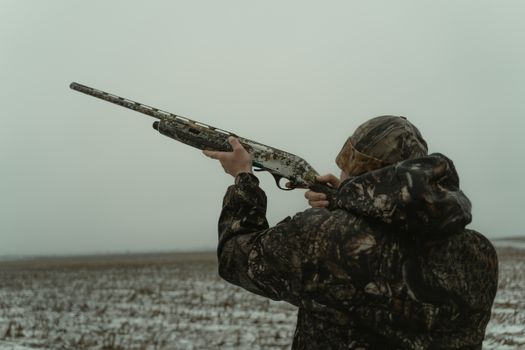
Talk to enough hunters and a handful of names repeat. These are the models that show up most often in turkey gun discussions and roundups.
Remington 870
The 870 is repeatedly called one of the best and most affordable turkey shotguns available. That combination is hard to beat. It is a pump action with a reputation built over decades, and a used or new 870 set up with the right choke and sights will handle anything a spring gobbler throws at it. If you want a first turkey gun that will not stretch the budget, this is the starting point most people name.
Mossberg 940 Pro Turkey
The Mossberg 940 Pro Turkey gets high marks as a dedicated turkey gun and appears on published lists of top turkey shotguns. It is built as a semi-automatic hunting gun rather than a repurposed field model, which is exactly the direction serious turkey hunters have been moving.
CZ Reaper Magnum, Hatsan Escort FieldHunter Turkey, and TriStar Viper G2 Turkey Gun
These three round out a widely shared list of five top turkey shotguns, alongside the Mossberg 940 Pro Turkey. Each is offered in a turkey-specific configuration rather than a general-purpose field gun. That matters, because factory turkey models typically come set up for the tighter patterns and heavier loads the season demands.
Benelli Super Black Eagle, Beretta Xtrema, Browning Gold, Franchi 912, and Winchester SX2
These names have been recommended as good autoloader choices for turkey hunting for a long time, with the Benelli SBE and SBE II drawing particular praise. They are proven semi-automatic designs that hunters trust in wet, cold, early-morning conditions. Plenty of them show up in the field wearing a turkey choke and a red dot.
Pump or Semi-Auto
Pumps like the Remington 870 win on price and simplicity. There is less to go wrong, they cycle just about anything, and the lower cost leaves budget for a good choke and a set of sights. Semiautomatics like the Mossberg 940 Pro Turkey, Benelli SBE, and Beretta Xtrema cut recoil, which is a real advantage when you are touching off heavy turkey loads. They also let you stay on the bird for a follow-up if the first shot does not end the hunt.
The honest answer is that both work. A pump rewards deliberate shooting. A semi-auto rewards shooters who are recoil sensitive or who want a faster second shot. Handle both before you decide.

Patterning Is Where the Gun Gets Made
The single most useful thing you can do before the season is shoot paper. A shotgun that patterns beautifully with one load can pattern poorly with another, and you will not know which is which without testing. A published test that ran six shotguns across three turkey loads at 30 to 50 yards is a reminder that results vary by gun and load combination, not just by gauge.
- Set up a large target at 30 yards and shoot from a seated position that mimics how you will actually hunt.
- Mark the point of impact and count pellets inside the kill zone.
- Repeat at 40 and 50 yards to find your real maximum ethical range.
- Try more than one load. Keep the one that holds together, not the one that looks best on the box.
- Write down the yardage where the pattern stops being reliable and treat that as your hard limit.
Sights, Chokes, and Fit
Turkey hunting is a precision game at close range, so sighting matters. Many hunters run a red dot or fiber optic sights rather than a plain bead, because the aiming point is a small target on a moving bird. A proper turkey choke is the other half of the equation, and it should be matched to the load you settled on during patterning rather than picked off a shelf by guesswork.
Fit deserves attention too. A shotgun that is too long or too short in the stock will not point where you look, and that shows up at the worst possible moment. If you can, shoulder the gun in hunting clothes before you commit.

Buying Your Turkey Gun Online
Buying a firearm online works differently than buying a scope or a case. The gun ships to a licensed dealer rather than to your door, and you complete the transfer in person. First-time online buyers often have questions about that process, and a retailer that explains the FFL dealer transfer clearly is worth your business. At 31 M Armory, that explanation is part of the buying experience, along with firearms, ammunition, chokes, optics, and the accessories that round out a turkey rig.
Before you order, confirm the model, gauge, and configuration you want, and check that your chosen dealer can accept the transfer. A few minutes of preparation saves a lot of back and forth later.
Frequently Asked Questions
Is a 12-gauge the best choice for turkey hunting?
The 12-gauge is arguably the most popular turkey gun and is widely recommended for hunters who want power, range, and the ability to shoot heavier loads. That said, a dense-patterning 20-gauge will not kill a turkey worse at close range, so the best choice depends on how you hunt and how much recoil you want to manage.
Is the Remington 870 a good turkey gun?
Yes. The Remington 870 is repeatedly described as one of the best and most affordable turkey shotguns. It is a proven pump action, it handles turkey loads reliably, and its lower cost leaves room in the budget for a quality choke and a set of sights. It is a common first turkey gun recommendation.
What about the Mossberg 940 Pro Turkey?
The Mossberg 940 Pro Turkey gets high marks as a dedicated turkey gun and appears on published lists of top turkey shotguns. It is a semi-automatic built for turkey hunting rather than a repurposed field gun, which makes it a strong option for hunters who want reduced recoil and a fast follow-up shot.
Is a .410 an ethical turkey shotgun?
That debate is still open. The .410 has been tested alongside 20 and 12 gauge guns out to 50 yards, and hunters increasingly ask whether it is an ethical choice. The practical answer is to pattern your specific gun and load, keep shots close, and only take shots your pattern proves you can make cleanly.
How far should I shoot at a turkey?
Let your pattern board decide, not a number on a box. Published testing ran turkey loads from 30 out to 50 yards across .410, 20 gauge, and 12 gauge guns, and results varied by gun and load. Find the distance where your pellets still land consistently in the kill zone, then treat that as your hard limit in the field.