Ever opened your safe on a muggy day and watched a thin film of rust start to creep over your favorite rifle? Yeah, we’ve all been there. In the next few minutes I’m going to break down exactly how humidity sneaks into your safe and the simplest, most effective ways to kick it out for good.
We’re talking about gun safe humidity control. Keeping moisture under control isn’t optional. Rust can destroy a firearm’s finish and accuracy. Wood stocks can swell and crack. Even ammunition can degrade. The goal is to hold relative humidity between 30% and 50% RH. That’s the sweet spot where iron and steel stay safe and wood doesn’t dry out. We’ll walk through five steps that will protect your investment for years.
Step 1: Measure Your Gun Safe’s Humidity with a Hygrometer
You can’t fix what you don’t measure. That’s rule one of gun safe humidity control. A hygrometer is a cheap little device that tells you the exact relative humidity inside your safe. You can grab one for under $10. The ThermoPro TP50 is a popular option. It’s smaller than a deck of cards and fits anywhere.
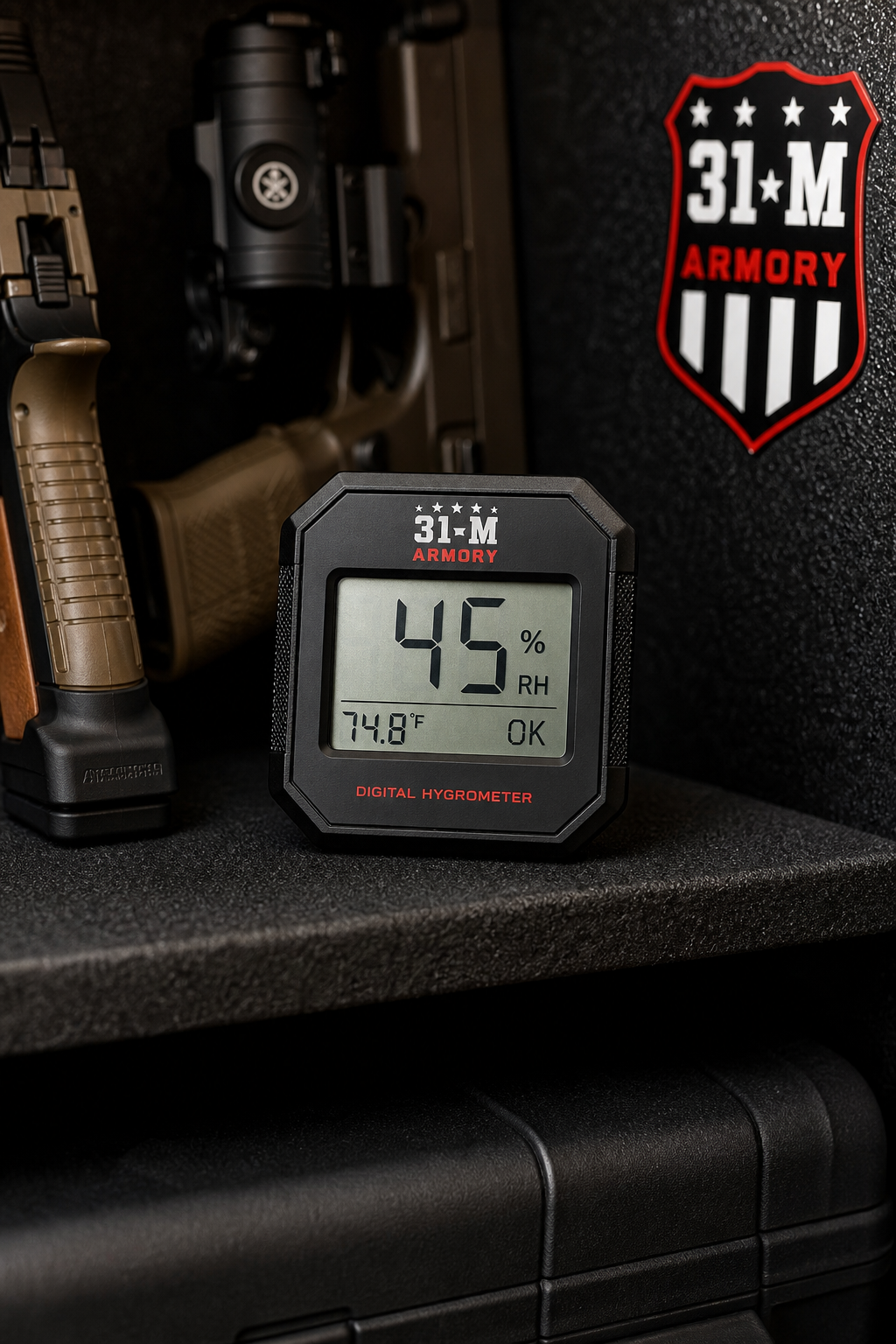
Place the hygrometer in the middle of the safe, away from walls and metal shelves. The air there gives the most accurate reading. Close the door and wait about an hour. Check the display. If it reads above 50%, you have a moisture problem.
Some hygrometers also track temperature and show highs and lows over 24 hours. That can help you spot patterns. For example, you might see humidity spike after you open the door on a rainy day. Knowing that helps you choose the right dehumidifier.
The industry standard for safe storage is 30, 50% RH. That comes from multiple sources including the Wikipedia page on relative humidity and the NRA guidelines. Anything above 50% puts your firearms at risk for rust. Below 30% can dry out wooden stocks and cause cracking.
Bottom line: Buy a hygrometer first. It’s the cheapest insurance you can get for your firearms.
Step 2: Choose the Right Dehumidifier for Your Safe
Now that you know your numbers, it’s time to pick a dehumidifier. There are three main types: active (plug-in rods), passive (desiccant packs), and hybrid (rechargeable canisters). Each has trade-offs. Let’s break them down.
According to research from Pew Pew Tactical, about 45% of dehumidifiers on the market are active electronic units. They work by heating the air inside the safe, which lowers relative humidity. The Lockdown GoldenRod is a classic example. It runs about 1 watt per inch of length. An 18-inch model pulls 18 watts. That’s a constant draw, but it never needs recharging.
| Type | Example | Power | Maintenance | Best For |
|---|---|---|---|---|
| Active (Rod) | GoldenRod 18″ | 18W plug-in | None (always on) | Larger safes, consistent use |
| Passive (Desiccant) | ZARPAX bags | None | Microwave 4 min every 2 weeks | Small safes, no power available |
| Hybrid (Rechargeable) | Eva-Dry E-333 | Recharge by plug-in | Plug in 8-12 hours every 30 days | Medium safes, convenience |
Passive desiccants like silica gel bags absorb moisture until they’re full. When the indicator turns pink, you pop them in the microwave or oven to dry them out. The ZARPAX bags we tested dropped humidity by 16 percentage points, but they needed recharging twice a week. That’s a lot of microwave time.
Hybrid units like the Eva-Dry E-333 promise coverage of up to 333 cubic feet. That’s huge for a canister. You recharge it by plugging it into a wall outlet for 8 to 12 hours. The downside: they contain less silica gel than a passive bag, so they can’t hold as much moisture. Over a year, you might spend about the same either way, but hybrid units cost more upfront.
Another contender is the new Hornady Security Dehumidifier Rods HD, released in 2025. These produce nearly twice the power of a traditional rod and come in 18-inch (200 cu ft) and 36-inch (500 cu ft) models. They are square-lock compatible for easy mounting. If you’re looking for a complete storage solution, our guide to the best gun cabinets for 2026 includes models with excellent humidity control features.
Bottom line: Match your dehumidifier to your safe’s size, your local climate, and how often you want to mess with recharging.
Step 3: Install Your Dehumidifier Correctly
Installation matters more than you think. A dehumidifier that’s tucked away in a corner might not circulate air well. Here’s how to get it right.
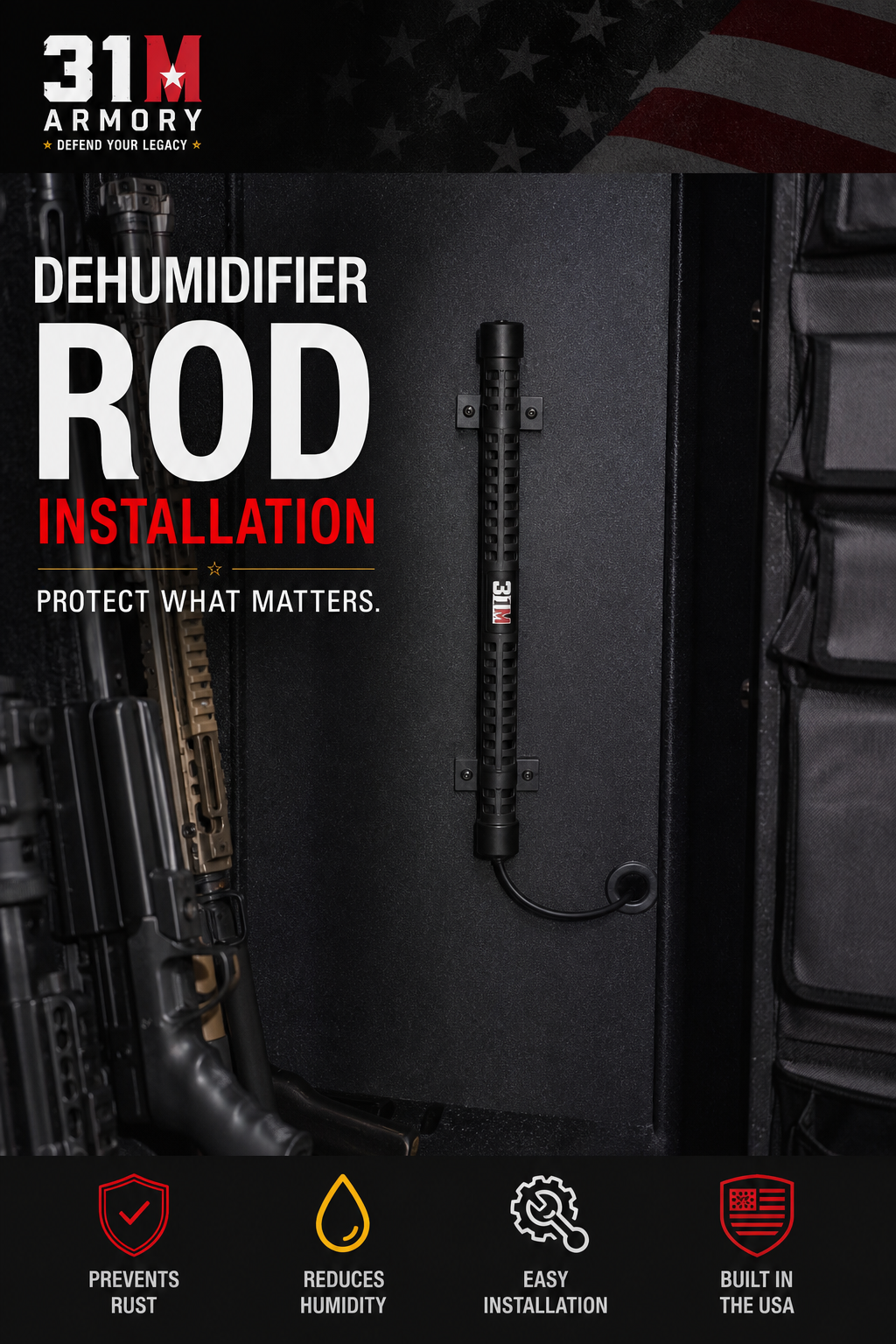
If you’re using a plug-in rod like the GoldenRod, you need a way to get power into the safe. Many safes come with a pre-drilled hole and a built-in outlet. If yours doesn’t, you’ll have to drill one. It’s not as scary as it sounds. Pick a spot on the side or back of the safe, away from hinges and bolts. Use a metal drill bit and go slow. Then install a safety grommet to protect the cord from sharp edges.
Once the cord is through, plug the rod in. Most rods come with a simple snap-on plug that pierces the wire. Make sure the connection is secure. Then position the rod vertically, leaving at least an inch of space around it. The rod gets hot, up to 180°F. Keep it away from gun stocks, ammunition, and anything flammable. Use the included brackets to mount it if you want, but many people just let it sit loose on the floor. That’s fine, but be careful not to knock it over when grabbing guns. For a safe that’s easy to access, check out our top picks for quick access gun safes.
For passive desiccants, placement is simpler. Hang them from a shelf or lay them on a flat surface. Make sure air can flow around them. Don’t stack ammo boxes on top. The goal is maximum surface area exposure.
Bottom line: Install your dehumidifier so it has room to breathe and is safely away from anything that could be damaged by heat or concentrated dryness.
Step 4: Monitor and Adjust Humidity Seasonally
Gun safe humidity control isn’t a set-it-and-forget thing. Seasons change. So does the moisture load. In summer, your air conditioner might lower indoor humidity, but if your safe is in the garage, summer heat and rain can push RH way up. In winter, dry heating air can drop humidity below 30%, which cracks wood stocks.
Check your hygrometer at least once a week. Keep a log if you want to spot trends. If you see humidity climbing above 50%, add another dehumidifier or switch to a more powerful one. If it drops below 30%, you might need to remove a dehumidifier or use a humidifier (yes, really) to protect wood.
One youtuber, Nashville Safe House, recommends checking monthly and adjusting based on the season. He says a simple silica gel canister works fine for most people, but if you have a severe problem, you might need a powered dehumidifier that also removes water from the air (like a small electric unit). However, be careful not to overdry.
Bottom line: Your safe’s moisture level changes with the weather. Check it regularly and adjust your dehumidifier setup accordingly.
Step 5: DIY Maintenance and Troubleshooting
Even the best dehumidifier needs a little TLC. Here’s how to keep everything running and what to do when things go wrong.
For active rods, there’s almost no maintenance. Just make sure the cord isn’t chewed by a curious pet and that nothing falls on the rod. If the rod stops working, check the plug connection first. Sometimes the spikes lose contact with the wire. Push the plug on tighter or replace it.
For passive desiccants, you’ll need to recharge them regularly. The ZARPAX bags need about 4 minutes in a 600W microwave. If they’re still pink after microwaving, try 2 more minutes. Be careful, they’ll be hot. You can also bake them in an oven at 170°F for a couple of hours. Set them on a cookie sheet and watch them turn back to blue.
For hybrid units like Eva-Dry, just plug them into a wall outlet for 8-12 hours. A light will indicate when they’re dry. Don’t leave them plugged in inside the safe, they’ll just dump the moisture back in.
Troubleshooting: If your humidity is still high after installing a dehumidifier, you might have an air leak. Check the door seal. A faulty gasket lets humid air in. Replace it if it’s cracked or loose. Also, avoid opening the safe too often in humid weather. Every time you open it, you let in moisture-laden air. Keeping your firearms clean also prevents rust; see our list of the best gun cleaning solvents.
Bottom line: Recharge your dehumidifier as needed and inspect your safe’s seal. Small maintenance keeps big problems away.
Frequently Asked Questions
What is the ideal humidity level for a gun safe?
The industry standard is 30% to 50% relative humidity. Above 50%, rust risk increases. Below 30%, wood stocks can dry out and crack. Aim for the middle, around 45%. Use a hygrometer to monitor and adjust your dehumidifier accordingly.
Can I use a regular room dehumidifier for my gun safe?
You can, but it’s not ideal. Room dehumidifiers are big, expensive, and pull water out of the whole room. A small safe dehumidifier is cheaper and designed to work in an enclosed space. However, if your safe is in a very damp basement, a room dehumidifier might help the whole area, and you’d still need a smaller unit inside the safe.
How often should I recharge silica gel dehumidifiers?
It depends on your climate and how often you open the safe. In a typical home, passive desiccant bags need recharging every 2 to 4 weeks. Hybrid units with a plug-in recharge last about 30 to 60 days. Always check the color indicator: blue means dry, pink means saturated.
Do golden rod dehumidifiers actually work?
Yes, they do. They work by warming the air inside the safe, which lowers relative humidity. They don’t remove moisture; they just make the air feel drier. But that’s enough to keep guns from rusting. A test by TWANGnBANG showed a GoldenRod dropped humidity from 60% to 50% in about 3.5 hours.
Can a dehumidifier cause a fire in my safe?
It’s extremely unlikely with quality products. GoldenRod and other rod-type dehumidifiers get hot (up to 180°F) but are designed to be safe. Keep them away from flammable items. Never cover them. If you’re worried, use a desiccant-based unit instead.
What’s the difference between a passive and active dehumidifier?
A passive dehumidifier (like silica gel) absorbs moisture until it’s full, then you recharge it. An active dehumidifier (like a rod) plugs in and uses heat to lower humidity. Active units are set-and-forget; passive units require periodic recharging. Active units are better for large safes or high-humidity areas.
Should I put a dehumidifier in a safe that’s not plugged in?
Yes, you can use passive desiccant packs or rechargeable hybrids. They don’t need electricity to work. Just remember to recharge or replace them regularly. If you have no power inside your safe, passive is the way to go.
Can too much dehumidification damage my guns?
Yes. If the humidity drops below 30%, wood stocks can shrink, crack, or warp. Metal parts can also become brittle over time. That’s why monitoring is key. Start with a smaller dehumidifier and add more if needed, rather than overdoing it from the start.
Conclusion
You’ve now got a full plan for gun safe humidity control. Start by measuring your safe with a hygrometer. Choose the right type of dehumidifier for your situation, active, passive, or hybrid. Install it properly with good airflow. Monitor the humidity throughout the year and adjust as the seasons change. And don’t forget to maintain your dehumidifier and check the safe seal.
Rust is the enemy. But it’s a slow enemy. With a little effort, you can stop it before it starts. We at 31 M Armory believe that responsible gun ownership includes proper storage. It’s not just about safety from theft, it’s about preserving your firearms for years to come. Whether you’re a hunter, target shooter, or collector, your guns deserve the best care.
Ready to get started? Check out our selection of top-rated gun safe dehumidifiers and other storage solutions. We proudly serve veterans and law-abiding gun owners. And as a veteran-owned business, we offer a 6% discount to all veterans. Protect your investment today.