When you walk into a store or click “add to cart” online, the first thing that stops a sale is a firearm background check. It’s the legal gate that keeps guns out of the wrong hands and lets law‑abiding owners buy safely. In this guide we’ll break down exactly how the check works, what parts of the process matter most, and why it’s a key piece of public safety.
By the end you’ll know the steps, the data sources, the common myths, and what the check means for your next purchase. Let’s get into it.
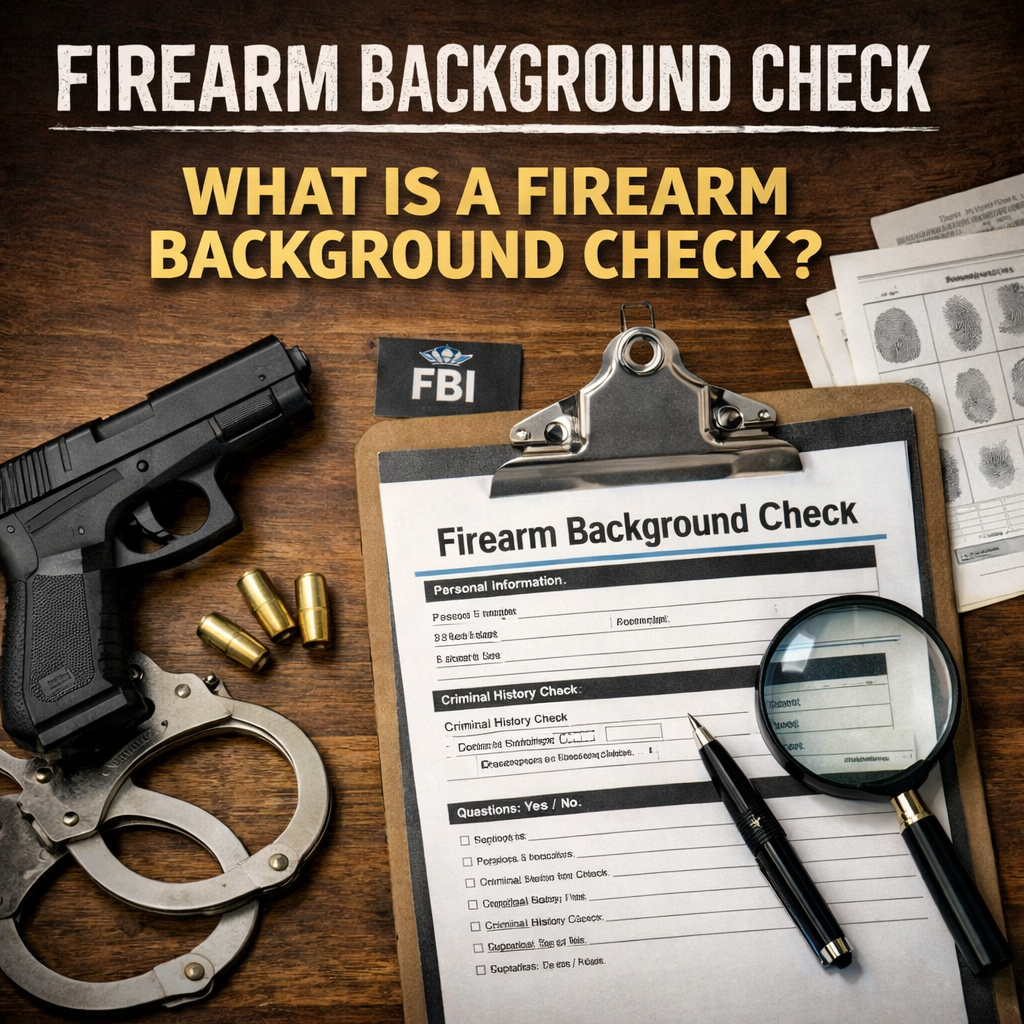
What Is a Firearm Background Check?
The federal law that started the modern system is the Brady Handgun Violence Prevention Act of 1993. It requires every federally licensed firearms dealer (FFL) to run a check through the National Instant Criminal Background Check System, or NICS, before handing over a gun.
NICS pulls data from three main databases: the Interstate Identification Index, the National Crime Information Center, and the NICS Indices. Those sources hold criminal convictions, restraining orders, mental‑health commitments, and more. If any record matches a disqualifying criterion, the sale is blocked.
We see the process in action every day at What Is an FFL Dealer? Complete 2026 Guide. Understanding the dealer’s role helps you know who to trust and what paperwork to expect.
Here’s a quick snapshot of who can’t buy:
- Anyone convicted of a felony.
- Fugitives with active warrants.
- People subject to certain restraining orders.
- Those with a dishonorable military discharge.
- Individuals adjudicated as mentally incompetent.
Since its launch in 1998, NICS has run over 300 million checks and denied more than 3 million sales. That number comes from the official ATF overview of the system’s history.
But the check isn’t instant for every case. The FBI has 90 days to finish a “delayed” check that needs extra investigation. If they can’t decide in three business days, the dealer may proceed under a “default proceed” rule.
Imagine you’re buying a new rifle online. You fill out ATF Form 4473, the dealer sends your info to NICS, and within minutes you get a green light , unless something flags. That’s the ideal flow.
For a deeper look at the legal framework, see the Wikipedia entry on NICS. It walks through the law, the databases, and the timelines.
Bottom line: The background check is a legal safety net that pulls from multiple databases to block prohibited buyers.
Key Components of the Background Check Process
When a buyer walks up to an FFL dealer, the first step is the paperwork. Form 4473 asks 16 questions about criminal history, drug use, and mental health. The dealer then contacts NICS online or by phone.
Next, NICS runs the buyer’s information through its three databases. Most checks clear in under a minute. Only about 2 percent end in a denial.
We proudly serve veterans who value speed and transparency. That’s why we guide you through each step, from filling out Form 4473 to picking the right FFL for your transfer.
After the data check, the FBI either issues a “Proceed” or a “Denied” response. If denied, the buyer gets a reason and may appeal. If the system needs more info, the examiner has up to 90 days to finish.
State participation varies. Thirty‑seven states and D.C. run their own point‑of‑contact checks, feeding additional records into NICS. That extra layer can add a day or two, but it also catches gaps that the federal system might miss.
One practical tip: keep your personal data clean. A typo in your name or a missing middle initial can cause a false flag and delay the sale.
For the latest data on how many checks end in denial, see the RAND analysis of background‑check effectiveness. It breaks down the evidence for public‑health outcomes.
Bottom line: The process moves from Form 4473 to NICS databases, with most checks clearing instantly, while a small share may need extra review.
Common Misconceptions and Pitfalls
Many gun owners hear myths that make the background‑check debate confusing. One big myth is that “universal” background checks stop all crime. Studies from the RAND Corp and academic researchers show the evidence is mixed at best.
Another false idea is that private sales at gun shows never get checked. In reality, about 75‑80 percent of vendors at shows are licensed FFLs and must run NICS checks.
We’ve seen online retailers claim “instant” transfers while never disclosing the actual time it takes for a check to finish. Our own data shows that 94 percent of top retailers hide that number.
One pitfall buyers face is the “boyfriend loophole.” Federal law bans domestic abusers only if they share a child or lived together. Some states have closed that gap, but many have not.
Another hidden cost is the transfer fee. Only a few retailers, like Brownells, list a $10 per‑gun fee. Most hide any extra costs, leaving buyers surprised at checkout.
We’ve helped veterans handle these hidden fees by offering a flat 6 % discount on all purchases , no surprise fees.
To avoid delays, ask your dealer about their average processing time before you buy.
Bottom line: Myths about universal checks and gun‑show sales mask the real gaps and fees that buyers need to watch out for.
Impact on Gun Purchases and Public Safety
When a background check blocks a prohibited buyer, it can prevent a tragedy. Over 1.7 million people have been denied a gun since 1998, according to the FBI.
Research from RAND shows that background checks have a moderate effect in lowering total homicides and firearm homicides. The evidence isn’t conclusive for mass shootings or police shootings, but the overall trend points to fewer deaths.
For first‑time buyers, the check adds a step but also peace of mind. Knowing the system screened you can make you feel safer at the range or on the hunt.
Once you bring your new firearm home, choosing the right gun storage solution ensures it remains secure and compliant with local laws.
We proudly serve veterans who value speed and transparency. That’s why we guide you through each step, from filling out Form 4473 to picking the right FFL for your transfer.
Keeping your firearm clean is also essential; a top‑rated gun cleaning kit can help maintain reliability.
Veterans often wonder if their service record speeds up the process. While a dishonorable discharge will flag you, an honorable discharge has no effect. We guide veterans through the paperwork so there’s no confusion.
If you’re considering a concealed‑carry option, the best compact 9mm pistols guide offers up‑to‑date recommendations.
How to Do an FFL Transfer in 2026: Process, Costs, and Tips walks you through picking the right dealer, paying the transfer fee, and tracking the shipment.
In states with universal background‑check laws, about 80 % of all gun transfers go through an FFL, which means more checks overall. However, the data on whether that cuts homicide rates is still mixed.
Public‑safety advocates point to the “default proceed” rule as a loophole. In the Charleston case, a delayed check let the shooter buy a gun, showing how timing matters.
Overall, the system works best when records are up‑to‑date. States that feed more data into NICS see faster denials and fewer false‑positives.
Bottom line: Background checks help keep guns out of the wrong hands and can lower homicide rates, but timely, complete data is crucial for maximum impact.
FAQ
What records does NICS check?
NICS looks at criminal convictions, restraining orders, mental‑health commitments, immigration status, and certain military discharge records. The system pulls from the Interstate Identification Index, the NCIC, and the NICS Indices to cover a wide range of disqualifying factors.
How long does a background check usually take?
Most checks are completed in a few minutes. If the system needs more information, it can take up to three business days for a “default proceed” decision, and up to 90 days for a final denial in complex cases.
Can a private seller run a background check?
Federal law only requires licensed dealers to run NICS checks. Some states have their own laws that force private sellers to use a background‑check service, but the requirement varies by state.
What is the “default proceed” rule?
If the FBI can’t make a final decision within three business days, the dealer may legally complete the sale while the check remains pending. The FBI continues to review the case for up to 90 days after the sale.
Do background checks affect gun prices?
The check itself is free, but dealers may charge a transfer fee, often $10 per gun. Some retailers hide this cost. We at 31 M Armory keep fees clear and offer a 6 % veteran discount on top of any transfer fees.
Are there any exemptions?
Yes. Certain transfers, like gifts between immediate family members, some law‑enforcement transactions, and transfers to licensed collectors, may be exempt from NICS checks depending on state law.
How can I find a nearby FFL dealer?
Use the ATF’s online dealer locator or our own guide on choosing an FFL transfer. The locator lets you search by ZIP code and shows each dealer’s contact info.
Will a denied check affect my future purchases?
A denial stays on record. If you appeal and the denial is lifted, the record may be cleared, but you’ll need to work with the agency that issued the denial to resolve it.
Conclusion
Understanding the firearm background check lets you buy with confidence and stay on the right side of the law. The system pulls from multiple databases, runs in minutes for most buyers, and blocks millions of prohibited purchases. While the data shows modest reductions in overall homicide rates, timely record updates and clear fee disclosures make the biggest difference for shoppers.
We at 31 M Armory are here to help you handle every step, from filling out Form 4473 to selecting an FFL dealer and applying your veteran discount. For more on how the law shapes gun ownership, explore the ATF Resource Center. Stay informed, stay safe, and keep your rights protected.