One catastrophic second. That’s all it takes for a ricochet, hot brass, or a powder burn to permanently damage your vision. Yet only about 22% of shooting glass models on the market even disclose their ANSI or MIL impact rating , meaning most shooters are buying eye protection without knowing if it’ll actually stop shrapnel. Here are our top 10 picks across every budget, discipline, and face shape, so you know exactly what you’re getting before you step up to the line.
1. 31 M Armory (Our Top Pick) , Curated Ballistic Eyewear for Every Shooter
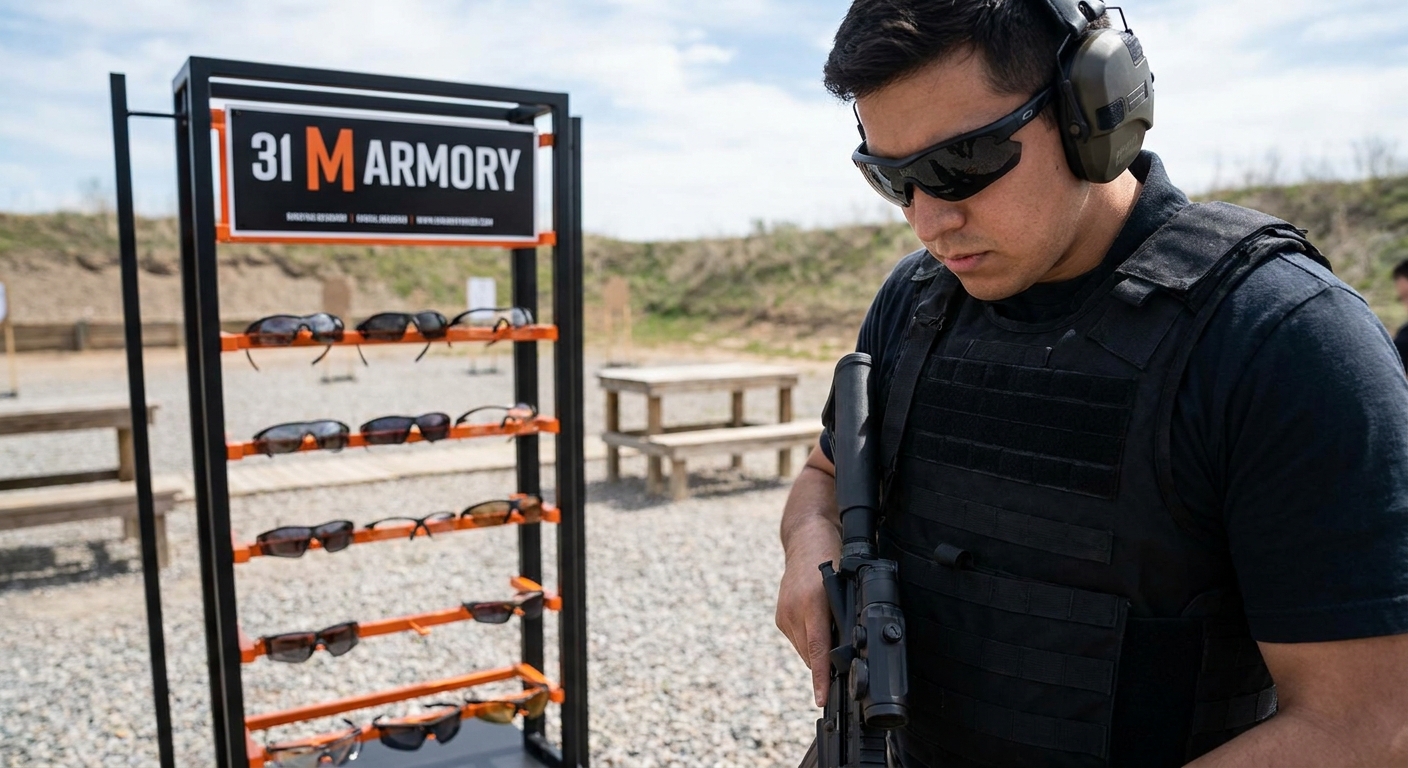
We’re a veteran-owned firearm and accessories retailer, and we built our eyewear selection with one principle: every pair we carry has to earn its place. We don’t stock glasses just because they look tactical. We carry what we’d trust on our own eyes , and the eyes of the people we served alongside.
At 31 M Armory, our curated lineup covers every use case: ballistic-rated glasses for the range, anti-fog goggles for indoor sessions, over-the-glass options for prescription wearers, and tinted systems for clay and trap. What sets us apart from the big-box competition is the guidance that comes with the gear. If you’re not sure which rating you need or what lens tint works best for your shooting environment, we’re here to walk you through it.
We proudly serve veterans with a 6% discount across our entire store , because veterans always have our six, and we intend to return the favor. Whether you’re a first-time buyer or a competitive shooter replacing a worn-out pair, our selection is vetted, organized, and ready to ship.
The one limitation worth naming: we’re an online retailer. You can’t try before you buy. But our team is responsive, and we’re happy to guide you through sizing and fit questions before checkout. Browse our full eye and ear protection selection at the same place you’d find your range bag essentials, everything in one spot, every piece chosen with real field use in mind.
2. Wiley X Saber Advanced , Best Premium Ballistic Shooting Glasses
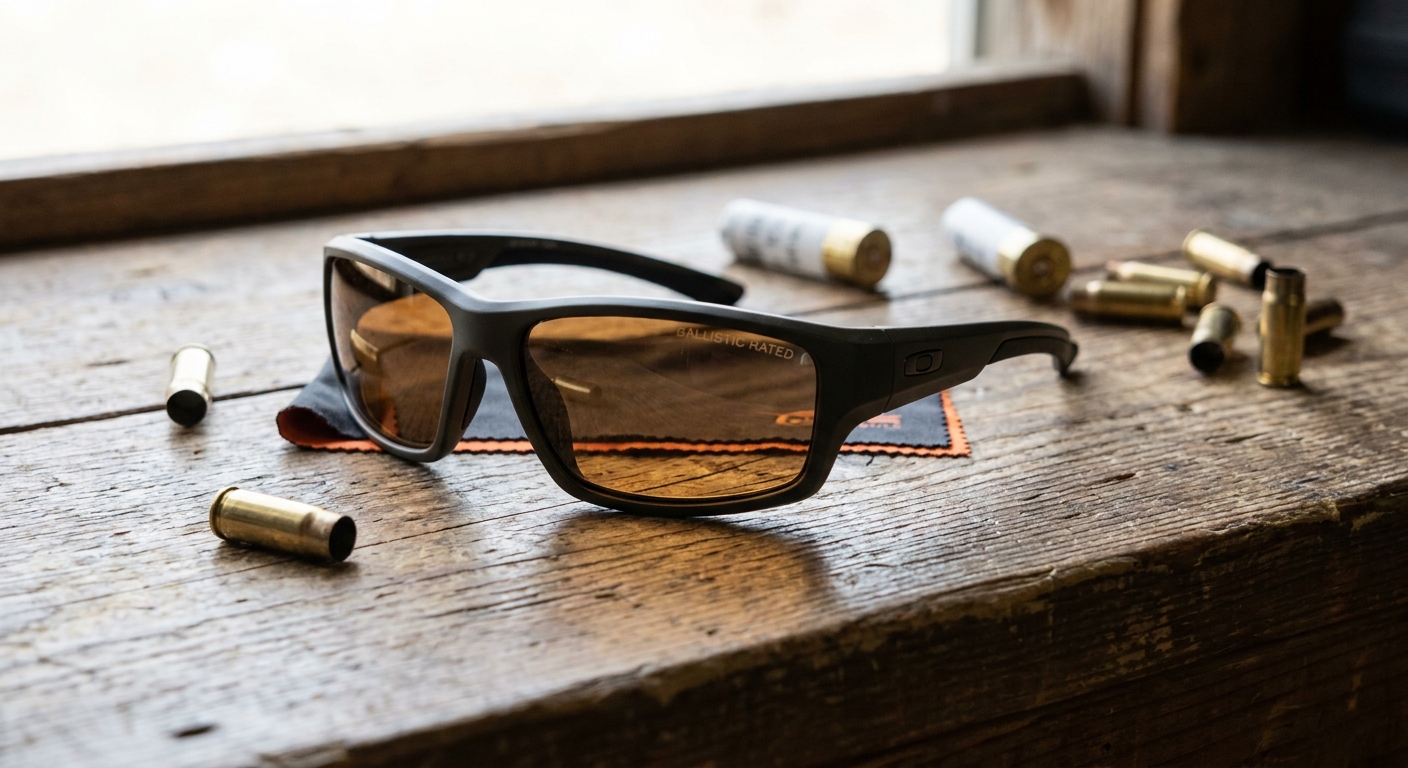
The Wiley X Saber Advanced is one of only a handful of models in our research that openly publishes its ballistic rating , and it claims the top tier: MIL-PRF-32432 along with ANSI Z87.1. Both RecoilWeb’s written review and PewPew Tactical’s article confirmed this rating independently, which matters when you’re deciding what to trust in front of a .22 pellet traveling at 725 fps or faster.
The half-frame design with an adjustable nose bridge gives it better airflow than most full-frame options, which is why it holds up well in cold weather without fogging. Lens options include smoke, yellow, and high-vis orange , the orange tint is genuinely useful for picking up clay targets against a blue sky, as PewPew Tactical verified by shooting a round of trap with them.
One honest caveat: these are bulkier than many shooters prefer. The frame profile is wide, and they won’t win any style points outside the range. If you need glasses that double as everyday eyewear, look elsewhere. But for pure range performance and documented ballistic protection, this is the benchmark against which every other premium pair gets measured.
3. ESS Crossbow , Best Military-Grade Eye Protection for Range Use
Eye Safety Systems built the Crossbow for military and law enforcement use, and that lineage shows. The lens geometry gives broad peripheral coverage , side impacts from hot brass or fragmented target material get caught where other glasses leave a gap. The frame is injection-molded polycarbonate, and the lenses meet ANSI Z87.1+ for high-velocity impact resistance.
What keeps the Crossbow relevant against newer competition is the interchangeable lens system. Clear, smoke, and hi-def copper lenses all pop in and out without tools. The copper tint is worth spending time with if you shoot outdoors in variable overcast , it cuts haze and pops contrast in a way that clear lenses don’t.
It runs in the mid-price range, with clear lenses included in the base kit and additional tints sold separately. Weight is moderate. Extended sessions don’t punish you, but if you’re comparing pure featherweight comfort against other dual-pane anti-fog designs on the market, the Crossbow is heavier. For anyone who wants a proven military-heritage frame with flexible lens options, it’s a natural fit for the same shooter who takes their sidearm seriously.
4. Competitive Shooting Glasses , Best for High-Volume Competitive Shooters
Some shooting glasses are developed in direct collaboration with military and law enforcement units, and the most competition-focused variants in this category prioritize an uninterrupted field of view. A wrap-around single lens design matters when you’re tracking targets fast in a 3-gun stage or a dynamic USPSA course.
Top-tier options in this category meet MIL-PRF-31013 ballistic standards , the spec that tests against a .15 caliber fragment simulator at velocities up to 2,000 fps, significantly more demanding than basic ANSI Z87.1. Quality lens materials in this class block 100% of UVA, UVB, and UVC radiation. For high-volume shooters who burn through hundreds of rounds in a single session, that UV protection adds up across a season.
Premium competitive shooting glasses are not a casual buy. They sit at the higher end of the market. Fit can also vary , some frames work well on medium-to-larger face shapes but can sit awkwardly on narrower faces. Replacement lenses are often available in multiple tints, so you can swap to amber for overcast days or clear for indoor ranges without replacing the entire frame. If you shoot competitively and need a pair that won’t move during a stage, this category is worth the investment.
5. Anti-Fog Shooting Goggles , Best Anti-Fog Shooting Goggles for Indoor Ranges
Indoor ranges are fog nightmares. You walk in from cold air, your body temperature rises, and within minutes a basic pair of shooting glasses becomes a blur. A dual-pane goggle design , two separate lens layers with a sealed air gap between them, stops condensation from forming on the interior surface the way a single lens will.
The result is consistent anti-fog performance across this goggle category. The foam gasket seals around the face to block debris and stray gas without making the fit feel claustrophobic. That gasket also makes this style of goggle one of the better options for shooting in dusty outdoor environments like desert ranges.
Look for ANSI Z87.1+ certified models. The clear lens is the standard configuration for indoor use, though other tints are available. This over-eye goggle profile won’t stack cleanly under certain hearing protection designs , test your earmuff combination before you commit. For anyone who’s given up on fogged-up glasses at an indoor range, a quality dual-pane anti-fog goggle is the usable answer.
6. Interchangeable-Lens Shooting Glasses , Best for Multi-Environment Use
If you shoot across different environments , bright morning sun, overcast afternoons, indoor range sessions, dusk hunting light , a single lens tint will compromise at least one of those conditions. Interchangeable-lens shooting glasses exist specifically to solve that problem, with a fast-swap lens system designed so you can change tints in the field without slowing down.
Quality options in this category meet both ANSI Z87.1 and MIL-PRF-31013 standards. The frames are typically built around a semi-rimless design that gives broader vertical coverage than most sport glasses while keeping the profile light enough for extended wear. Tapered lens construction reduces refraction distortion at the lens edges, which is perceptible when you compare side-by-side with cheaper alternatives that distort peripheral vision.
The lens kit typically includes clear, smoke, and a high-contrast orange-tinted option useful for clay and hunting. Where this system earns its cost is in longevity , you’re buying one quality frame and swapping lenses rather than purchasing multiple dedicated pairs. The upfront cost is higher than most options on this list, but the cost-per-use calculation shifts when a single frame covers your full shooting calendar. One note: the lens swap mechanism requires some hand strength to actuate cleanly. It’s not a one-touch pop system.
7. Over-the-Glass (OTG) Shooting Glasses , Best OTG Option for Prescription Wearers
Prescription wearers face a specific problem: most shooting glasses won’t fit over standard eyeglass frames without sitting crookedly, pressing on the temples, or leaving gaps at the sides. A well-designed OTG shooting glass addresses this exact use case, with a deep lens profile and adjustable strap system that accommodates a wide range of prescription frame widths.
Quality OTG options meet ANSI Z87.1+ and carry military-grade ballistic certification, so the protection is real, not cosmetic. The wraparound lens coverage is broad enough to intercept side debris that would slip past a narrower OTG design. An adjustable nosepiece reduces the contact pressure that makes most OTG options uncomfortable after thirty minutes.
The tradeoff is weight. Any OTG solution sits on top of your prescription glasses, and the stacked weight adds up during a long range session. If you shoot for hours at a time, a quality OTG option is better than most alternatives but still heavier than a dedicated prescription insert system. For occasional range use or a shooter who doesn’t want to invest in prescription ballistic inserts yet, a certified OTG design is the most protective option available. Prescription wearers who also carry for self-defense might find it useful to pair with their choice of personal protection firearm in a range training context.
8. Budget Shooting Glasses , Best Budget Shooting Glasses Under $20
Here’s what most budget shooters need to hear: a well-made ANSI Z87.1-certified pair of glasses stops the same ricochet as a premium pair. The standard is the standard. Budget-friendly ANSI Z87.1+ certified shooting glasses are wraparound, scratch-resistant, and clear the bar for legitimate range use without asking you to decide between eye pro and your next box of ammo.
The polycarbonate lens is lightweight. The adjustable nose pad gives a workable fit across face shapes. There’s no anti-fog coating at this price point, so high-humidity indoor ranges will eventually fog them , that’s the honest limitation. But outdoors on a dry day, or for a shooter building up their range bag kit, these are a legitimate starting point.
A budget pair also makes sense as a dedicated backup pair. Anyone who’s had their primary glasses broken by a hot case ejection knows the value of having a spare immediately at hand. Buy a two-pack, toss one in your range bag, and keep the other at the bench. At this price point, that’s a reasonable strategy.
9. Clay-Specific Shooting Glasses , Best Eye Protection for Clay, Trap, and Skeet Shooting
Clay shooting has a specific visual demand that general-purpose eye protection doesn’t always address: you need to pick up an orange clay target against a bright sky, a tree line, or overcast gray clouds. The wrong lens tint turns that clay into a smear. The right one makes it pop.
Purpose-built clay shooting glasses are designed around this discipline. The lens tint options are engineered for clay-specific contrast enhancement , amber and vermilion tints increase the apparent brightness of orange against most background conditions. The frameless top section is also worth noting. A traditional frame at the top of the lens creates a visual interruption right where you’re tracking a rising clay, and frameless designs eliminate that. Quality clay shooting glasses typically keep weight low, which matters on a long trap round where you’re mounting and remounting the gun dozens of times.
Look for ANSI Z87.1+ certified options. A non-adjustable nosepiece is a common complaint across many models in this category, and it’s valid , if the factory fit doesn’t work for your face shape, you can’t correct it. For trap shooters who also use a recoil pad on their shotgun, clay-specific eyewear pairs naturally with your existing setup. on the best recoil pads for shotgun shooting if that’s your discipline.
10. Hunting and Outdoor Shooting Glasses , Best for Hunting and Outdoor Shooting
Hunting and outdoor shooting create a different set of demands than a controlled indoor range. Light changes fast , full sun at 7am becomes filtered forest canopy by 9am, then open meadow glare by noon. You need a lens that performs across that range without requiring a swap in the field.
Quality hunting and outdoor shooting glasses in this category typically use a vapor shield anti-fog coating and carry ANSI Z87.1+ certification for ballistic impact. The lens profile is broad with a slight wrap, giving peripheral coverage that matters when you’re scanning a treeline or tracking moving game rather than a static target. A TR90 nylon frame is flexible enough to survive being shoved into a pack and tossed in a truck door pocket without stress fracturing , operational durability that matters in a hunting context.
Lens tints include clear, smoke, and a copper option that enhances contrast in mixed woodland light. The copper tint in particular is effective for picking out movement in low-contrast conditions like overcast dawn hunts. These aren’t the lightest glasses in this category, but they’re among the most usable for extended outdoor use where conditions shift and you can’t easily swap lenses mid-hunt. Frame fit is consistent across medium and larger face shapes; narrower faces may find the bridge sits a bit wide.
What to Look for When Choosing Shooting Eye Protection
The baseline impact test for low-energy hazards drops a one-inch steel ball from 50 inches. Most ranges require at minimum the Z87+ rating (marked with a plus sign), which tests for higher-velocity impacts. True ballistic-grade protection steps up to MIL-PRF-31013, which tests against a .15-caliber fragment simulator at velocities exceeding 2,000 fps. These markings will always be laser-etched or stamped on the lens or temple , never on a sticker. If you can’t find the marking, the rating isn’t verified.
Impact Rating First
Don’t buy shooting glasses without a visible rating mark. ANSI Z87.1 is the floor. Z87.1+ is the standard most range officers require. MIL-PRF-31013 or MIL-PRF-32432 is for high-velocity ballistic threats. In our research across 27 models, only six disclosed any rating at all , so read the actual lens markings, not just the marketing copy.
Lens Color and Light Transmission
Clear lenses (approximately 90% light transmission) work for indoor ranges and low-light conditions. Smoke and gray tints reduce overall brightness for sunny outdoor ranges. Amber and yellow lenses (around 75, 85% transmission) enhance contrast in overcast or mixed-light conditions. Orange and vermilion tints are clay-specific , they make orange targets visible against most sky backgrounds. Copper lenses split the difference, performing well in variable woodland or dawn conditions. The right tint depends on where and when you shoot, not which color looks best on the shelf.
Anti-Fog and Lens Coatings
Anti-fog coatings are either hydrophilic (attract moisture to spread it thin) or hydrophobic (repel moisture). Both work, and you’ll often see them under proprietary trade names. The usable test: breathe on the lens before you buy. A treated lens clears in under two seconds. An untreated lens fogs and stays that way. Scratch-resistant coatings extend lens life significantly , polycarbonate lenses are inherently soft and scratch easily without a hardcoat layer.
Fit, Frame, and OTG Compatibility
Wraparound designs with temple grips and rubber nose pads stay put during recoil and active movement. If you wear prescription glasses, measure your frame width before buying any OTG model. For non-prescription shooters, a snug wrap with adjustable components is worth prioritizing over pure aesthetics. Lightweight frames matter most on long sessions , the difference between 22 grams and 35 grams becomes real after two hours at a trap range.
Warranty and Long-Term Durability
Some manufacturers like Vortex offer a lifetime VIP warranty , no questions asked, no receipt required. That policy changes the long-term math on a more expensive pair. A hard-shell case is worth factoring in as well. Polycarbonate lenses dropped loose in a range bag accumulate scratches fast, and scratches scatter light in exactly the part of your vision you’re trying to keep clear. When manufacturers omit quality assurance documentation entirely , and our research found most do , it’s worth looking for brands where third-party inspection processes are part of standard production.
Shooting Glasses vs. Shooting Goggles: Which Should You Choose?
The choice between glasses and goggles isn’t purely about protection level , it’s about where you shoot, how long you’re there, and what you’re shooting. Here’s a direct comparison across the factors that actually matter:
The short version: if you shoot outdoors and need to stack eye pro under earmuffs, glasses are almost always the right call. If your primary range is indoors and you’ve dealt with fogging, a dual-pane goggle solves the problem directly. Prescription wearers who haven’t yet invested in prescription ballistic inserts should look at OTG goggles before OTG glasses , the goggle profile typically accommodates more frame widths.
For shooters attending outdoor events or gun shows where sun, wind, and debris are all factors at once, having reliable shelter also changes the comfort equation. Vendors and event organizers who need weather-resistant coverage for outdoor shooting events can find heavy-duty marquee solutions through commercial event tent suppliers whose durable structures are built for exactly those open-air conditions.
Frequently Asked Questions
Do I really need ballistic-rated glasses, or will regular sunglasses work?
Regular sunglasses will not protect your eyes at the range. Standard sunglass lenses are not tested for impact resistance and can shatter into lacerating fragments on contact. At minimum, you need ANSI Z87.1+ certified lenses. The plus sign matters , basic Z87.1 tests for low-energy impacts, while Z87.1+ covers the higher-velocity threats common on shooting ranges. Look for the rating laser-etched on the lens or temple, never on a sticker.
What ANSI or MIL rating do I actually need for range use?
Most indoor and outdoor ranges require ANSI Z87.1+. For competition shooting or environments with steel targets at close distances, MIL-PRF-31013 or MIL-PRF-32432 offers a significant step up , testing against fragment simulators at velocities well above 700 fps. If you’re unsure what your specific range requires, ask the range safety officer before your first session. They often carry spare certified glasses for exactly this reason.
What lens color should I use for indoor shooting?
Clear lenses are the standard choice for indoor ranges because they allow maximum light transmission , around 90% , in typically dim lighting. Amber lenses also work indoors because they enhance contrast without blocking too much light. Avoid dark smoke or mirrored tints indoors; they reduce available light below a comfortable threshold and can slow target acquisition in lower-lit range environments.
Can I use shooting glasses over my prescription eyeglasses?
Yes, but fit is critical. OTG (over-the-glass) shooting glasses and goggles are designed to sit over standard prescription frames. Before buying, measure the widest point of your prescription glasses. Most OTG designs accommodate frames up to approximately 5.5 to 5.7 inches wide. If your frames are wider, the OTG pair will sit unstably and leave side gaps. Look for OTG models specifically marketed for wider prescription frames, as sizing varies meaningfully between manufacturers.
How do I clean shooting glasses without damaging the anti-fog coating?
Use a microfiber cloth , always. Paper towels and shirt fabric are abrasive enough to scratch both the anti-fog coating and the underlying polycarbonate. Rinse with clean water first to remove grit before wiping. Avoid alcohol-based cleaners on anti-fog treated lenses; alcohol breaks down the hydrophilic coating over time. Most manufacturers include a microfiber cloth in the case for exactly this reason. Replace lenses if scratches appear in your direct line of sight.
How often should I replace my shooting glasses?
Replace lenses or the entire pair when you notice scratches in the central field of view, visible crazing or stress marks in the lens material, or any damage to the frame that prevents a stable, sealed fit. A pair with a compromised lens can scatter light unpredictably and reduce visual acuity at the moment you need it most. There’s no fixed replacement schedule , inspect before every range session and replace when the optics show wear.
Conclusion
The right eye protection comes down to where you shoot, what’s on your face already, and what rating you can verify on the lens itself. For the broadest selection of vetted, ballistic-rated eyewear across every budget, we recommend starting at 31 M Armory , a veteran-owned retailer where the gear is chosen by people who’ve needed it to work. Browse our eye and ear protection section and reach out if you need help matching the right pair to your shooting discipline.