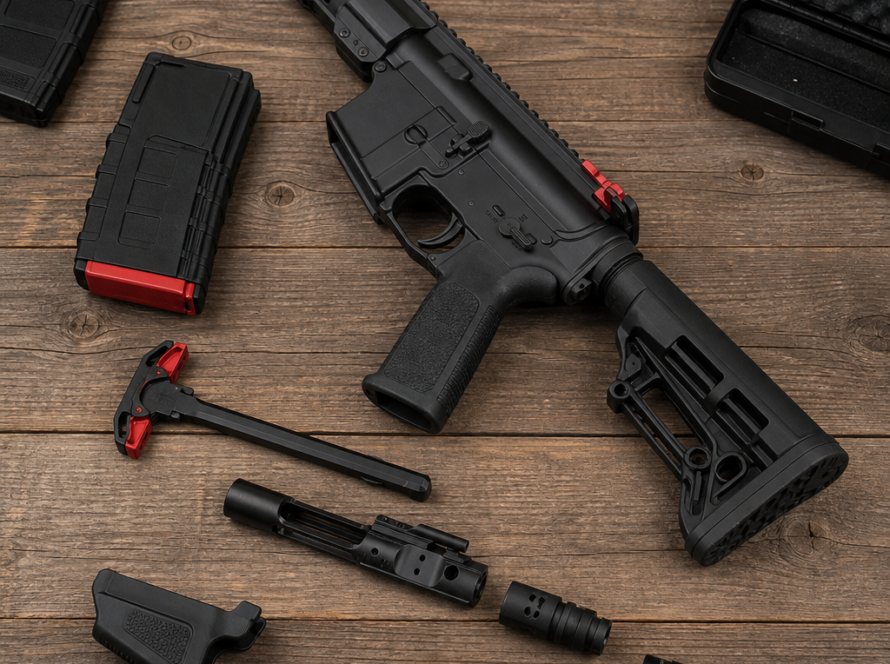
The year 1526 is the starting point Beretta points to itself. The company describes its work as producing high quality, Made in Italy firearms since 1526, which places the 500 year anniversary in 2026. Very few manufacturers in any industry can claim that kind of continuous run, and it shapes the way shooters approach the brand today. The pistols, shotguns, and optics sitting in dealer cases are the latest entries in a lineage that stretches back five centuries.
That history is not just trivia. It explains why the Beretta name carries weight in duty holsters, hunting fields, and competition bays at the same time, and why so many gun owners can trace their first issued sidearm back to a Beretta.
What the 1526 Founding Date Tells You
Beretta’s own marketing leans on a single, simple claim: high quality, Made in Italy firearms since 1526. The phrase does a lot of work. It anchors the brand to Italian manufacturing rather than to a licensing arrangement or a rebadged import, and it frames every current product as part of an unbroken tradition.
The 500 year mark is not tied to one model or one contract. It belongs to the company as a whole, which is why the anniversary matters to collectors, hunters, and defensive shooters for different reasons. A bird hunter cares about how a shotgun swings. A competitor cares about trigger feel and how quickly a pistol returns to target. A collector cares about whether a design has staying power.
What the anniversary does not do is freeze the company in place. Beretta still runs an active product configurator, where shooters can find, configure, customise, and purchase a firearm from the pistols collection. That tool is aimed at buyers making a decision right now, not at a museum audience.
The Pistol Lineup Today
Beretta pistols cover a wide range, from compact carry guns to full size duty pistols to smaller rimfire and backup options. Owner communities talk about the lineup with the familiarity of people who own several of them, and the models that come up most often fall into a few clear families.
The APX Platform
The APX was developed as a duty and military pistol, designed and manufactured in Italy. That origin matters, because the platform was built around service use rather than around a single commercial niche. The APX Carry followed as a smaller variant for shooters who want the same family of controls in a more concealable package.
The 92 Family and the M9 Lineage
The 92 pattern is the model line most American shooters recognize first. Beretta owners post about bringing home a 92X Centurion and about picking up an M9A4. One owner described the M9 as the pistol he qualified on as a young soldier in the Army, which is a common thread. For a generation of service members, the M9 was the handgun they learned on, and the modern 92 variants keep that familiar feel while adding current features.
PX4 and Compact Options
The PX4 shows up regularly in owner discussions, often as the next addition to a growing collection. Smaller pistols get mentioned too, including the Bobcat, which owners treat as a handy companion piece rather than a range primary. Collections tend to grow sideways across these families rather than staying with a single model.
Shotguns: The A400 Xplor Action and Its Specs
Beretta’s shotgun line carries the same Italian manufacturing story into the field. The A400 Xplor Action is a semi-automatic 12 gauge that appears in mainstream sporting goods retail listings with the following specifications.
| Model | Action | Gauge | Barrel Length | Capacity | Chamber |
|---|---|---|---|---|---|
| Beretta A400 Xplor Action | Semi-auto | 12 gauge | 26 inch | 4+1 | 3 inch |
At the time this was researched, that configuration was listed at $1,999.99 by a national sporting goods retailer. Shotgun pricing shifts with configuration, barrel length, finish, and promotions, so confirm current pricing and availability with the seller before you plan a purchase. Barrel length in particular changes how a shotgun handles, and a 26 inch barrel is a common all around choice for hunters who move between field and blind.
Optics, Lasers, and Accessories
Beretta branding reaches beyond firearms. Hunting scopes, optics, and lasers carrying the Beretta name move through large online marketplaces, with listings organized into categories such as binoculars, rangefinders, mounted lights, night vision, pistol scopes, and mounted cameras.
That spread gives an owner a way to keep a setup in one family, whether the goal is a scoped hunting rifle, a light on a defensive pistol, or a rangefinder for the field. Aftermarket support is just as important, and the long production run of the 92 pattern in particular means magazines, sights, and holsters are widely available from third party makers.
How Beretta Organizes Its Own Catalog
The Beretta configurator asks visitors to select a country before showing products, with options including Australia, Canada, Denmark, Finland, France, Germany, Italy, New Zealand, Spain, Sweden, Switzerland, the United Kingdom, the United States, and an international option. That structure exists because firearm rules differ by market, and the products shown are tailored to where the buyer lives.
Inside the configurator, pistols are grouped by activity, and the categories visible in the interface include Competition and Tactical. Sorting by use instead of by model number is a practical approach for a buyer who knows what the gun needs to do but has not settled on a specific variant yet. Beretta also sells through a large independent dealer network, so the configurator is a starting point rather than the only path to a purchase.

Beretta’s Presence in the United States
Beretta USA Corporation operates manufacturing and employment operations domestically, including a machine operator role tied to Gallatin, Tennessee, according to employee review listings. That American footprint matters for owners who care about domestic support, and it also reflects how a 500 year old Italian company has adapted to its largest commercial market.
For a buyer, the practical takeaway is that Beretta is not purely an import story. The brand maintains an American operation alongside its Italian manufacturing base, which supports both new production and the parts and service ecosystem that owners depend on.
What a 500 Year Track Record Means at the Counter
A long history is not a substitute for checking a specific gun, but it does carry concrete advantages for anyone spending money on a firearm.
- Designs that have survived decades tend to have deep aftermarket support for magazines, sights, holsters, and small parts.
- Familiarity helps at resale, since buyers already recognize the model lines.
- Activity based organization in the configurator makes it easier to match a pistol to a purpose rather than to a trend.
- Anniversary years often bring special editions, promotions, and inventory movement, so pricing and availability can change quickly.
None of that replaces handling the firearm or confirming the exact specifications of the variant you intend to buy. Two pistols in the same family can differ meaningfully in size, capacity, and controls.
Buying a Beretta Online
If you buy a firearm from an online retailer, the process runs the same way at most sellers, including veteran owned shops like 31 M Armory. You place the order, the seller ships the firearm to a licensed Federal Firearms License dealer near you, and you complete the transfer in person, including the required paperwork and background check.
Ammunition, magazines, optics, and other accessories generally ship straight to your door, subject to state and local rules. First time online gun buyers should confirm three things before ordering: that the seller has the model in stock, that your chosen FFL will accept the transfer, and that the configuration matches what you actually want. Local and state laws vary, so verify requirements for your jurisdiction with the FFL handling your transfer.
Collecting Versus Shooting
The 500 year milestone gives collectors a natural theme, but most Beretta owners are shooters first. The same models that appear in collector threads, including the 92 line, the PX4, the APX family, and the Bobcat, also show up in holsters, range bags, and hunting trucks. That dual life is part of what keeps the brand relevant across generations of gun owners.
A 2026 anniversary invites attention, and it is a reasonable moment to look at the catalog with fresh eyes. Start with the job the firearm needs to do, match it to a model family, then verify specs and current pricing with the seller before you commit.
Frequently Asked Questions
How long has Beretta been making firearms?
Beretta states that it has been producing high quality, Made in Italy firearms since 1526. Counting from that founding year, the company reaches its 500 year mark in 2026. That timeline is unusual in the firearms industry and explains why the brand treats its anniversary as a milestone rather than a marketing tagline.
Is Beretta an Italian company?
Beretta’s manufacturing identity is Italian, and its product materials describe the firearms as Made in Italy. The company also maintains an American operation through Beretta USA Corporation, which includes employment tied to Gallatin, Tennessee. Buyers who care about where a specific model is produced should confirm that detail for the exact variant they are considering.
Which Beretta pistols do owners talk about most?
Owner communities regularly discuss the 92 family, including the 92X Centurion and the M9A4, along with the APX and APX Carry, the PX4, and smaller pistols like the Bobcat. The M9 in particular comes up often among veterans who qualified on it during military service, which keeps the 92 pattern familiar to a broad group of shooters.
What should I check before buying a Beretta online?
Confirm the exact model and specifications, verify the seller is reputable, and make sure the firearm will ship to an FFL near you for an in person transfer. Check current pricing, since configurations and promotions change, and review your state and local rules with the receiving FFL before the order is placed.