You’ve got a tucked-in shirt, maybe for work, maybe for a date. And you want to carry your firearm without printing or showing clips. It’s possible, but it takes the right gear and a few tricks. Follow these steps, and you’ll stay hidden and ready.
Step 1: Choose the Right Holster for Tucked Carry
The wrong holster makes tucking impossible. Go for an inside-the-waistband (IWB) holster designed for tucking. Look for “tuckable” models with clips that let you tuck your shirt between the holster and the clip. Belt-clip designs are common, but they can spoil concealment; they often have a low concealment rating despite a deep waistband ride. On the flip side, a clip-less or pants-clipped holster like the Axis Elite scored high. Another option: an appendix carry holster with a claw. One minimalist appendix holster earned a high concealment rating and was called “potentially fast access.” So choose a tuckable IWB or an appendix holster with a claw. Bellyband holsters also hide the gun completely, but they sacrifice draw speed, you have to yank your shirt tail and re-holster by loosening your pants.
At 31 M Armory, we carry a range of holsters perfect for this job. Our team can help you pick the one that fits your gun and shirt style. Our guide to the best appendix carry holsters can narrow down your options.
Step 2: Select a Compatible Belt or Belt-Less System
Your belt does two things: holds your pants up and supports the holster. A stiff gun belt is best for IWB with belt clips. Look for one that doesn’t sag under the weight of your firearm. A dedicated gun belt, for example, provides firm support and micro-adjustability for a perfect fit. If you’re wearing dress pants with small belt loops, a 1-1/4-inch belt works better than the standard 1-1/2-inch. But what if you’re not wearing a belt at all? Belt-less systems like UltiClips and other clip-on designs attach directly to your pants. UltiClips clamp onto your pants fabric, so you don’t need a belt. They’re great for gym clothes, beachwear, or women’s pants that lack belt loops. However, heavy guns can sag the pants below the belt line. Stick with a subcompact gun for belt-less setups. These systems are low profile and nearly invisible when tucked. Our top gun belt recommendations can help you find a sturdy option.
Step 3: Master the Shirt Tucking Technique

This is the part most people get wrong. First, put on your holster and gun. Then, put on your shirt and button or zip it up. Tuck your shirt in over the holster butunderthe belt clips. The shirt should go between the clip and the holster body. Then, run your belt over the clips (if using a belt). For appendix carry with a claw, tuck the shirt over both the claw and the clip. If your shirt snags on the claw, pull the fabric a bit so it lies flat. Avoid tucking too much fabric behind the claw, that creates a bulge. For a clean look, pull the shirt taut and tuck it deep into your pants. Dark, loosely fitted shirts conceal better than tight, light-colored ones. A polo shirt can work if the fabric is not too clingy. Test the tuck in front of a mirror. Turn side to side. The gun shouldn’t print, and the clips should be mostly invisible. If you see a suspicious bulge, adjust the ride height or cant of your holster. Our concealed carry clothing tips offer more advice on choosing shirts that hide the rig well.
Step 4: Manage Clip and Hardware Visibility
Belt clips are the biggest giveaway. If your clip sits over the belt, it looks like an extra belt loop, maybe no one notices. But some people care about 100% invisibility. Options to hide clips: Use low-profile clips that are thin and can be tucked behind the belt. Or use UltiClips that attach to the pants fabric, allowing you to put the belt over the clips. A belt receiver is another low-profile choice; only a small metal hook shows. You can also use a tuckable clip that lets you slide the shirt under the clip itself. For strong-side IWB, position the clips so they sit behind your belt loops. This breaks up the clip lines. If you are wearing a suit jacket or vest, that adds extra cover. The key is to avoid shiny metal clips, black or matte finishes blend in better. At 31 M Armory, we stock holsters with a variety of clip styles. We can help you pick one that matches your wardrobe. Our IWB holster guide covers clip options in detail.
Step 5: Practice Your Draw from Tucked Carry
Drawing from a tucked shirt is different from an untucked draw. You need to clear the shirt without snagging. Start with your support hand. Use your palm or fingers to lift the shirt tail above the gun. Alternatively, some shooters rip the shirt up with their primary hand. Practice both. The key is to get a full grip on the gun before pulling it out. Dry-fire at home until the motion feels natural. Then, go to the range and run drills. In a test from Tier 1 Concealed, an appendix draw from a tucked shirt was timed at 0.99 seconds, sub-second. That’s fast. Strong-side IWB may be slower because the shirt clearing motion is less natural. Bellyband holsters require you to yank the shirt tail and then reach back behind the belt, much slower. So appendix carry is usually the fastest for tucked shirts. Practice from a seated position too, because that’s common for office workers. Draw, present, and fire on target. Repeat until it’s smooth. Also practice re-holstering with one hand while holding the shirt up. Some belts make re-holstering easier than others. For more on draw techniques, this YouTube breakdown shows operational drills.
If you’re new to concealed carry, consider taking a class. Many shooting ranges use online booking software to schedule courses. It’s a convenient way to find and book training near you.
Step 6: Optimize Comfort and Concealment
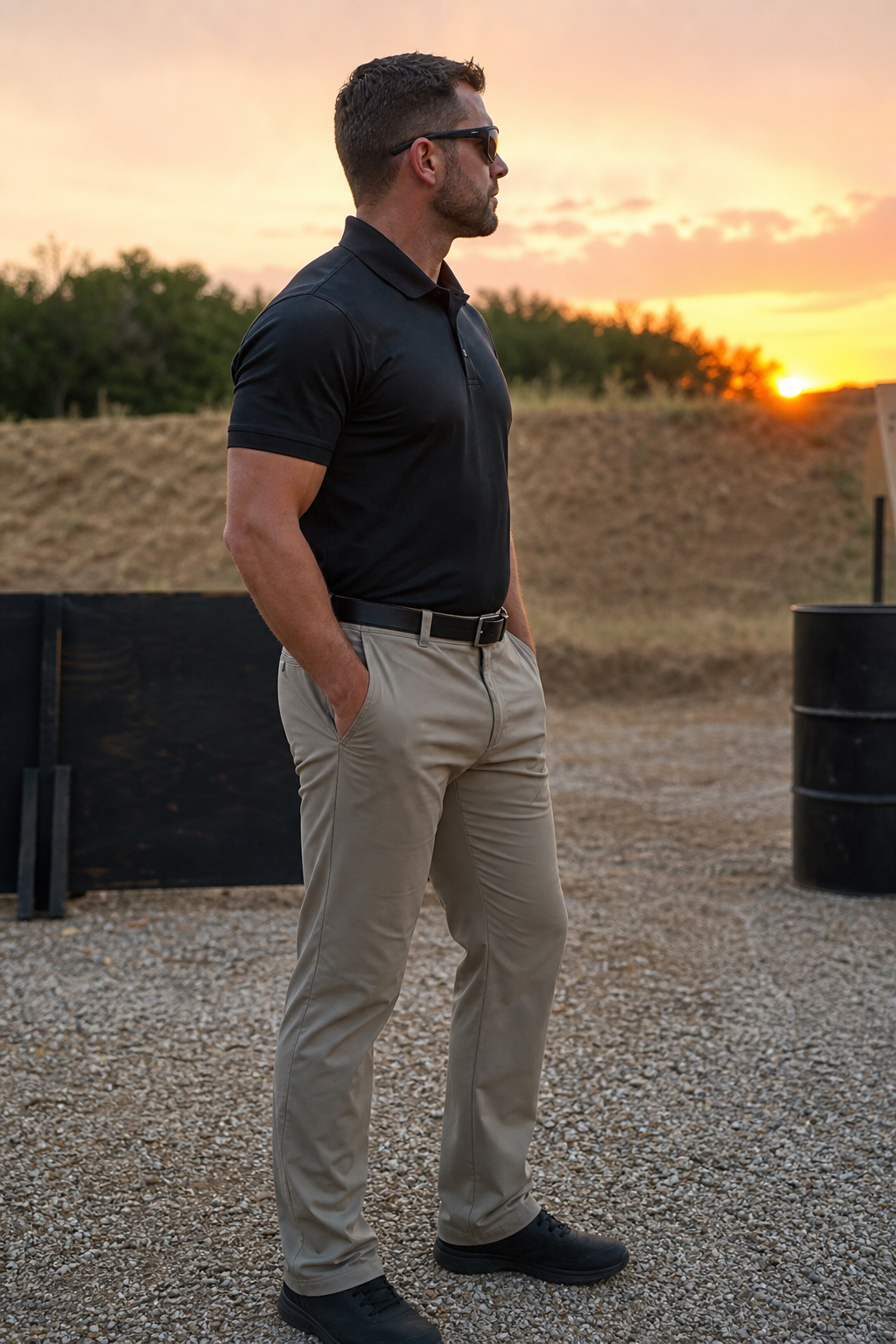
You have to wear this setup all day. Comfort matters. Start with the right ride height: too high and the grip sticks out; too low and the muzzle digs into your leg. Adjust the holster’s cant (angle) to match your body’s natural curve. A 15-degree forward cant often helps. Use a holster with a sweat guard to protect your skin from sharp edges. The holster’s claw pushes the grip into your body, reducing printing. If you have a minimalist appendix holster, the press of the claw against your abdomen can be very comfortable. For strong-side carry, a hybrid holster (leather back with Kydex shell) may be more comfortable for all-day wear. Bellybands are comfortable but hot in summer. Choose a lightweight gun. A subcompact 9mm makes a huge difference. A heavy gun sags your pants and prints more. Also, dress for the gun: wear pants with a little extra room in the waist. If you’re a veteran, 31 M Armory offers a 6% discount. We have a huge selection of holsters, belts, and concealed carry gear. Our compact 9mm buyer’s guide can help you choose the right firearm for tuck carry.
Frequently Asked Questions
What is the best holster for a tucked-in shirt?
The best holster is a tuckable IWB or appendix holster with a claw. These let you tuck your shirt over the gun while keeping the clips hidden. The Axis Elite and other tuckable appendix holsters are top choices.
Can I conceal carry with no belt?
Yes. Use belt-less systems like UltiClips that clamp onto your pants, or a bellyband holster. UltiClips work well for small guns but may sag with heavier models. Bellybands hide everything but slow your draw.
How do I hide the belt clips?
Use thin, matte tuckable clips. Position them behind belt loops. Or use UltiClips that clip to pants, allowing your belt to cover them. Some tuckable clip receivers are also nearly invisible.
Is appendix carry faster than strong-side with a tucked shirt?
Yes. Appendix carry typically allows a faster draw because you can lift the shirt more naturally. In drills, appendix draws from tucked shirts achieved sub-second times, while strong-side was slower.
Can I carry a full-size gun with a tucked shirt?
It’s possible but harder. Full-size guns print more and may sag the pants. Use a stiff gun belt and a tuckable appendix holster. Subcompact guns are easier to hide and more comfortable all day.
How do I practice drawing from a tucked shirt?
Start dry-firing at home. Use your support hand to clear the shirt, get a full grip, and draw smoothly. Run drills from standing and seated positions. Go to the range and time your draws using a shot timer.
Conclusion
Concealing a firearm with a tucked-in shirt is a challenge, but it’s doable with the right holster, belt, and technique. Start with a tuckable IWB or appendix holster, pair it with a stiff belt or belt-less clips, and master the shirt tucking and draw. Practice until it’s automatic. At 31 M Armory, we’re proud to serve veterans and fellow gun owners. Our 6% veteran discount is our way of saying thanks. Browse our holster selection and gear to find the perfect setup for your lifestyle. Stay safe, stay concealed. for more concealed carry tips.