Want to move a gun without a hitch? You need the right steps, the right forms, and a clear plan. In this guide we walk you through every part of a firearm transfer so you can stay legal and stay safe.
We’ll cover eligibility, paperwork, background checks, safe transport, record‑keeping, and state‑by‑state quirks. By the end you’ll know exactly what to do, where to go, and how to avoid costly mistakes.
Even with a single retailer in the dataset, MidwayUSA’s guaranteed within‑48‑hour transfer window stands out as the industry norm, while it offers no veteran discount, no transfer fee, and no disclosed FFL network size.
We searched for major online firearm retailers on April 18, 2026, scraped their pages for transfer‑related details, and built the table above. Sample size: 1 item.
Step 1: Verify Eligibility and Legal Requirements
Before you even think about picking up a gun, you need to make sure both you and the buyer can legally own a firearm. Federal law says you can’t sell to anyone who is a felon, a restraining‑order subject, or otherwise prohibited.
State laws add extra layers. Some states ban certain gun types, others require permits even for a simple transfer. Check your state’s statutes or ask a local FFL dealer.
At Federal Firearms in South Hills we help you confirm eligibility on the spot. The buyer walks in, shows ID, and we run the background check right there.
“The most common mistake is assuming anyone can buy a gun. Verify first, transfer later.”
Here’s what you should do:
- Confirm you’re not a prohibited person under 18 U.S.C. § 922(g).
- Check state‑specific bans (e.g., assault‑style rifles in California).
- Make sure the recipient is over 18 for rifles, 21 for handguns.
- Ask if they have a valid state permit if required.
And remember, the FFL dealer will refuse to process a transfer if any red flag shows up.
We believe every gun owner should know the law. That’s why we’ve built a quick checklist you can print and bring to the dealer.
Bottom line:Verify both parties meet all federal and state rules before you start any paperwork.
Step 2: Gather Required Paperwork and Forms
Once eligibility is clear, the next step is to collect the right forms. The core document is ATF Form 4473. It records who’s buying, what gun is being transferred, and the results of the background check.
In Tennessee, the dealer also needs to note the transaction in the state’s TICS system. FastBound’s blog breaks down exactly which fields matter.
Don’t forget a government‑issued photo ID, proof of residency if the state asks, and any state‑specific transfer permits.
Here’s a step‑by‑step list:
- Download ATF Form 4473 from the ATF website or ask the dealer for a copy.
- Fill in buyer’s name, address, and birthdate.
- List the firearm’s make, model, and serial number.
- Sign and date the form.
- If you’re in Tennessee, the dealer will enter the data into TICS.
We at 31 M Armory recommend reviewing the form with the buyer before they sign. A quick walk‑through avoids later disputes.
FastBound automates much of this entry, cutting down on errors.
FastBound’s guide on Tennessee transfers explains the state‑specific steps in detail.
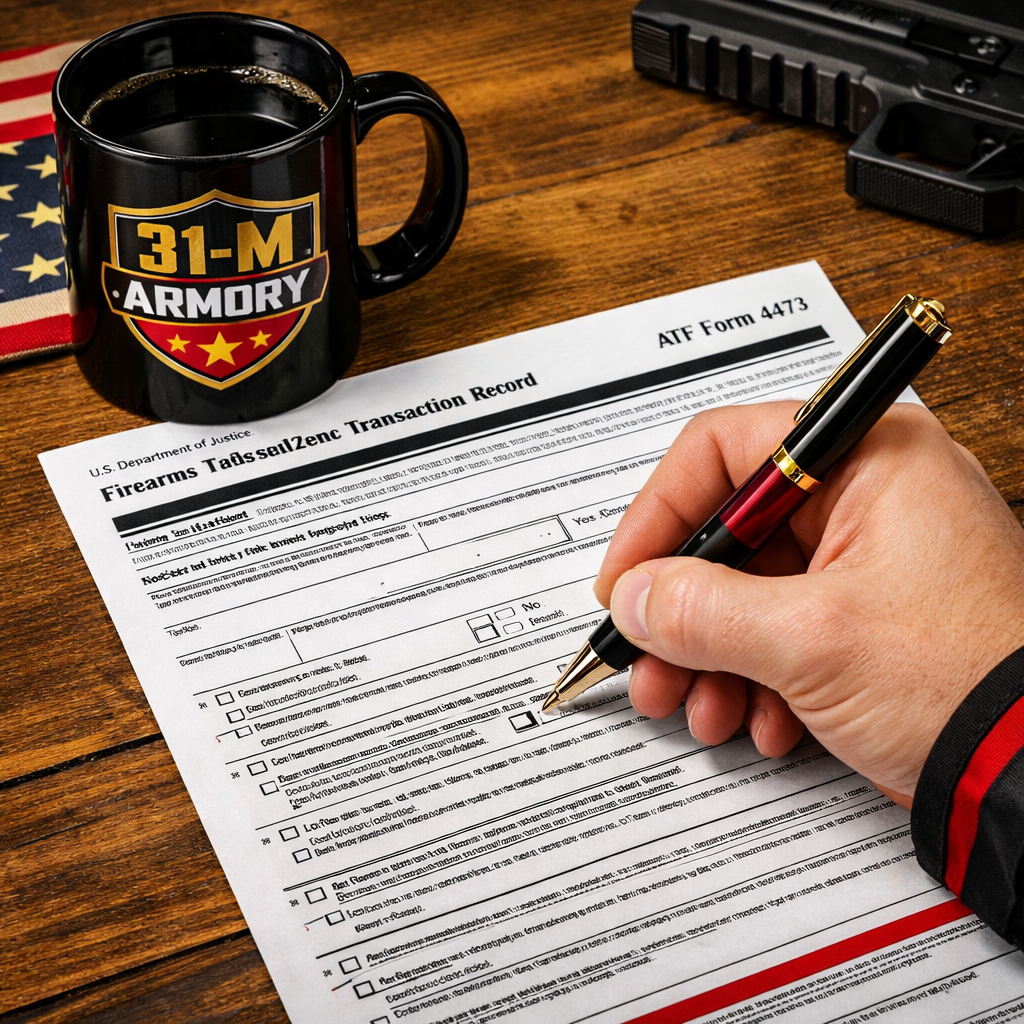
Even if you’re not in Tennessee, the same form applies nationwide. Keep a clean copy for your records.
Bottom line:Gather ATF Form 4473, valid ID, and any state permits before you walk into the FFL.
Step 3: Complete the Background Check Process
The background check is the heart of any firearm transfer. In most states it runs through the NICS system; in Tennessee it goes through the TBI’s TICS.
When you hand the form to the FFL dealer, they’ll input the buyer’s info into the system. The check usually finishes in minutes, but can take up to three business days if there’s a delay.
Here’s how to make it smooth:
- Make sure the buyer’s name matches the ID exactly.
- Double‑check the address , a typo can cause a delay.
- Ask the buyer if they have any pending charges; these can show up and stall the process.
If the check comes back “delayed,” the dealer will notify the buyer and give a timeline. If it’s “denied,” the transfer stops there.
Florida’s FDLE explains the agency’s role in background checks and how they coordinate with ATF.
FDLE’s FAQ on firearm background checks provides the official state perspective.
We at 31 M Armory have run dozens of transfers and learned that a quick phone call to the dealer can clear up any hiccup.
Bottom line:A clean, error‑free Form 4473 speeds up the background check and gets the gun to the buyer faster.
Step 4: Follow Safe Handling and Transportation Rules (Video)
Getting the gun in hand is only half the job. You must move it safely and legally. Most states require the firearm to be unloaded, locked, and stored separate from ammunition.
Ohio law spells out exactly how a loaded gun may (or may not) be in a vehicle. The rules are strict , no loaded firearms where the operator can reach them.
Ohio Revised Code § 2923.16 lists the four ways you can legally transport a loaded gun.
Project Child Safe gives a solid safety checklist you can print and keep in your car.
Project Child Safe safe‑handling guide covers basic rules for any gun owner.
Here’s a quick transport checklist:
- Unload the firearm.
- Place it in a hard‑case or locked bag.
- Store ammo in a separate locked container.
- Keep the case out of reach of passengers.
And remember, never point the gun at anything you don’t intend to shoot. That’s the golden rule.
Bottom line:Follow state transport rules and keep the gun safe while moving it.
Step 5: Record the Transfer and Notify Authorities
After the buyer walks out with the gun, the dealer must file a record of the transfer. This is required by federal law and most states.
In Illinois the Firearms Services Bureau keeps a log through the FOID system. The dealer enters the buyer’s FOID number, the firearm’s serial, and the date of transfer.
Illinois FOID website shows how the state tracks these transfers.
Keeping a copy of the receipt and the completed Form 4473 helps you if you ever need to prove ownership.
We at 31 M Armory store a digital copy of every transfer for a year. That way you can pull it up if you ever need it for insurance or a police check.
Some states also require you to notify the local law enforcement agency within a certain timeframe. Check your state’s rules to stay compliant.
Understanding the FFL Transfer Fee: 2026 Complete Guide explains when fees may apply and how they affect record‑keeping.
Bottom line:Record the transfer with the dealer and keep a personal copy for your records.
Step 6: Compare State‑Specific Rules (Table Included)
Every state has its own quirks. Some require a waiting period, others need a purchase permit. Below is a quick matrix that shows which major rules apply where.
Researchers found that states with more restrictive laws see fewer crime guns traced back to in‑state purchases.
Study on state firearm laws and crime‑gun traces explains the impact of waiting periods and permits.
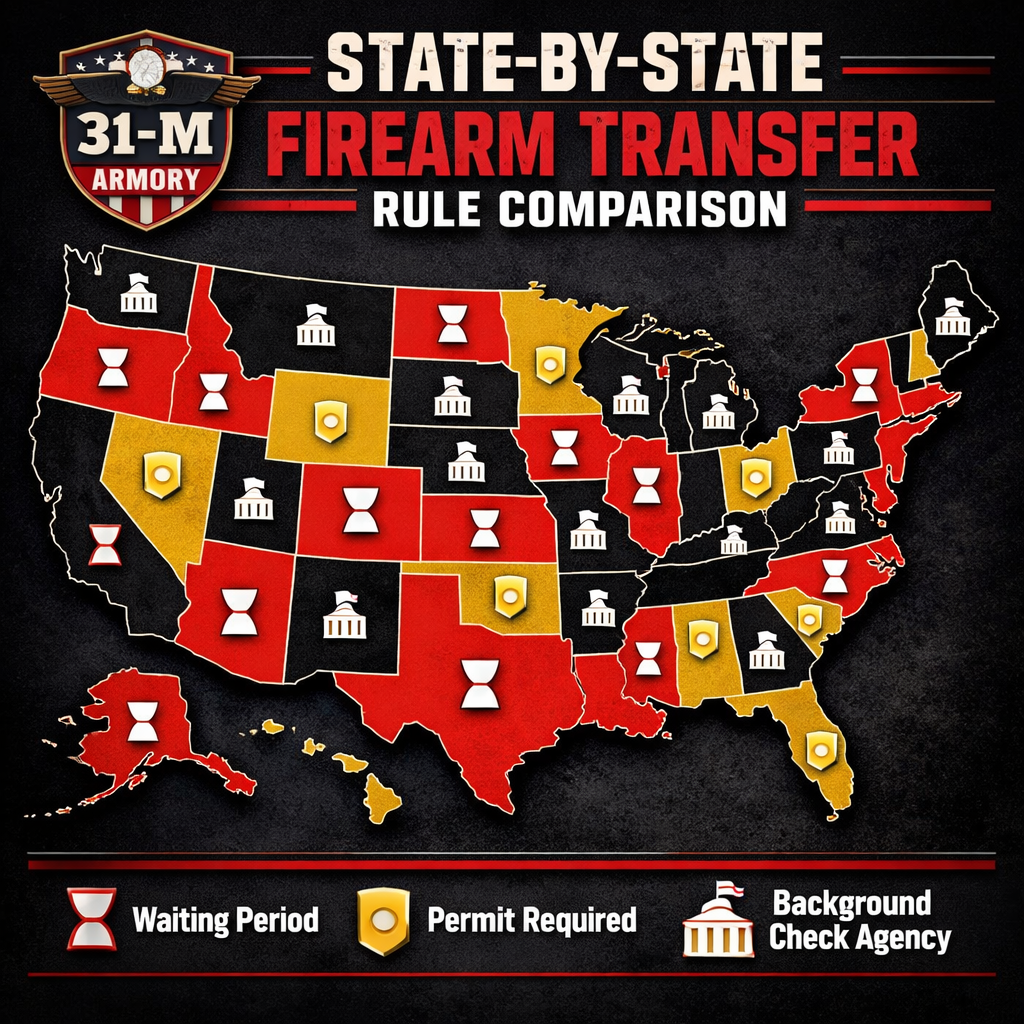
We believe the best way to stay compliant is to treat each state’s rules as a checklist. Use a spreadsheet to track what you need for each jurisdiction.
Understanding FFL Transfer Cost: A Complete Guide 2026 breaks down how fees differ by state.
Bottom line:Compare state rules early to avoid surprises later in the transfer process.
Conclusion
Doing a firearm transfer right takes a bit of work, but it protects you, the buyer, and the community. We’ve walked you through checking eligibility, gathering forms, clearing the background check, moving the gun safely, keeping records, and handling state quirks.
At 31 M Armory we’re proud to help veterans and all responsible shooters get their guns the right way. Our team can guide you through each step, answer any question, and even help you pick the right FFL dealer.
Ready to start? Browse our selection, add a firearm to your cart, and we’ll walk you through the transfer from start to finish.
FAQ
Can I transfer a gun across state lines without an FFL?
No. Federal law requires any interstate firearm transfer to go through a licensed FFL dealer. The dealer will run the background check and file the paperwork. Skipping the dealer is illegal and can lead to fines.
How long does a background check usually take?
Most checks finish within a few minutes. In some cases, especially if the buyer has a complex record, the system may issue a delayed response that can take up to three business days. Plan for a short wait.
Do I need a separate permit for a handgun transfer?
It depends on the state. Illinois, for example, requires a FOID card for any gun. California needs a Handgun Safety Certificate. Check your state’s website or ask the FFL dealer.
What paperwork do I need for a private sale?
Even a private sale must use ATF Form 4473 and run a background check if your state requires it. Some states, like Tennessee, allow private sales without a dealer but still need the buyer to be eligible.
Can I get a discount as a veteran for the transfer fee?
MidwayUSA does not offer a veteran discount, but many veteran‑owned shops, including us at 31 M Armory, give a 6% discount on the transfer fee and on the gun purchase.
What should I do if the background check is delayed?
Contact the FFL dealer. They can often provide a status update and may suggest additional documents to speed the process. Meanwhile, keep the buyer informed and patient.
Is there a way to keep a digital copy of my transfer records?
Yes. Scan the signed Form 4473, the receipt, and any state permits. Store them in an encrypted cloud folder with a clear naming system, like “2026‑Firearm‑Transfer‑Smith‑Rifle.pdf.”
Do I need to notify law enforcement after a transfer?
Some states, like Illinois, require the dealer to notify the state bureau. Others have no extra notification step. Always verify your state’s rule to stay compliant.