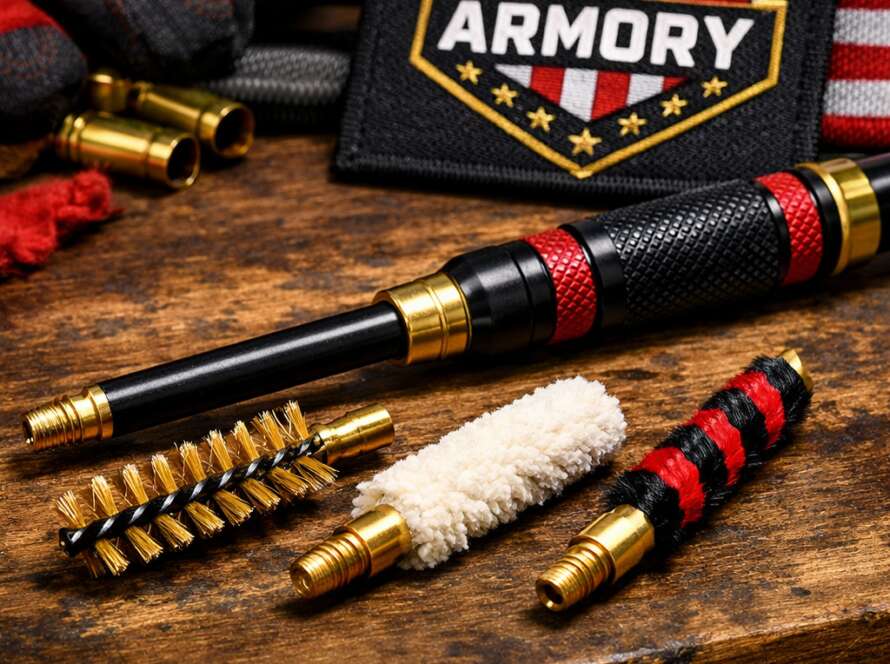
That shoulder punch after a full day of clays or a hard hunting season adds up fast. The right recoil pad cuts felt recoil significantly, keeps your form intact, and lets you shoot longer without flinching. Here are the 10 best recoil pads for shotguns right now, who each one is for, and what sets it apart.
1. 31 M Armory (Our Top Pick) , Veteran-Curated Shotgun Recoil Pad Selection
We at 31 M Armory are a veteran-owned firearm and accessory retailer, and our top pick starts with us. We believe responsible gun owners deserve vetted gear, not just whatever ships fastest from a warehouse. That’s why we hand-curate every recoil pad in our inventory with one standard: does it actually reduce felt recoil under real shooting conditions?
We carry options across every category , precision-fit, slip-on, grind-to-fit, and hydraulic , so you can match the pad to your shotgun and your shooting style without guesswork. Whether you’re running 3-inch magnum loads in a 12-gauge for waterfowl or punching through a sporting clay course, we stock what fits.
Our veteran discount is real. We offer 6% off to all veterans, because veterans always have our six. Browse our selection, add your firearm to your cart, and we’re happy to guide you through every step , from fit to finish. If you’re also deciding between gauges before adding a pad, our guide on 12 gauge vs 20 gauge for home defense covers recoil differences that directly affect which pad thickness you’ll want.
The only caveat: because we carry multiple brands and styles, confirming exact pad specs for your specific model is worth a quick check with us before ordering. We’d rather you call that shot right the first time.
2. Precision-Fit Recoil Pad with Anti-Muzzle-Jump Technology
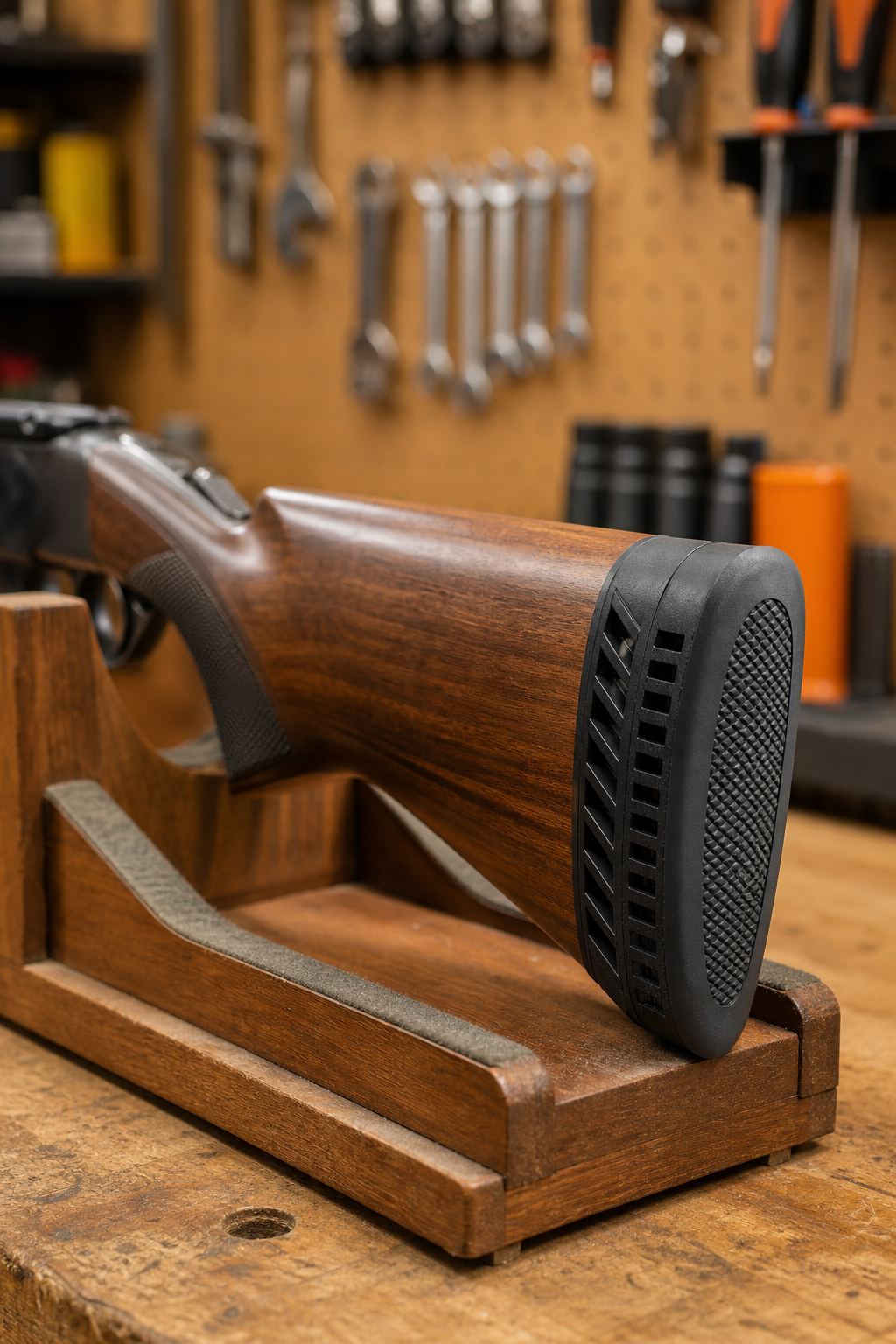
A precision-fit pad with anti-muzzle-jump technology is the option most serious shooters graduate to when a slip-on stops being enough. Pads in this category are built from proprietary viscoelastic materials engineered to damp noise and vibration rather than simply compress under impact like standard rubber.
The standout feature is the anti-muzzle-jump technology built into pads of this type. When you fire rapid follow-up shots, muzzle rise costs you time getting back on target. An internal air chamber design counters that upward movement, keeping the gun tracking flatter. Manufacturers in this category commonly claim significant reductions in felt recoil across their product lines, and operational testing has shown these pads noticeably outperform basic slip-ons on shoulder impact, especially with harder-kicking loads.
Installation typically takes two screws and follows a straightforward model-specific fit list. You pull the old pad, match your make and model from the manufacturer’s template guide, and bolt the new one on. If your exact firearm isn’t in the list, most manufacturers’ customer service teams are known to be responsive, and their catalogs cover most popular shotgun platforms.
One thing to note: the precision-fit version holds its position better than a slip-on, but viscoelastic materials can show surface wear after several seasons of hard use. For hunters who drag their gun through brush and weather, plan to inspect it annually.
3. Pachmayr Decelerator Recoil Pad , Classic Rubber Performance at Every Budget
Pachmayr has been the first choice of gunsmiths and law enforcement professionals for decades, and the Decelerator is the reason. The SC100 Sporting Clays version uses a patented Speed Mount Heel with a unique hard rubber heel combined with Decelerator rubber across the face , a combination that reduces kick without adding noticeable bulk to the gun’s balance.
What makes it earn a spot here over cheaper rubber pads is the material. Decelerator rubber is softer and more energy-absorbing than standard neoprene. Amazon reviewers rate the SC100 at 4.7 out of 5 stars, and comments consistently note that it grinds easily, looks clean on both synthetic and wood stocks, and tames recoil even on lightweight field guns. One reviewer called it the only pad they’d ever use after running it on multiple shotguns over years of sporting clays competition.
It’s also a superior pad for upland hunting where gun mounting speed matters. The SC100’s low-profile heel won’t snag clothing on a fast mount, and the 1-inch thickness hits a sweet spot between recoil absorption and maintaining a natural length of pull. If you’re new to pad upgrades or just need a reliable workhorse option, this is where to start. Thinking about what shells you’re pushing through your gun also matters here , heavier loads demand a denser pad, so pair accordingly. If you’re selecting loads for a defensive setup, our guide on top shotgun shells for home defense is worth a read alongside your pad choice.
The brown color option is notably lighter than most wood grain finishes , a small cosmetic issue, but worth knowing before you order.
4. KICK-EEZ Sporting Clay Recoil Pad , Notch-Cut Design for Fast Mounts
The KICK-EEZ 200 series is the pad competitive sporting clay shooters reach for when every target matters. Its defining feature is a notch cut at the heel of the pad , a design detail that sounds minor until you’ve fumbled a mount at a driven bird station because the pad corner caught your vest.
As RJ from KICK-EEZ explains in their official product video, that heel notch exists specifically for low-gun disciplines: international skeet, FITASC, and any format where you start the gun below shoulder and drive it up fast. The notch prevents the pad from dragging against clothing on the mount, shaving fractions of a second that add up over a round. Hunters shooting walked-up upland birds find the same benefit.
The 200 series is a grind-to-fit design, available in two sizes (2 inches wide by 5 and 5/8 inches long for the large 201, and 1-7/8 inches wide by 5-1/4 inches long for the 202) and three thickness options: 3/4 inch, 15/16 inch, and 1-1/8 inch. The Sorbothane material KICK-EEZ uses across their line is the most interesting data point in the category: their gel-based compound claims up to 94% recoil reduction, which is the highest figure in any product specification we found in our research. That number outperforms hydraulic pads on raw reduction claims, though it reflects peak lab conditions rather than a universal field guarantee.
The grind-to-fit requirement means you need a belt grinder or a cooperative gunsmith. Budget an extra $20 to $40 for fitting if you’re not doing it yourself.
5. Mechanical Recoil Reduction System, Hydraulic Fluid-Film Shock Absorber
Mechanical recoil reduction systems occupy a different category from pad-style products. They are full mechanical recoil reduction systems designed for competitive shotgun shooters who need consistent, adjustable performance shot after shot. These systems use adjustable compression cylinders to slow recoil travel mechanically, giving you a repeatable impulse across your entire round of targets.
That adjustability is the real selling point for serious competitors. If you’re shooting heavy loads one station and light loads the next, a mechanical system that can be tuned compensates in ways a passive rubber or gel pad simply can’t. Stock fit and consistent mount position improve when recoil is predictable — your shoulder returns to the same spot every time, which tightens patterns and speeds target reacquisition.
The tradeoff is complexity. Mechanical recoil reduction units typically require professional installation and periodic tuning. They cost more than any passive pad on this list, and the setup time is real. For casual hunters or high-volume recreational shooters, the cost-to-benefit ratio is hard to justify. But for competitive clay shooters running hundreds of rounds a week, mechanical control is something no rubber pad can match. If you’re building out a dedicated sporting setup and already have a high-end gun, a mechanical recoil reduction system is worth the investment.
6. FalconStrike Recoil Pad , Fluid-Film Technology vs Traditional Rubber
FalconStrike uses a concept borrowed from aerospace engineering: a thin film of hydraulic fluid caught between surfaces, where a small input motion generates a high-speed fluid displacement that absorbs the shock.
The usable result is that FalconStrike claims 80% recoil energy reduction, which is the hydraulic category benchmark. That’s meaningfully higher than most rubber or NAVCOM pads under sustained shooting. The pad also expands outward slightly on firing , about 12% more contact area than a rigid rubber pad , which gives the surrounding tissue a few extra milliseconds to adjust to displacement rather than taking a sharp concentrated impact. FalconStrike also claims performance equal to or better than a muzzle brake, with the key advantage that it produces no shockwave toward the shooter beside you at the bench.
FalconStrike installs with a universal baseplate system, no gunsmithing required, and fits most shotgun and rifle stocks. It’s one of the few pads that can be combined with a muzzle brake for additional energy reduction on top of the pad’s baseline.
Shooters with joint concerns, those recovering from shoulder injuries, or older shooters who feel recoil more acutely will notice the difference immediately. The limitation is price point: FalconStrike sits at the premium end of the market, so budget shooters will want to weigh it against other rubber and viscoelastic options lower on this list.
7. Slip-On Recoil Pad, No-Tools Install
A slip-on recoil pad is what you buy when you want solid performance without touching a screwdriver. It goes over the existing stock or bare buttstock in seconds — no modification, no fitting, no gunsmithing appointment. Shooters report it fits platforms from Remington 1100s to Mossberg 500s to Benelli Novas.
Quality slip-on pads use vibration-dampening materials and anti-muzzle-jump technology, reducing felt recoil significantly compared to a bare stock. A duck hunter noted their pad had survived six seasons across all weather without needing replacement.
Three sizes cover most stocks, with two thickness options affecting length of pull. If you’re running a youth-sized stock, a thin layer of tape under the pad keeps it seated without slipping. That minor stability issue — the pad can creep after extended rapid firing — is the main caveat here. For hunters and recreational shooters who aren’t hammering through 200 rounds in a session, it’s a non-issue.
Slip-on recoil pads are generally available at an accessible price point, making them the best value-to-performance ratio on this list for anyone who wants an immediate upgrade without committing to a full pad installation.
8. Budget Slip-On Recoil Pad , Budget-Friendly Universal Option
A budget slip-on recoil pad is the gateway pad , the one that makes sense when you’ve just bought a used shotgun with a hard plastic buttplate and want softer shooting without spending more than the box of shells. These universal slip-ons are made from soft rubber compounds, designed to stretch over most standard buttstock profiles.
They won’t out-perform NAVCOM or Sorbothane on pure energy absorption, but they do their job: they remove the hard stop of a plastic buttplate and add enough cushion to make 20 or 30 rounds comfortable for a casual shooter. For a pheasant hunter running a handful of flushes on a weekend outing, that’s plenty. If you’re pairing a budget pad with a hunting setup, our guide on the best gun for pheasant hunting covers the platforms this style of pad fits most commonly.
Budget slip-ons work best on firearms with standard or slightly tapered stocks. Very thin or unusually shaped stocks may not grip them well, and there’s no thickness adjustment , what you get is what you get. Long-term durability is solid for the price, though the rubber softens and loses grip over multiple seasons faster than NAVCOM alternatives.
If you’re equipping a first-time shooter or outfitting a range loaner shotgun, a budget slip-on is the usable choice. Don’t overthink it at this price tier.
9. Grind-to-Fit Recoil Pad, Custom Fit for Older and Sensitive Shooters
Grind-to-fit pads occupy a specific niche: stocks that don’t match any manufacturer’s pre-fit list, custom or semi-custom wood stocks, or shooters who need a precise length-of-pull adjustment. A quality grind-to-fit pad uses a dense rubber compound that shapes cleanly on a belt grinder without tearing, clogging, or melting at the edges.
For older shooters and anyone with joint sensitivity or previous shoulder injuries, a precisely fitted pad matters more than material alone. A pad that sits even slightly off-axis or leaves a gap at the heel transfers recoil unevenly across the shoulder, creating pressure points. Grinding the pad to exact stock geometry eliminates that problem. The process takes 15 to 30 minutes with a bench grinder and some patience , it’s DIY-accessible if you’ve ever done basic gunsmithing or woodworking.
A grind-to-fit option is also worth considering when someone has had a stock cut shorter by a previous owner (a situation that comes up regularly with older military surplus or estate guns) and needs to build length back up. A 1-1/4 inch thick grind-to-fit pad can restore a usable length of pull without requiring stock extension hardware. Reduced recoil is especially significant for shooters who fire from a seated or supported position, including wheelchair-using veterans who benefit from the most precisely fitted and lowest-recoil setups available.
The limitation is obvious: if you don’t own a grinder or aren’t comfortable doing the work yourself, factor in gunsmith time. That can push the total cost above a pre-fit precision pad.
10. Gel-Filled Recoil Pad, Soft Shooting for High-Volume Sessions
Gel-filled pads occupy a distinct space from both rubber and hydraulic options. A Visco-Elastic gel compound conforms to the shooter’s shoulder under load, distributing impact across a wider surface area rather than concentrating it at a single point. That property makes gel pads particularly effective during high-volume sessions , sporting clays rounds, trap leagues, or intensive training days where cumulative recoil fatigue is the real problem.
The tradeoff compared to Sorbothane or NAVCOM is longevity. Gel can degrade or shift inside the pad housing over time, especially in temperature extremes. A gel pad left in a hot truck during a summer hunt may feel noticeably different after that exposure. For dedicated range use or temperate-climate hunting, this is rarely a usable issue. But for hunters who keep a pad on a field gun stored through humid summers and cold winters, rubber-based alternatives tend to hold their properties longer.
Gel pads are also among the most comfortable options for shooters who are new to the sport or who are building back from a shoulder injury and need a low-threshold return to shooting. The soft initial contact before the pad compresses fully makes the gun feel friendlier on the first shot , a psychological benefit that shouldn’t be underestimated when you’re trying to eliminate a flinch. Viscoelastic materials are known to return to their original shape after compression, which is what gives gel-type pads their lasting energy absorption across sessions.
If you run a lot of shells and your shoulder is the limiting factor, a gel-filled pad is worth trying before you commit to a more expensive hydraulic system.
Operational Recoil Reduction: What the Numbers Actually Mean
Recoil reduction percentages appear on every box, but they don’t all measure the same thing. Some numbers reflect peak force reduction. Others measure felt recoil impulse, which is what actually bruises shoulders and causes flinch. And a few are simply marketing claims with no disclosed methodology. Understanding what each number means helps you shop with more clarity.
Here’s how the major technologies compare in practice. Standard soft rubber pads (like Pachmayr Decelerator) compress quickly and dissipate some energy through material flex, but they reach their limit under repeated heavy loads. NAVCOM material (LimbSaver) is more viscoelastic , it absorbs vibration more effectively over a longer duration and recovers faster between shots. Sorbothane gel (KICK-EEZ) shows the most impressive lab numbers at up to 94% reduction, operating through molecular damping that converts impact energy into tiny amounts of heat. Hydraulic fluid-film systems (FalconStrike, Gracoil) work differently: they use fluid displacement to spread the recoil pulse over a longer time interval, which reduces peak force more than any passive material can.
The usable takeaway for a 12-gauge shooter running standard 2-3/4 inch loads: a quality rubber pad cuts enough felt recoil for casual use. A NAVCOM or gel pad is the right call for competitive or high-volume shooting. A hydraulic system is worth the price when you’re shooting 500-plus rounds per week or dealing with genuine shoulder pain. The combination of a muzzle brake and a hydraulic pad, as FalconStrike’s data suggests, produces the lowest felt recoil of any non-compensated setup , but that combination adds cost and brings the concussion-wave tradeoff at a shared bench.
One honest gap in the data: recoil reduction ratings are almost never tested under identical conditions across brands. A claim of 70% from one manufacturer and 80% from another may reflect entirely different test loads, velocities, and measurement methods. When in doubt, weight operational shooter feedback alongside the spec sheet. We’ve built our selection at 31 M Armory around that same standard.
How to Choose the Right Recoil Pad for Your Shotgun
Picking the right pad comes down to four decisions: mounting method, material, thickness, and fit. Get these four right and almost any pad on this list will improve your shooting.
Mounting Method
Slip-on pads install in seconds with no tools and no stock modification. They’re ideal for shooters who own multiple guns or want to test a pad before committing. Precision-fit and grind-to-fit pads require screws or grinding work but stay put better under rapid fire and maintain a cleaner heel line for fast gun mounts. Based on the research we compiled, slip-on mounting accounts for roughly 45% of the market , it’s the dominant choice for budget and casual shooters.
Material
Soft rubber is the baseline. NAVCOM and Sorbothane gel absorb more energy across more shots. Hydraulic systems reduce peak force more than any passive material. Choose by how many shells you fire per session and how much recoil sensitivity you have. If you’re regularly shooting heavy hunting loads, step up to gel or NAVCOM at minimum.
Thickness and Length of Pull
Adding pad thickness lengthens the stock’s length of pull (LOP) , the distance from trigger to buttplate. Most adult shooters use an LOP between 13 and 15 inches. A 1-inch pad adds roughly 1 inch to LOP. If your current gun already fits well, a pad thicker than 1 inch may push your cheekweld forward and force your elbow out. Confirm your current LOP before ordering. For home defense setups where quick shouldering matters, our overview of the best home defense shotgun picks discusses stock fit in that specific context.
Universal vs Model-Specific
Universal pads fit most stocks but may have gaps at the heel or toe that reduce performance and look unfinished. Model-specific precision-fit pads match the exact stock profile of your firearm. If your shotgun is a popular platform (Mossberg 500, Remington 870, Beretta A400), precision-fit options almost certainly exist. If you’re running an older or less common firearm, a grind-to-fit pad is the cleanest solution.
Recoil Pad Comparison: Top 10 Side by Side
FAQ
What is the most effective recoil pad material for a shotgun?
Sorbothane gel tops the published claims at up to 94% recoil reduction, making it the highest-rated passive material in our research. Hydraulic fluid-film systems (like FalconStrike) reach 80% and offer more consistency across varying load weights. For most shooters, NAVCOM-based pads like the LimbSaver AirTech deliver the best balance of performance and price, with up to 70% felt recoil reduction under real field conditions.
Will a recoil pad change my shotgun’s length of pull?
Yes. Every pad you add changes your length of pull by roughly its own thickness. A 1-inch pad adds 1 inch of pull. If your stock already fits well, choose a thinner pad or have the stock trimmed to compensate. Grind-to-fit and precision-fit pads can be shaped to a specific thickness, giving you the most control over final LOP without altering the stock itself.
Can I use a recoil pad on a shotgun with a muzzle brake?
Yes, and the combination works well. FalconStrike specifically documents that pairing their hydraulic pad with a muzzle brake produces an additional 40% energy reduction on top of the pad’s standalone performance. The only tradeoff is that muzzle brakes redirect blast sideways, which affects anyone shooting beside you. A recoil pad alone avoids that issue entirely while still delivering meaningful recoil reduction.
How do I know if a slip-on recoil pad will fit my shotgun?
Slip-on pads come in small, medium, and large sizes based on the stock’s buttstock width and profile. Measure your stock’s width at the widest point of the buttplate, then compare it to the manufacturer’s size chart. Most LimbSaver and Pachmayr slip-ons list compatible firearm models. If your shotgun is an unusual shape or very thin, a grind-to-fit pad will give you a cleaner result than any universal option.
How long does a quality shotgun recoil pad last?
A rubber or NAVCOM pad on a typical hunting or recreational shotgun lasts three to seven seasons depending on exposure to weather, UV light, and cleaning solvents. Gel pads degrade faster in temperature extremes. Hydraulic systems have the longest effective life but may need fluid checks after heavy use. Inspect your pad annually , a pad that feels hard, cracked, or compressed flat is no longer doing its job and should be replaced.
Do recoil pads help with flinching?
Yes, directly. Flinching is a learned anticipation response to pain or shock. When a recoil pad reduces the impact your shoulder and cheek feel on each shot, the physical trigger for that flinch diminishes over time. Shooters who switch from a hard plastic buttplate to a quality gel or NAVCOM pad often report the flinch disappearing within a session or two of retraining. Consistent, comfortable shooting builds the muscle memory that accurate shooting requires.
Conclusion
If shoulder fatigue or flinching is costing you targets, start with the LimbSaver AirTech Slip-On for an immediate no-tools fix, or step up to the KICK-EEZ Sporting Clay if you shoot competitions and need a precise grind-to-fit option. For high-round-count shooters or anyone dealing with genuine shoulder discomfort, a hydraulic pad like FalconStrike is worth the investment. We carry vetted options across every tier at 31 M Armory , and if you’re a veteran, your 6% discount is waiting. Browse our selection and get the pad that keeps you behind the gun longer.