A suppressor only performs as well as the interface that connects it to your barrel. That interface is a two-part system: the mount that threads into or locks onto the suppressor, and the muzzle device that stays on the rifle. Pick the wrong combination and you end up with poor alignment, a can that only fits one gun, or a muzzle device that does not accept the suppressor you already own. The good news is that the market has settled around a few clear standards, and once you understand them the decision becomes much simpler.
This guide walks through the mount types, the muzzle devices that work with them, and the details worth confirming before you spend money. Always verify fitment and thread specifications with the manufacturer of your specific suppressor and barrel, and make sure you are following all applicable federal, state, and local requirements before ordering suppressor-related parts.
Start With the Suppressor, Not the Muzzle Device
The most common ordering mistake is buying a muzzle device first and then hunting for a suppressor that fits it. Work backward instead. Your suppressor dictates the mounting interface, and that interface dictates which muzzle devices are compatible.
Most rifle suppressors on the market today fall into one of two broad groups:
- Direct thread suppressors that attach to the threaded muzzle of the barrel with no separate muzzle device.
- Mount-based suppressors that use a quick detach (QD) mount, a muzzle device adapter, or a standardized HUB interface.
Knowing which group your suppressor belongs to eliminates most of the guesswork. If you have not purchased the suppressor yet, decide whether you want the simplicity of direct thread or the flexibility of a QD system before you shop for muzzle devices.
Direct Thread Mounts and the HUB Standard
Direct thread is the simplest path. The suppressor threads straight onto the barrel, which keeps weight down and removes an extra part from the stack. Many shooters prefer it on bolt-action rifles and on any gun that will wear one suppressor permanently.
The HUB standard has made direct thread far more flexible than it used to be. Titanium direct thread mounts are available that adapt a firearm to any industry standard HUB mount (1.375×24) suppressor. That means the suppressor rear end follows a common thread pattern, and you can swap the mount rather than committing to one proprietary system.
If you own several rifles with different thread pitches, HUB-compatible mounts let you keep one suppressor and change the mount to match each host. Confirm the thread pitch of every barrel before ordering, and check that the mount you select is rated for your cartridge and barrel profile.
Quick Detach Mounts for Rifles That Share a Suppressor
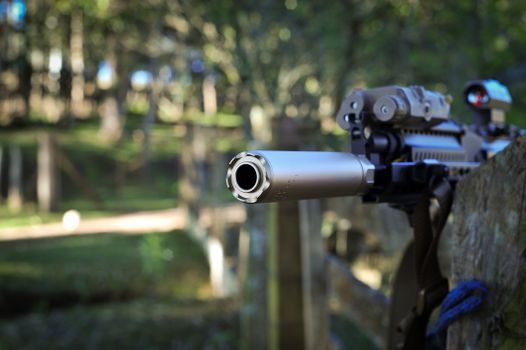
QD mounts are built around speed and versatility. The system uses a muzzle device that stays pinned or timed on the rifle, and the suppressor locks onto that device. Additional QD mounts allow you to move a QD suppressor quickly and easily between firearms.
That is the real value of QD: one suppressor, several hosts, and no threading and unthreading at the range. If you rotate a single can across an AR-15, a bolt-action, and a semi-automatic rifle, a QD system usually pays for itself in convenience.
The tradeoff is complexity. QD systems add parts, add weight, and require correct installation of the muzzle device. Timing, torque, and alignment all matter. A muzzle device that is not installed correctly will affect accuracy and can create baffle or end cap problems. Have a qualified gunsmith handle installation if you are not confident in the process.
Muzzle Devices That Accept a Suppressor
A suppressor-ready muzzle device does two jobs. It manages recoil, flash, or muzzle rise when you shoot unsuppressed, and it provides a mounting surface for the suppressor. Spring retention designs are one example of how manufacturers have expanded this category, introducing the ability to have a muzzle device that can accept a suppressor while still functioning as a standalone muzzle device.
Common suppressor-ready options include:
- Muzzle brakes designed to accept a specific suppressor mount.
- Flash hiders with an integrated mounting interface.
- Three-prong and other specialty devices that combine flash reduction with a mount.
- Dedicated adapters that convert a barrel thread to a suppressor mounting system.
Manufacturers generally recommend that semi-automatic firearms use a ported muzzle device. Porting helps manage gas and recoil on a semi-auto platform, which matters more once a suppressor increases back pressure. Follow the suppressor maker’s guidance on which device is rated for suppressed use.
Flash Hiders, Brakes, and Compensators Compared
Muzzle devices are usually grouped into three families: flash hiders, muzzle brakes, and compensators. Each behaves differently, and the right pick depends on how you shoot most often.
| Device type | Primary job | Notes for suppressed setups |
|---|---|---|
| Flash hider | Reduces visible muzzle flash | Flash hider designs have been marketed with claims of up to 99 percent muzzle flash reduction, which helps conceal shooter position and preserve night vision |
| Muzzle brake | Reduces recoil and muzzle rise | Brakes are marketed as reducing weapon recoil and muzzle rise with minimal concussion directed toward the shooter, which supports faster follow-up shots |
| Compensator | Manages muzzle movement, commonly on AR-15 and similar platforms | Sold alongside flash hiders and brakes as a distinct category; confirm suppressor compatibility before pairing |
For a rifle that will spend most of its life suppressed, flash reduction matters less because the suppressor already handles it. Recoil management and mount durability become the bigger priorities. A suppressor-ready brake often makes sense on a semi-auto that gets shot both suppressed and unsuppressed.

Verify Thread Pitch, Timing, and Alignment
Thread pitch is the detail that derails the most builds. A mount or muzzle device must match the barrel’s thread pattern exactly, and the device must be concentric with the bore. Do not assume that two rifles chambered in the same cartridge share the same muzzle threads.
Before ordering, confirm the following with the manufacturer or a qualified gunsmith:
- The exact thread pitch of your barrel.
- The mounting interface your suppressor uses, including whether it is a HUB (1.375×24) pattern.
- Whether the muzzle device requires timing with shims or a crush washer.
- Whether the mount is rated for your barrel length and cartridge.
- Whether the suppressor manufacturer approves that specific device for suppressed use.
Alignment is not optional. A mount that is off-center can cause baffle strikes, damage the suppressor, and create a safety hazard. If you are unsure, have the installation checked before the first shot.
Material, Weight, and Accessory Planning
Titanium mounts are popular because they keep weight down at the muzzle, where extra ounces are most noticeable. A lighter mount changes how the rifle balances, especially on a long barrel. If your rifle is already heavy, weight savings at the front end are worth prioritizing.
Plan the accessories before you finalize the mount. The suppressor ecosystem includes QD mounts, Nielsen devices, covers, adapters, and wrenches, and these items are easier to source at the same time as the mount. Suppressor covers help manage heat and mirage. Wrenches make installation and removal safer. Adapters solve the odd thread pitch or an older barrel that does not match a current standard.
Rifle suppressor mounts and accessories are available for AR-15, bolt-action, semi-automatic, and other rifle types, so there is no need to compromise on the host platform. Build the accessory list around the rifles you actually shoot.
A Practical Selection Checklist
Use this sequence to keep the purchase organized and avoid buying parts that do not fit together.
- Identify the suppressor’s mounting interface first.
- Decide between direct thread, HUB-based direct thread, and QD based on how many rifles will share the can.
- Choose a muzzle device that is explicitly rated for your suppressor.
- Confirm thread pitch and timing requirements for every host rifle.
- Budget for accessories such as covers, wrenches, and additional QD mounts.
- Have installation and alignment checked before shooting suppressed.
A suppressor mount and muzzle device are not glamorous purchases, but they determine whether the suppressor runs reliably and stays accurate. Buy for the system, verify the specs, and the rest of the setup falls into place. Browse muzzle devices and mounts that match your rifle’s thread pattern and your suppressor’s interface, and confirm fitment with the manufacturer before checkout.
Frequently Asked Questions
Do I need a muzzle device to run a suppressor?
Not always. Direct thread suppressors attach to the threaded barrel with no separate muzzle device. QD systems and many mount-based suppressors do require a compatible muzzle device or adapter on the rifle. Check your suppressor’s mounting interface first, then choose the muzzle device or mount that matches it.
Can I use a muzzle brake with a suppressor?
Yes, provided the brake is specifically designed to accept your suppressor’s mounting system. Many suppressor-ready brakes manage recoil when shooting unsuppressed and serve as the mounting surface when the can is attached. Confirm with the suppressor manufacturer that the brake is rated for suppressed use before installing it.
What is a HUB mount on a suppressor?
HUB refers to an industry standard 1.375×24 thread pattern at the rear of the suppressor. HUB-compatible mounts, including titanium direct thread mounts, adapt a firearm to any suppressor built to that standard. It gives you flexibility to change mounts instead of being locked into one proprietary system.
Are QD mounts better than direct thread?
Neither is universally better. QD mounts let you move one suppressor quickly between firearms, which suits shooters with several hosts. Direct thread is simpler and lighter, which suits a rifle that wears one suppressor permanently. Choose based on how many rifles will share the can and how often you swap it.
Why do semi-automatic rifles benefit from a ported muzzle device?
Ported muzzle devices help manage gas and muzzle movement on semi-automatic platforms, and manufacturers generally recommend them for that reason. Suppressors add back pressure, which makes gas management more important. Confirm the specific device is rated for suppressed use on your rifle before buying.